- DUI
- Criminal Defense
- Florida DUI
- Traffic Offenses
- Drug Charges
- Marijuana Charges
- Violent Crimes
- Domestic Violence
- Temporary Injunctions
- Weapons Charges
- Theft Crimes
- White Collar Crime
- Juvenile Offenses
- Sex Crimes
- Violation of Probation
- Early Termination of Probation
- Seal or Expunge Criminal Record
- Criminal Appeals
- US Federal Offenses
- Misdemeanor Charges
- Felony Charges
- Co-Defendant Cases
- College Student Defense
- College Student Hearings
- FSU Students
- FAMU Students
- Florida Panhandle Arrests
- Extradition to Florida
- Bench Warrants / Warrants
- Emergency Bond Hearings
- Gambling Charges
- Drone Arrests
- Marsy’s Law
- UAS Infractions
- Introduction of Contraband
- Lying to Police
- Locations
- Case Results
- Our Firm
- Media
- Resources
- Blog
- Contact Us
Major FL Court Reverses Conviction After Judge Fails to Excuse Juror Who Was Victim of Similar Crime
January 14, 2026 Don Pumphrey, Jr. Criminal Defense Social Share
Florida’s 2nd District Court of Appeal ruled that a juror who was a victim of domestic battery should have been excused “for cause” in a prosecution for that same offense, and that failure to do so required reversal of the defendant’s conviction.
In Florida, jury selection (voir dire) is a critical part of any criminal trial in Florida. Picking the right jury can “make or break” a case, as having jurors that are not fair and impartial (e.g. biased against a defendant) may be more likely to lead to a conviction.
During jury selection, both the State and defense are granted an unlimited number of “cause challenges” (also known as “for-cause strikes.”). A cause challenge may occur if a potential juror makes one or more comments during jury selection that indicate they are likely to be biased if seated on the jury.
In the event that a cause challenge occurs, the trial judge (who oversees jury selection) can do one of two things:
- Grant the cause challenge, sending the potential juror home
- Deny the cause challenge, requiring the State or defense to either allow the potential juror to be seated or use a peremptory strike
A peremptory strike (or peremptory challenge) occurs when the State or defense excuses a potential juror from service without explaining why. This is unilateral, in that unlike a cause challenge, this does not require approval by the judge.
Unlike cause challenges, peremptory strikes are limited in number. In Florida, the State and defense are awarded three peremptories in misdemeanor cases, six in non-capital felony cases (e.g. not punishable by death), and ten peremptories in capital cases. Though this is the “usual” number, judges can award more peremptory strikes if necessary.
If a peremptory strike is used, the potential juror is usually sent home immediately. However, the other side may occasionally challenge a peremptory strike (Neil challenge) if this appears to be solely on the basis of the race, ethnicity or sex of the potential juror – which is not permitted. Batson v. Kentucky, 476 U.S. 79 (1986); J.E.B. v. Alabama ex rel. T.B., 511 U.S. 127 (1994)
There are two types of potentially “biased” jurors that exist in a pool of jurors, and different approaches will likely be taken with each by an experienced and aggressive Florida criminal defense attorney:
- Group “A” jurors: These are potential jurors that have shown clear bias, and a cause challenge against them would likely succeed
- Group “B” jurors: These are potential jurors who may appear to be biased based on what they have said or how they are acting, but there is not necessarily a clear enough bias risk that the judge will grant a cause challenge
Note: This is not an official, legal framework recognized by courts – it’s a heuristic that can be used by defendants and defense attorneys during jury selection.
An experienced and aggressive Florida criminal defense attorney is likely to use as many cause challenges as possible on Group A jurors, while reserving peremptory strikes for those in Group B. But if the trial judge denies a cause challenge of a Group A juror, the defense may be forced to use a peremptory strike on a Group A juror that they would’ve used on a Group B juror.
The consequence of this is that sometimes, a Group B juror who otherwise would have been peremptorily stricken is seated on the jury. In some cases, even a Group A juror may be seated – if the defense has run out of peremptory strikes and the judge does not award additional strikes to the defense to excuse the Group A juror.
If a judge wrongly denies a cause challenge of a juror who clearly exhibited an inability to be fair and impartial (e.g. Group A), this is reversible error (grounds for reversing a conviction) if both of the following are true:
- The defense receives fewer additional peremptory strikes (which the judge has discretion to award) than the number of cause challenges that were wrongly denied, and
- The defense objects to the composition of the jury (e.g. saying it’s biased/that the defense asked for more peremptory strikes) immediately before the jury is sworn and the trial begins (Greathouse v. State, 371 So. 3d 406 (Fla. 2d. DCA 2023))
Florida appellate courts have heard various cases in which judges have “abused their discretion” by wrongly denying a for-cause challenge of a “Group A” (e.g. clearly biased) juror, and failing to award additional peremptory strikes to the defense to excuse that juror, leading to them being seated on the jury.
Let’s take a look at one such case, Peters v. State, 874 So.2d 677 (Fla. 4th DCA 2004) and what it means for defendants in Florida concerned about potentially biased juries at criminal trials.
KEY CASE: Peters v. State, 874 So.2d 677 (Fla. 4th DCA 2004)
In Peters, the defendant (Peters) was charged with one count of battery, one count of trespass, and one count of fleeing to elude police. He was convicted at trial.
During jury selection, a potential juror was asked questions by defense regarding how she felt about the subject matter of the trial. Peters was accused of battery on his wife.
The potential juror disclosed she separated from her husband years prior due to spousal abuse. She stated that because the experience was very traumatic, she would likely be biased from the start of the proceedings against Peters.
The State attempted to “rehabilitate” the potential juror by asking her if she could follow the law if she was instructed to do so by the judge. Though she replied in the affirmative, she continued to express reservations about her ability to remain unbiased throughout jury selection.
At the conclusion of questioning, Peters (through his counsel) requested a “for-cause” strike of the potential juror. He argued that the potential juror was likely to be biased against Peters due to her experiences with domestic violence.
However, the trial judge denied the cause challenge and concluded that the potential juror was sufficiently “rehabilitated” (able to be fair and impartial despite bias concerns). Since Peters ran out peremptory challenges (and no additional peremptories were awarded by the judge), she was seated on the jury.
Peters was convicted, including on the battery charge and appealed. He argued that the trial judge erred (“abused his discretion”) by refusing to grant a cause challenge of the potential juror. Since she was biased by her own admission, Peters claimed that sitting her on the jury contaminated the proceedings from the start, requiring reversal.
Florida’s 4th District Court of Appeal (Southeast Florida’s highest court) agreed and reversed Peters’s convictions. The 4th DCA found that because the juror remained “devastated” by the abuse she had endured, the trial judge committed a “manifest error” by not excusing her for cause:
“This potential juror expressed that she was still “devastated” by past traumatic experiences of abuse by her own spouse. She also said that she believed that her experience would play a role in how she decided this case. This is the paradigm response casting reasonable doubt on a juror’s ability to be fair and impartial. Again, we note that this case involves charges that the defendant battered his ex-wife. See Rodriguez v. State, 816 So.2d 805, 807 (Fla. 3d DCA 2002) (juror’s comments regarding her prior experiences with abuse “should have sent up a red flag that she had no business sitting on a case in which defendant was charged with an offense involving domestic violence.”). We find manifest error in the trial court’s refusal to excuse her.”
The 4th DCA rejected the State’s argument that the juror had been rehabilitated because she told the court could be fair and impartial, writing:
“The State contends that the juror was rehabilitated because she told the court she could be fair and impartial. The juror in fact responded to the court’s leading question with the words, “I think I could, Yes.” Yet, as we have held, a juror’s later statement that she can be fair does not erase a doubt as to impartiality when the juror has previously expressed some attitude or personal experience that continues to affect the juror in some way. Rodas, 821 So.2d at 1153; Williams 638 So.2d at 979.”
Finding that the juror’s responses “cast a broad shadow of doubt” on whether Peters truly had an impartial jury, the 4th DCA found his convictions required reversal:
“The juror’s own experience involving the very kind of conduct involved in the trial was still devastating to her some twenty years after the events. At best her record testimony is that she could “try” to be fair. She never even approached testifying that she felt confident that she could be fair … We thus conclude that the record does not support the trial judge’s exercise of discretion in this case. This juror’s remarks cast a broad shadow of doubt on the defendant’s right to a fair and impartial jury. That shadow was not removed by her responses to the later questioning. She should have been excused for cause. We reverse the conviction and remand for a new trial.”
In sum, Peters v. State, 874 So.2d 677 (Fla. 4th DCA 2004) marks a significant development in Florida case law regarding jury selection – and when a potential juror’s responses require that the trial judge excuse them “for cause.” The 4th DCA held:
- The juror, who was seated in Peters’s case, expressed that she continued to be seriously damaged emotionally by the physical abuse she endured at the hands of her husband
- Though she said she could “try” to be fair and impartial, the similarity of the subject matter to her traumatic experience clearly influenced her judgment (by the juror’s own admission)
- This required the trial judge to grant Peters’s cause challenge
- Because the judge failed to do so and the juror was seated, Peters’s convictions required reversal and a new trial was necessary
Florida’s criminal defense community should take note of Peters v. State, 874 So.2d 677 (Fla. 4th DCA 2004), as it is a major, defendant-friendly case on jury selection in the state – and when a judge’s failure to grant a cause challenge is reversible error.
If someone is arrested and formally charged in Florida and concerned about jury selection, it is critical to find experienced and trusted legal representation as soon as possible. This decision could make the difference in whether or not someone faces a lengthy prison term and hefty fines.
Criminal Defense Attorney in Tallahassee, FL
Don Pumphrey, Jr. is a Former Prosecutor, Former State Police Officer, Lifetime Member of the Florida Association of Criminal Defense Lawyers; for over 25 years as a private defense attorney who is Trusted, Experienced, Aggressive in Criminal Defense as a Trial Attorney, Criminal Lawyer, Criminal Defense Lawyer for the accused in Florida State Courts located in Tallahassee, Florida but handling cases throughout the State of Florida.
Don Pumphrey, Jr. and the Tallahassee criminal defense lawyers at Pumphrey Law have decades of experience fighting drug charges on behalf of clients and winning. Call Pumphrey Law now at (850) 681-7777 to learn more about what we can do for you. Our lawyers will be happy to provide you with a free consultation.
Don Pumphrey, Jr.
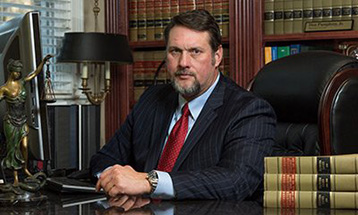
Attorney Don Pumphrey, Jr. is a former prosecutor, former law enforcement officer, and a successful and experienced criminal defense attorney. Don has achieved over 100 not guilty verdicts at trial and over 2,000 dismissals.