- DUI
- Criminal Defense
- Florida DUI
- Traffic Offenses
- Drug Charges
- Marijuana Charges
- Violent Crimes
- Domestic Violence
- Temporary Injunctions
- Weapons Charges
- Theft Crimes
- White Collar Crime
- Juvenile Offenses
- Sex Crimes
- Violation of Probation
- Early Termination of Probation
- Seal or Expunge Criminal Record
- Criminal Appeals
- US Federal Offenses
- Misdemeanor Charges
- Felony Charges
- Co-Defendant Cases
- College Student Defense
- College Student Hearings
- FSU Students
- FAMU Students
- Florida Panhandle Arrests
- Extradition to Florida
- Bench Warrants / Warrants
- Emergency Bond Hearings
- Gambling Charges
- Drone Arrests
- Marsy’s Law
- UAS Infractions
- Introduction of Contraband
- Lying to Police
- Locations
- Case Results
- Our Firm
- Media
- Resources
- Blog
- Contact Us
Major FL Court REVERSES Vehicular Homicide Conviction Due to Failure to Provide Special Jury Instruction
April 23, 2026 Don Pumphrey, Jr. Criminal Defense, Violent Crimes Social Share
Florida’s 2nd District Court of Appeal REVERSED a defendant’s vehicular homicide conviction because the trial judge failed to give the jury a special instruction about relevant traffic laws that may have supported the defense.
CASE: Keller v. State, 849 So.3d 385 (Fla. 2d DCA 2003)
Charge(s): Vehicular Homicide
Outcome: Conviction REVERSED, because the trial judge failed to give the jury relevant special instructions on traffic laws that may have helped Keller’s defense.
Vehicular Homicide in Florida
In Florida, vehicular homicide (Fla. Stat. 782.071) is a very serious felony offense. Vehicular homicide is typically punishable by up to 15 years in prison and a $10,000 fine. However, it is considered a first-degree felony (up to 30 years in prison and a $10,000 fine) if either (or both) of the following are true:
- The defendant has a prior conviction for DUI manslaughter, BUI manslaughter, vehicular homicide or vessel homicide (Trenton’s Law, 2025)
- The defendant fails to give information to authorities, render aid to the victim(s), or leaves the scene of the accident (e.g. fails to stop)
Unlike its name implies, vehicular homicide does NOT require that someone intentionally kill a person with their vehicle. For someone to be guilty of vehicular homicide under Florida law, the State must prove all of the following elements beyond a reasonable doubt:
- The defendant operated a vehicle
- The defendant’s operation of a vehicle caused the death of one or more victims
- The defendant operated their vehicle in a reckless manner (e.g. in a manner they knew or should have known was likely to cause death or great bodily harm)
The two most common points of dispute in a vehicular homicide case are whether the defendant was reckless, and/or whether they were the cause of the collision. Operation is often not debated, as if the defendant was driving at the time of a fatal accident, this element of the offense has been satisfied.
For vehicular homicide purposes, recklessness does not occur simply because someone violates one or more traffic laws. The following two things must be proven beyond a reasonable doubt for the State to establish someone was reckless in a vehicular homicide case:
- The defendant operated their vehicle in a manner they knew or should have known was likely to cause death or great bodily harm (House v. State, 831 So.2d 1230 (Fla. 2d DCA 2002))
- The defendant did more than simply exceed the speed limit, as this is negligence – not recklessness (Luzardo v. State, 147 So.3d 1083 (Fla. 3d. DCA 2014))
Notably, recklessness has the same legal definition in vehicular homicide and vessel homicide cases. For more on vessel homicide (Fla. Stat. 782.072) in Florida, click here.
Though speeding alone cannot establish that the defendant was reckless for purposes of vehicular homicide, speeding can be considered alongside other factors used to evaluate recklessness. Per House v. State, 831 So.2d 1230 (Fla. 2d DCA 2002), these include:
- Whether visibility was good or poor at the time of the accident
- Whether the defendant was staying “in their lane” or swerving out of it
- Whether there was signage indicating drivers should pay particular attention or slow down (e.g. school zones)
- Whether the defendant was traveling in an area with heavy foot traffic (e.g. residential)
- Whether the defendant was familiar with the area in which they were traveling
- Whether the cause of the death (e.g. the hazard that caused it) was foreseeable/perceived by others
- Whether the defendant exercised “any degree of care” to avoid collision
The second most common disputed element in a Florida vehicular homicide (or vessel homicide) case is CAUSATION. For someone to be guilty of vehicular homicide, the State must prove that the defendant was the proximate cause of the victim’s death – not simply that they contributed to it, like in DUI manslaughter cases.
However, it is not as hard to prove causation as many initially believe. This is because, pursuant to Reaves v. State, 979 So.2d 1066 (Fla. 1st DCA 2008), the victim’s conduct must have been the SOLE CAUSE of their death (e.g. entirely responsible) for the defendant to NOT be considered a proximate cause as a matter of law.
Moreover, if a defendant argues that a third party (someone other than the defendant and victim) was the proximate cause, it must be the case that the third party’s conduct was an “unnatural and unforeseeable response” to the defendant’s conduct, given the circumstances (Reaves).
It is critical to recall, however, that the State still retains the burden of proof. If a defendant says they were not the cause of a victim’s death, the State must prove beyond a reasonable doubt that:
- The victim was not the sole cause of their own death (if the defendant alleges the victim was the sole proximate cause)
- The third party’s conduct that allegedly served as the true proximate cause was a “natural and foreseeable” response to the defendant’s conduct
Critically, there can be more than one proximate cause of a victim’s death in a vehicular or vessel homicide case. To learn more, click here.
Although causation may be difficult to dispute in certain cases, the defendant may in other cases have a viable argument that the victim’s conduct was the sole proximate cause of their own death (or that a third party’s unnatural, unforeseeable conduct was the proximate cause).
In a case where a defendant blatantly violated certain traffic laws – directly resulting in the crash that caused their demise – a defendant may request a special jury instruction that conveys to the jury that they may find the victim was the cause of their own death if their failure to abide by traffic laws was responsible for the fatal collision.
In the event that such an instruction is given, a defendant’s argument that they were not the cause of the victim’s death is more likely to succeed. But before such an instruction can be read to the jury, the defendant must prove:
- The special instruction is supported by the evidence
- The special instruction is a correct statement of the law
- The special instruction is not confusing or misleading
In one major Florida vehicular homicide case, a defendant requested a special instruction after he argued the victim’s negligent driving (e.g. turning directly in front of the defendant despite not having the right of way) was the sole proximate cause of the collision.
The defendant requested that the trial judge, based on expert testimony presented at trial, give a special instruction to the jury that they should find him not guilty if the collision would not have occurred but for the victim’s conduct. The defendant presented expert testimony to this effect at trial.
Ultimately, the judge DENIED the defendant’s request – sending the jury to deliberate with the standard instructions in vehicular homicide cases. They found the defendant guilty.
On appeal, the defendant argued that the failure to give the special instruction required reversal of his conviction and for the matter to be remanded to the lower court for a new trial. Florida’s 2nd District Court of Appeal (Greater Tampa’s highest court) AGREED with him – and reversed his conviction. But why?
Let’s take a look at that case – Keller v. State, 849 So.3d 385 (Fla. 2d DCA 2003) – and discuss what it means for defendants charged with vehicular homicide in Florida.
KEY CASE: Keller v. State, 849 So.3d 385 (Fla. 2d DCA 2003)
In Keller, the defendant (Keller) was arrested and charged with vehicular homicide after he was involved in a crash with a car driven by Chris Klueh. Klueh died. According to the 2nd DCA, the following was revealed at trial:
- Keller was driving 55 miles per hour in a 30 mile per hour zone with his headlights off at approximately 9 p.m.
- Keller’s passenger testified that just before the collision, Klueh’s oncoming car was seen with its blinker on to indicate a left turn in front of Keller’s truck
- Klueh apparently pulled directly in front of Keller, leading to the crash that killed Klueh
- An officer from the Florida Highway Patrol concluded Klueh turned left into the path of Keller’s vehicle and cut the corner of the intersection
- However, the officer concluded the collision would not have occurred but for Keller’s speeding
- Keller presented an expert at trial who testified that if Klueh had not cut the corner of the intersection, he would have missed Keller’s car and turned behind in
- The expert opined that even if Keller was going the speed limit, the crash still would’ve occurred, and it was caused by Klueh violating the right of way
- The State gave a special jury instruction on causation (e.g. Klueh had to be 100 percent responsible for his death for Keller not to be guilty)
- Keller requested a special instruction detailing traffic rules surrounding the intersection, violations of the right of way by a car turning left, and proper left turns in intersections
- Though Keller cited his expert’s testimony as an evidentiary basis for this instruction, the trial judge DENIED this (e.g. did not give the instruction)
- The jury found Keller guilty
On appeal, Keller argued that the trial judge:
- Erred by giving the State’s causation instruction, and
- Erred by refusing to give his requested special jury instruction
On the first issue, the 2nd DCA found that Keller waived the issue by failing to object at the trial level:
“At trial, the judge gave a special instruction on causation, which was requested by the State and which Keller now challenges on appeal. We reject Keller’s argument on this issue because Keller did not object to the instruction below and the challenged instruction does not rise to the level of fundamental error.”
However, the 2nd DCA AGREED with Keller’s second argument – that the trial judge erred by refusing to give the special jury instruction he requested. This required that Keller’s conviction be REVERSED and a new trial take place. The 2nd DCA wrote:
“Keller also challenges the trial court’s denial of his request for special instructions detailing the traffic regulations governing the definition of an intersection, violation of the right of way by a vehicle turning left, and proper left turns in an intersection. … The trial court refused to give Keller’s requested instructions on the grounds that they were either not relevant or the relevance was outweighed by the potential for confusion of the jury. In order to be entitled to a special jury instruction, a defendant must prove that the special instruction was supported by the evidence, was a correct statement of the law and was not confusing or misleading, and the standard instruction did not adequately cover the theory of defense. Stephens v. State, 787 So.2d 747, 756 (Fla. 2001). In a vehicular homicide prosecution, evidence of a victim’s negligence is relevant only if the victim’s act was the sole proximate cause of the accident that caused the victim’s death. See Nunez v. State, 721 So.2d 346, 347 (Fla. 2d DCA 1998) (citing Filmon v. State, 336 So.2d 586, 591 (Fla. 1976)).”
“Here, Keller presented an expert witness to support his assertion that Klueh caused the accident by turning left against the right of way. Evidence of Klueh’s negligent driving was properly admitted. The requested instructions were not confusing or misleading, and they were necessary in order for the jury to evaluate the evidence and determine whether Klueh did violate the traffic regulations concerning left turns against the right of way as Keller’s expert had asserted. The requested instructions were relevant to the jury’s task of deciding causation, and the standard instructions did not adequately cover the theory of defense. We reject the State’s argument that the instructions were not necessary because the traffic regulations are a matter of common knowledge. Because the special instructions were directly related to the question of proximate cause, which was central to the defense, we cannot say that error in denying the instructions was harmless. See Lambert v. State, 728 So.2d 1189 (Fla. 2d DCA 1999).”
Put simply, the outcome of the trial may have been influenced by the trial judge’s failure to give the special instruction. Because the jury may have otherwise found Klueh WAS the sole cause of the crash (e.g. if the special instruction was given), and the instruction should have been given, Keller was entitled to a new trial.
In sum, Keller v. State, 849 So.3d 385 (Fla. 2d DCA 2003) marks a significant development in Florida’s corpus of case law surrounding vehicular (and vessel) homicide. The 2nd DCA found that:
- Keller’s special jury instruction that would have made it more likely for the jury to find the victim SOLELY RESPONSIBLE for his death should’ve been given
- There was evidence in the record that Klueh’s failure to abide by traffic regulations (e.g. failure to yield to Keller) led directly to the crash, as Keller’s expert said it would have occurred regardless of Keller’s speed
- As this erroneous decision by the judge may have influenced the outcome of the trial, Keller’s conviction was REVERSED
Florida’s criminal defense community should take note of Keller v. State, 849 So.3d 385 (Fla. 2d DCA 2003), as it is a strong case to support the provision of special jury instructions (when these are relevant) in vehicular/vessel homicide cases.
It is critical to find experienced and trusted legal representation as soon as possible if someone is charged with vehicular homicide, DUI manslaughter, BUI manslaughter or vessel homicide. This decision could make the difference in whether or not someone faces a lengthy prison term and hefty fines.
Criminal Defense Attorney in Tallahassee, FL
Don Pumphrey, Jr. is a Former Prosecutor, Former State Police Officer, Lifetime Member of the Florida Association of Criminal Defense Lawyers; for over 25 years as a private defense attorney who is Trusted, Experienced, Aggressive in Criminal Defense as a Trial Attorney, Criminal Lawyer, Criminal Defense Lawyer for the accused in Florida State Courts located in Tallahassee, Florida but handling cases throughout the State of Florida.
Don Pumphrey, Jr. and the Tallahassee criminal defense lawyers at Pumphrey Law have decades of experience fighting criminal charges on behalf of clients and winning. Call Pumphrey Law now at (850) 681-7777 to learn more about what we can do for you. Our lawyers will be happy to provide you with a free consultation.
Don Pumphrey, Jr.
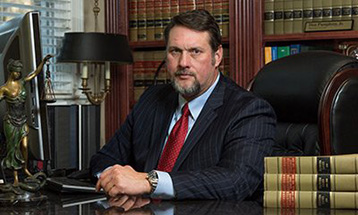
Attorney Don Pumphrey, Jr. is a former prosecutor, former law enforcement officer, and a successful and experienced criminal defense attorney. Don has achieved over 100 not guilty verdicts at trial and over 2,000 dismissals.