- DUI
- Criminal Defense
- Florida DUI
- Traffic Offenses
- Drug Charges
- Marijuana Charges
- Violent Crimes
- Domestic Violence
- Temporary Injunctions
- Weapons Charges
- Theft Crimes
- White Collar Crime
- Juvenile Offenses
- Sex Crimes
- Violation of Probation
- Early Termination of Probation
- Seal or Expunge Criminal Record
- Criminal Appeals
- US Federal Offenses
- Misdemeanor Charges
- Felony Charges
- Co-Defendant Cases
- College Student Defense
- College Student Hearings
- FSU Students
- FAMU Students
- Florida Panhandle Arrests
- Extradition to Florida
- Bench Warrants / Warrants
- Emergency Bond Hearings
- Gambling Charges
- Drone Arrests
- Marsy’s Law
- UAS Infractions
- Introduction of Contraband
- Lying to Police
- Locations
- Case Results
- Our Firm
- Media
- Resources
- Blog
- Contact Us
Major Florida Court Addresses Miranda Rights in Significant New Ruling
October 9, 2025 Don Pumphrey, Jr. Criminal Defense, News & Announcements Social Share
Florida’s 1st District Court of Appeal reiterates that when a suspect unequivocally invokes their right to attorney, police must end questioning unless the suspect voluntarily re-engages.
Before someone is subject to custodial interrogation by law enforcement in Florida, they must first be read their Miranda rights. Police must notify someone after they are taken into custody but before interrogation commences of the following:
- Their right to remain silent
- The fact that anything they say can and will be used against them in a court of law
- The right to an attorney, including during police questioning
- The fact that if someone cannot afford an attorney, one will be provided for them
This is required by the U.S. Supreme Court Miranda v. Arizona, meaning that every suspect throughout Florida (and the U.S.) must be notified of these rights before custodial interrogation begins. Miranda v. Arizona, 384 U.S. 436 (1966).
Custody for Miranda purposes occurs if a reasonable person in a suspect’s position would not feel free to end questioning and leave. Interrogation occurs when law enforcement engages in questioning or its functional equivalent that is reasonably likely to elicit an incriminating response. For more on custody and interrogation, click here.
If someone is taken into custody and read their Miranda rights, they should immediately exercise them by notifying the officers they will be remaining silent, and asking for an attorney. You must inform the officers out loud you are exercising your rights for questioning to end, not simply remain quiet. Berghuis v. Thompkins, 560 U.S. 370 (2010).
When an individual is read their Miranda rights and agrees to speak with law enforcement after an arrest, their statements can generally be used against them in a court of law (e.g. at trial). If someone confesses to a crime after waiving their rights, this is often harmful to their case.
But just because someone makes incriminating statements after their Miranda rights are read, does not automatically mean they are admissible in court. This is because a Miranda waiver (agreeing to waive Miranda rights and speak with police) must be knowing, intelligent, and voluntary. Miranda v. Arizona, 384 U.S. 436, 479 (1966). For more on this, click here.
Moreover, if someone explicitly conveys that they are exercising their rights (tells police they are remaining silent/requesting an attorney) and officers continue questioning in spite of this, it is considered a Miranda violation. Any post-arrest statements obtained after that violation are inadmissible in court against the suspect.
Major New Case: Snowden v. State, Florida’s 1st District Court of Appeal (July 2, 2025)
In a major new case, Florida’s 1st District Court of Appeal (which covers Tallahassee and North Florida) dealt with exactly such a dispute. The appellant, Snowden, claimed officers unlawfully kept questioning him in spite of his requests for a lawyer. Snowden v. State, — So. 3d —, 2025 WL 1812917 (Fla. 1st DCA 2025).
Snowden was arrested and charged with first-degree murder and attempted first-degree murder, and was ultimately convicted. He raised one issue on appeal – an argument that the trial court erred (made a mistake) by allowing his confession to be heard by a jury, as his Miranda rights were violated.
After Snowden was arrested and taken to the police station, he vomited in the interrogation room while he was waiting for police to begin questioning him. When two officers came in to clean it up, Snowden asked for a lawyer (“Is there any way I can talk to my lawyer or anything?”).
One officer acknowledged Snowden’s request, but simply moved Snowden out of the room for a few minutes. When the cleaning was finished, officers ushered Snowden back in and proceeded to read Snowden’s Miranda rights in spite of Snowden’s explicit (and unequivocal) request for an attorney, intending to question him.
Snowden confirmed he understood his rights and officers questioned him for over an hour, despite his previous request for an attorney. Snowden denied his involvement in the crime, then again asked for a lawyer (“That’s why I need a lawyer or something, dude”). However, officers ignored the request and continued to interview Snowden.
Snowden made a third request for an attorney a few minutes later (“I need a lawyer”) – to which one officer responded by asking Snowden if he needed a break. That officer then left, and the other officer escorted Snowden out of the room for a smoke break. During the break, the officer casually advised Snowden “he could talk,” and Snowden confessed to being the getaway driver.
After hearing this, the officer urged Snowden to give additional statements to “help himself out” and mitigate his potential involvement – but said Snowden currently could not due to his request for an attorney. Feeling pressured, Snowden decided to re-engage with officers and gave them a full recounting of his involvement in the murder and attempted murder.
Florida’s First District Court of Appeal ruled that Snowden’s statements were erroneously admitted (wrongly used against him at trial), reversing the guilty verdict entered against him and remanding for a new trial. The unanimous court concluded:
“Because Snowden made three unequivocal requests for counsel which were ignored, his reinitiation of contact with officers and readministering of Miranda rights does not cure the failure to scrupulously honor his requests. Snowden’s statements should have been suppressed, and we cannot say that the trial court’s erroneous admission of his inculpatory statements at trial was harmless.”
The court also noted that there is a difference between exercising the right to remain silent and requesting an attorney. This is because the right to remain silent can be waived at any time by voluntary re-engagement with officers.
By contrast, all engagement with a suspect must end if they request an attorney unless:
- The suspect changes their mind and explicitly tells officers that they no longer wish to have an attorney present
- An attorney actually arrives and a suspect decides to continue the interrogation with the attorney present, after conferring with them
The 1st DCA concluded:
“Where a suspect chooses to remain silent, the interrogation may only resume when the suspect waives the invoked right. But if a suspect subject to custodial interrogation indicates that he wants the assistance of an attorney, law enforcement must immediately stop the interrogation until an attorney is present or the right is waived.”
The court distinguished “equivocal” waivers (e.g. “I think I may want an attorney at some point”) with Snowden’s explicit requests for counsel, which were unconditional. The court ruled that officers should have stopped engaging Snowden as soon as he asked for a lawyer for the first time – as they were cleaning the interrogation room before questioning started.
The 1st DCA also noted that Snowden’s re-engagement with police via his final incriminating statements (the full confession) was the result of an officer urging Snowden to talk to reduce his culpability – all after Snowden requested to have an attorney present. The court found this was impermissible, making Snowden’s subsequent statements inadmissible at trial.
Though it was decided very recently (July 2025), Snowden will likely prove to be a significant development in Florida’s Miranda case law. The court 1st DCA recognized that once an attorney is requested, police cannot “talk someone out” of that request under any circumstances.
Someone must either receive an attorney, or change their mind of their own volition before the lawyer arrives – voluntarily re-engaging officers without force, coercion, or prompting.
As the Snowden rule now binds Florida trial courts, it shifts the Miranda suppression calculus in a defendant’s favor if they explicitly request an attorney and this is not immediately honored. If someone gave incriminating statements because the police continued engaging with them in spite of their request for a lawyer, those statements are inadmissible in court.
If someone requested an attorney and police continued questioning them, an experienced and aggressive Florida criminal defense attorney can now cite Snowden as additional grounds to prevent a suspect’s post-arrest statements (including confessions) from being used against them.
In sum, Snowden v. State is a major development in Florida case law surrounding Miranda rights. If someone is arrested and formally charged in Florida in a case involving a Miranda waiver that was not knowing, intelligent, or voluntary, it is CRITICAL to find experienced and trusted legal representation as soon as possible. This decision could make the difference in whether someone faces a lengthy prison term and hefty fines.
Criminal Defense Attorney in Tallahassee, FL
Don Pumphrey, Jr. is a Former Prosecutor, Former State Police Officer, Lifetime Member of the Florida Association of Criminal Defense Lawyers; for over 25 years as a private defense attorney who is Trusted, Experienced, Aggressive in Criminal Defense as a Trial Attorney, Criminal Lawyer, Criminal Defense Lawyer for the accused in Florida State Courts located in Tallahassee, Florida but handling cases throughout the State of Florida.
Don Pumphrey, Jr. and the Tallahassee criminal defense lawyers at Pumphrey Law have decades of experience fighting drug charges on behalf of clients and winning. Call Pumphrey Law now at (850) 681-7777 to learn more about what we can do for you. Our lawyers will be happy to provide you with a free consultation.
Don Pumphrey, Jr.
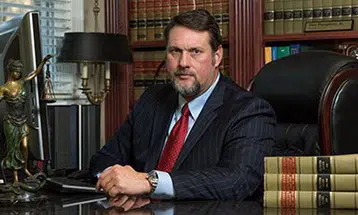
Attorney Don Pumphrey, Jr. is a former prosecutor, former law enforcement officer, and a successful and experienced criminal defense attorney. Don has achieved over 100 not guilty verdicts at trial and over 2,000 dismissals.