- DUI
- Criminal Defense
- Florida DUI
- Traffic Offenses
- Drug Charges
- Marijuana Charges
- Violent Crimes
- Domestic Violence
- Temporary Injunctions
- Weapons Charges
- Theft Crimes
- White Collar Crime
- Juvenile Offenses
- Sex Crimes
- Violation of Probation
- Early Termination of Probation
- Seal or Expunge Criminal Record
- Criminal Appeals
- US Federal Offenses
- Misdemeanor Charges
- Felony Charges
- Co-Defendant Cases
- College Student Defense
- College Student Hearings
- FSU Students
- FAMU Students
- Florida Panhandle Arrests
- Extradition to Florida
- Bench Warrants / Warrants
- Emergency Bond Hearings
- Gambling Charges
- Drone Arrests
- Marsy’s Law
- UAS Infractions
- Introduction of Contraband
- Lying to Police
- Locations
- Case Results
- Our Firm
- Media
- Resources
- Blog
- Contact Us
Major Florida Court: Being Only Person In Car Can Mean Constructive Possession
December 4, 2025 Don Pumphrey, Jr. Criminal Defense, Drug Charges Social Share
Florida’s 6th District Court of Appeal recently held that a defendant’s conviction for drug trafficking could be upheld, as he was the only one in the vehicle when controlled substances were found inside.
In Florida, constructive possession is a critical concept to understand. If someone is accused of possessing contraband (e.g. illegal drugs, guns), the State can prove that the defendant actually or constructively possessed it.
Actual possession occurs when contraband is found on a defendant’s person (e.g. in their pocket or in their hand), or within their immediate reach and under their exclusive control at the time it is discovered by law enforcement. Sanders v. State, 210 So. 3d 246, 248 (Fla. 2d DCA 2017).
Sometimes, contraband may be discovered in a vehicle, home, or other area where a defendant was present – but they did not physically (actually) possess it at the time. In such cases, the State may nevertheless make an arrest and proceed on a theory of constructive possession.
Notably, “mere proximity” to contraband (whatever it may be) is legally insufficient to prove constructive possession. Even if law enforcement finds contraband that is physically “close” to a defendant, this does not mean the contraband can automatically be said to belong to them.
For constructive possession to be proven, the State must provide independent evidence that the defendant knew about the contraband, knew that it was illegal to possess, and that they were able to exercise “dominion and control” over it at the time. T.W. v. State, 666 So.2d 1001, 1002 (Fla. 5th DCA 1996).
That independent evidence is generally sourced from one of three places (Thomas v. State, 269 So. 3d 681, 684 (Fla. 2d DCA 2019)):
- Statements by the accused admitting that the contraband belonged to them
- Statements from others (witness accounts) saying that the contraband belonged to the defendant
- Scientific evidence (e.g. testing that reveals the defendant’s DNA/fingerprints on the contraband)
In cases where constructive possession is being argued, it is quite common for this to stem from “jointly occupied premises.” Contraband may be discovered in a home, a vehicle, or another area where various people are present – but it is attributed to a particular defendant for the purpose of charging them.
An intriguing legal issue surrounding constructive possession surrounds what needs to be proven when a defendant is alone in a vehicle at the time contraband is discovered. Imagine a case in which officers find this, but:
- The defendant does not make any incriminating statements (and in fact, denies that the contraband belonged to them)
- There are no witnesses that provide statements accusing the defendant of possessing the contraband (since there are no other passengers)
- There is no scientific evidence (such as DNA or fingerprints) connecting the defendant to the contraband
Under Thomas v. State, 269 So. 3d 681, 684 (Fla. 2d DCA 2019), this would intuitively seem like grounds to dismiss charges, as the State did not find the contraband in the defendant’s actual possession, and there is no independent evidence of their knowledge and ability to control the contraband.
But the reality is not so simple. Let’s discuss a recent decision by Florida’s 6th District Court of Appeal, Gibson v. State, and its contribution to Florida case law on constructive possession.
KEY CASE: Gibson v. State (Fla. 6th DCA, November 14, 2025)
In Gibson, the defendant (Gibson) was charged with trafficking in amphetamine. He was stopped by law enforcement, who found Gibson alone in the vehicle. Upon inspecting the interior, police found drugs that were within Gibson’s plain view and within arm’s reach of where he was seated.
Though police never saw Gibson physically possess the amphetamine, the State proceeded on a theory of constructive possession. Gibson denied the drugs were his, and no witness accounts (as there were no witnesses) or scientific evidence were presented to undermine Gibson’s claim.
At trial, Gibson moved for a judgment of acquittal (MJOA), arguing that the State produced no independent proof that Gibson knew about and had dominion and control over the drugs. The trial judge denied the motion, finding that the drugs were in plain view and Gibson was the car’s sole occupant. The jury found him guilty.
Gibson reiterated his MJOA argument to Florida’s 6th District Court of Appeal, urging reversal of the guilty verdict on the grounds that the State did not prove constructive possession. But the 6th DCA rejected his claim and affirmed Gibson’s conviction. The court wrote:
“Here, the State’s evidence showed that Gibson was the driver and sole occupant of the vehicle in which the contraband was found, and that the contraband was in Gibson’s plain view and ready reach. Cf. Lee v. State, 835 So. 2d 1177, 1180 (Fla. 4th DCA 2002) (‘Lee’s presence, as driver and sole occupant of the vehicle at the time of his arrest, is sufficient to show he exclusively possessed the vehicle, creating an inference of his dominion and control and guilty knowledge of the marijuana.’).”
“Gibson’s testimony that he had no knowledge of the contraband and that other people were in the car earlier in the day does not render the State’s evidence insufficient. Rather, once the State adduced sufficient evidence to support each element of the crime, any dispute in the facts is to be resolved by the jury. See Parker v. State, 641 So. 2d 483, 484 (Fla. 5th DCA 1994) (‘[T]he jury is free to believe or disbelieve the defendant. . . . The question of exclusive possession is properly determined by the jury.’).”
In essence, the court held that as a matter of law, the fact that the drugs were within Gibson’s “ready reach” and in plain view were sufficient to send the case to the jury. Even though there was no other proof the drugs belonged to Gibson – and he affirmatively denied that the drugs were his (and said others had been in the car) – the 6th DCA declined to reverse his conviction.
But as Lee v. State, 835 So. 2d 1177, 1180 (Fla. 4th DCA 2002) notes, the drugs did not even technically have to be in Gibson’s “plain view” and “ready reach” for the issue to have gone to the jury. The fact that Gibson was the vehicle’s sole occupant created a prima facie assumption that the drugs were his, and the jury could permissibly infer this (and find him guilty).
In sum, Gibson v. State is a significant contribution to Florida’s evolving case law on the issue of constructive possession in vehicles. In line with past cases on the issue, Gibson held that being the sole occupant of a car when drugs are found in plain view is a prima facie (on its face) case of constructive possession, and the jury may find guilt based on this alone.
Critics of Gibson are likely to argue that it creates a major, unwarranted exception to the typical requirements of proving “constructive possession.” However, Florida courts are consistent that if a vehicle is contraband is discovered inside a vehicle with only one occupant, possession can be imputed to the defendant even in the absence of additional proof.
If someone is concerned about a charge of possession of drug paraphernalia, it is crucial to find experienced and aggressive legal representation as soon as possible. This vital decision could make the difference in whether or not a person is subject to a lengthy prison term and hefty fines.
Criminal Defense Attorney in Tallahassee, FL
Don Pumphrey, Jr. is a Former Prosecutor, Former State Police Officer, Lifetime Member of the Florida Association of Criminal Defense Lawyers; for over 25 years as a private defense attorney who is Trusted, Experienced, Aggressive in Criminal Defense as a Trial Attorney, Criminal Lawyer, Criminal Defense Lawyer for the accused in Florida State Courts located in Tallahassee, Florida but handling cases throughout the State of Florida.
Don Pumphrey, Jr. and the Tallahassee criminal defense lawyers at Pumphrey Law have decades of experience fighting drug charges on behalf of clients and winning. Call Pumphrey Law now at (850) 681-7777 to learn more about what we can do for you. Our lawyers will be happy to provide you with a free consultation.
Don Pumphrey, Jr.
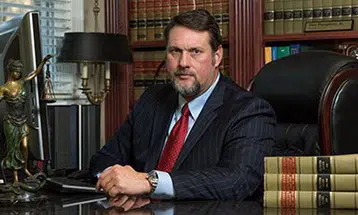
Attorney Don Pumphrey, Jr. is a former prosecutor, former law enforcement officer, and a successful and experienced criminal defense attorney. Don has achieved over 100 not guilty verdicts at trial and over 2,000 dismissals.