- DUI
- Criminal Defense
- Florida DUI
- Traffic Offenses
- Drug Charges
- Marijuana Charges
- Violent Crimes
- Domestic Violence
- Temporary Injunctions
- Weapons Charges
- Theft Crimes
- White Collar Crime
- Juvenile Offenses
- Sex Crimes
- Violation of Probation
- Early Termination of Probation
- Seal or Expunge Criminal Record
- Criminal Appeals
- US Federal Offenses
- Misdemeanor Charges
- Felony Charges
- Co-Defendant Cases
- College Student Defense
- College Student Hearings
- FSU Students
- FAMU Students
- Florida Panhandle Arrests
- Extradition to Florida
- Bench Warrants / Warrants
- Emergency Bond Hearings
- Gambling Charges
- Drone Arrests
- Marsy’s Law
- UAS Infractions
- Introduction of Contraband
- Lying to Police
- Locations
- Case Results
- Our Firm
- Media
- Resources
- Blog
- Contact Us
Major Florida Court: Child Hearsay Admissible Even After Child Victim Turns 18
November 11, 2025 Don Pumphrey, Jr. Criminal Defense Social Share
A major Florida court ruled that despite an alleged child victim of sexual battery being 21 at the time a defendant was tried, her statements from the time she was a minor could still be admitted under Florida’s child hearsay exception.
In Florida, child hearsay is a common legal issue at trials involving minor victims, particularly in cases of alleged physical or sexual abuse. Hearsay is defined as an out of court statement offered in court for the truth of matter asserted in the statement.
Per Fla. Stat. 90.803(23), the admission of a child’s out of court statement alleging physical or sexual abuse of which they were a victim (or they witnessed) can be admitted for its truth (hearsay) if the following conditions are met:
- The child had a physical, emotional, or developmental age of 17 or less
- The statement describes any act of child abuse or neglect, sexual abuse against a child, the offense of child abuse or aggravated child abuse, or any unlawful sexual act, contact, intrusion or penetration performed on or in the presence of the child
- The statement and source through which it is reported are sufficiently trustworthy
- The time, content and circumstances of the statement provide sufficient safeguards as to its reliability
When evaluating if a child hearsay statement regarding any of the above crimes is admissible in court, a judge is to rely on factors like (Cabrera v. State, 206 So.3d 768 (Fla. 1st DCA 2016)):
- The mental and physical age and maturity of the child who made the statement
- Nature and duration of the abuse or offense
- Relationship of the child to the offender
- Vagueness or specificity of the accusation
- Contradictions (if any) in the accusation
- Whether the child uses terminology expected of someone of their age
The goal of Florida’s child hearsay exception is to prevent minors who are the victims of sexual abuse from being forced to physically testify at a trial in certain cases. If a child’s testimony at trial would create a substantial likelihood of severe emotional or mental harm to that child, and their out of court statement is covered by the statute, courts may admit it into evidence.
In some cases, years will pass between when a child (under 18) makes a hearsay statement that may qualify for admission at a defendant’s trial. In rare cases, the defendant may not even stand trial until the alleged victim has turned 18 years old, or even years after this has occurred.
Because of this, Florida’s courts have been forced to answer a difficult question. If a child hearsay statement is being admitted at trial to prevent the “child victim” from being forced to testify – but the “child victim” is now an adult – does the child hearsay exception still apply?
In other words, does the child hearsay exception only cover the victim so long as they are still a child – or even once they have turned 18? If the exception does not apply once a child victim has turned 18, the victim would now have to testify (and face cross-examination) for their allegation to be admitted into evidence.
Remarkably, no Florida court had squarely addressed this issue. But that changed in November of 2025. Let’s discuss the 2nd District Court of Appeal’s (Greater Tampa area) recent ruling in McCartney v. State and what it means for the admissibility of child hearsay going forward.
KEY CASE: McCartney v. State (Fla. 2d. DCA, November 7, 2025)
In McCartney, the defendant (McCartney) was charged with various sex crimes he allegedly committed against three daughters of his neighbor. He was convicted on all counts.
At the time of the incidents, one victim was 11, and the other two were 8 years old. McCartney had been tried for the crimes before, but there was a mistrial. At the second trial, which occurred approximately 10 years after the alleged offenses, the oldest victim had just turned 21.
The State moved to introduce evidence of the then-minor (now 21-year-old) daughter’s account of the sexual abuse. McCartney objected to this before trial, arguing that the alleged victim was no longer a minor. Because of this, McCartney reasoned, the child hearsay exception (Fla. Stat. 90.803(23))) could not be used to shield her from testifying.
The trial judge overruled McCartney’s objection, finding the statements (a statement to a law enforcement officer and CPT interview) could come in under the child hearsay exception. The judge reasoned that since the now-21-year-old was 11 at the time the statements were made, they were covered by Fla. Stat. 90.803(23).
On appeal, McCartney reiterated his argument that because the eldest child victim had reached the age of majority (18), the child hearsay exception could not be used. He asserted that even if her statements were previously admissible (before she aged into adulthood), they were not now because she was 21.
However, the 2nd DCA ruled against McCartney, finding that the only relevant question (in addition to determining whether the statements fell under the exception) was the age of the alleged victim at the time she made the statement – not at the time of McCartney’s trial. Agreeing with the trial judge, the court wrote:
“Guided by Contreras, and persuaded by Akins, we hold that section 90.803(23) permits the admission of the eldest victim’s child hearsay statements, regardless of her age at retrial, so long as she was under the age of sixteen when she made the statements. The trial court properly admitted the child hearsay statements.”
The 2nd DCA cited a major child hearsay case, State v. Contreras, 979 So.2d 896 (Fla. 2008), in reaching its conclusion:
“As relevant here, the [Contreras] court recounted: … Nothing in the statute provides that a finding of unavailability is limited by the victim’s current age. The only age requirement is that the statement being admitted as hearsay must have been made by a victim eleven years or less in age.”
Since the Florida Supreme Court tacitly acknowledged in Contreras that the child’s age at the time of the hearsay statements determines whether they are admissible, the 2nd DCA found it irrelevant that McCartney’s alleged victim was 21 when he was put on trial.
The 2nd DCA also cited a recent case decided by the Oregon Supreme Court, State v. Akins, 568 P.3d 174 (Or. 2025), which noted the following in a similar ruling on Oregon’s child hearsay law:
“That is all that is required by the text of the rule to make that evidence admissible. Nothing in the text conditions the admissibility of that evidence on the declarant’s age when she testified at trial—that is, the rule does not expressly state that the witness must be a child at the time of her trial testimony.”
Finding the logic of these courts persuasive, the 2nd DCA ruled that the age of a child hearsay declarant at the time of trial is irrelevant in determining whether the hearsay statements are admissible. As this was an issue of first impression, McCartney now binds all Florida courts under the Pardo rule (unless another DCA/Florida Supreme Court conflicts with it).
In sum, McCartney v. State (Fla. 2d. DCA, November 7, 2025) is a significant development in Florida case law on the issue of the child hearsay exception (Fla. Stat. 90.803(23)). It holds that as long as a child declarant’s hearsay statement qualified for admission at the time it was made, the current age of that declarant is irrelevant.
The fact that the alleged child victim is now an adult does not mean they must be forced to testify at trial. The child hearsay exception applies regardless of how old the victim is at the time the case is tried, so long as the qualifying statements were made while they were a minor and are found to be admissible under Fla. Stat. 90.803(23).
The admission of child hearsay can change the outcome of a case, so it is critical to find experienced and trusted legal representation as soon as possible if someone is charged with an offense involving a child victim. This decision could make the difference in whether or not someone faces a lengthy prison term and hefty fines.
Criminal Defense Attorney in Tallahassee, FL
Don Pumphrey, Jr. is a Former Prosecutor, Former State Police Officer, Lifetime Member of the Florida Association of Criminal Defense Lawyers; for over 25 years as a private defense attorney who is Trusted, Experienced, Aggressive in Criminal Defense as a Trial Attorney, Criminal Lawyer, Criminal Defense Lawyer for the accused in Florida State Courts located in Tallahassee, Florida but handling cases throughout the State of Florida.
Don Pumphrey, Jr. and the Tallahassee criminal defense lawyers at Pumphrey Law have decades of experience fighting drug charges on behalf of clients and winning. Call Pumphrey Law now at (850) 681-7777 to learn more about what we can do for you. Our lawyers will be happy to provide you with a free consultation.
Don Pumphrey, Jr.
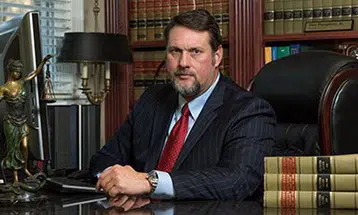
Attorney Don Pumphrey, Jr. is a former prosecutor, former law enforcement officer, and a successful and experienced criminal defense attorney. Don has achieved over 100 not guilty verdicts at trial and over 2,000 dismissals.