- DUI
- Criminal Defense
- Florida DUI
- Traffic Offenses
- Drug Charges
- Marijuana Charges
- Violent Crimes
- Domestic Violence
- Temporary Injunctions
- Weapons Charges
- Theft Crimes
- White Collar Crime
- Juvenile Offenses
- Sex Crimes
- Violation of Probation
- Early Termination of Probation
- Seal or Expunge Criminal Record
- Criminal Appeals
- US Federal Offenses
- Misdemeanor Charges
- Felony Charges
- Co-Defendant Cases
- College Student Defense
- College Student Hearings
- FSU Students
- FAMU Students
- Florida Panhandle Arrests
- Extradition to Florida
- Bench Warrants / Warrants
- Emergency Bond Hearings
- Gambling Charges
- Drone Arrests
- Marsy’s Law
- UAS Infractions
- Introduction of Contraband
- Lying to Police
- Locations
- Case Results
- Our Firm
- Media
- Resources
- Blog
- Contact Us
Major Florida Court: “I Want a Lawyer” Doesn’t Always Stop Police Questioning
October 9, 2025 Don Pumphrey, Jr. Criminal Defense Social Share
Florida’s 5th District Court of Appeal rules that an explicit post-Miranda request for a lawyer, in certain contexts, does not always mean the police must immediately end questioning.
In Florida, someone may (and should!) invoke their Miranda rights to remain silent and request an attorney if law enforcement reads them their rights.
Law enforcement in Florida must read Miranda before custodial interrogation begins. Custodial interrogation occurs when police place a suspect in an environment where the suspect would not reasonably feel free to leave, with the intent of engaging in conduct (questioning or its functional equivalent) reasonably likely to elicit an incriminating response from them.
Your Miranda rights include all of the following, according to the U.S. Supreme Court’s decision in Miranda v. Arizona, 384 U.S. 436 (1966):
- The right to remain silent
- The fact that anything you say can and will be used against you in a court of law
- The right to an attorney, including to have an attorney present during police questioning
- The fact that if you cannot afford an attorney, one will be provided for you
If someone is read their Miranda rights, they should be courteous but firm. Tell law enforcement that you will be exercising your right to remain silent and will not answer questions without an attorney present. If this is done unequivocally, police must cease interrogative questioning immediately.
Some may claim that since they do not have anything to hide (or think they can convince the police they did not act criminally), that there is no harm in talking. This is a huge mistake. Law enforcement is specifically trained in the art of interrogation and will elicit “little things” from a suspect that they don’t realize are a big deal – but can significantly undermine their defense.
It is also important to not to try and be “clever” when you express your wish to exercise your Miranda rights. Do not sit there and stay quiet without saying that you want to remain silent and want an attorney. Police can continue questioning you if you don’t explicitly assert your rights. Berghuis v. Thompkins, 560 U.S. 370 (2010)
Typically, when a suspect asks for counsel (an attorney), police cannot re-engage that suspect at all unless the suspect voluntarily changes their mind and waives that right. Edwards v. Arizona, 451 U.S. 477 (1981). Questioning must immediately be terminated – total disengagement by the officers is required.
But in recent years, some Florida’s courts have interpreted the Edwards rule a bit more “loosely.” Rather than treating someone requesting an attorney as immediate grounds for law enforcement to disengage, courts have indicated certain circumstances may allow officers to ask follow-up questions about if someone is “really” asking for a lawyer.
A recent case on this issue was decided by Florida’s Fifth District Court of Appeal in August of 2025, and is worthy of discussion.
Major New Case: Pastor v. State, Florida 5th District Court of Appeal (August 22, 2025)
In Pastor, the defendant (Pastor) was arrested and accused of murder. Pastor was taken into custody and read his Miranda rights. He acknowledged his rights, agreed to speak, then said the following after being asked if he could tell the interrogating officers “what happened”:
“I can, yes. Obviously, I know my rights. I do want a lawyer. I will answer questions. I do want to speak with you because I want the truth to be known. What happened tonight, I felt was just an act of self-defense. I didn’t know what else to do just because I don’t know this man who’s in my house and he’s getting angry, and he was trying to take the kids away out of the house…”
After Pastor said this, an officer asked for a “clarification” as to whether Pastor wanted to speak with or without a lawyer present – as he had seemingly begun to discuss the details of the case with detectives (without an attorney). Pastor said, “Yeah, I do still want a lawyer and everything, but…”
Still unclear as to whether Pastor was actually invoking his right to counsel at that moment or simply hoping to talk to a lawyer later, the detective again questioned Pastor on this point. The following exchange took place:
Detective: So, are you saying that you don’t want to talk to us until you talk to a lawyer, or are you saying you will talk to us now and then talk to your lawyer later? I’m not understanding what you mean by that. Because he asked you, “knowing these rights will you talk to us.” You said, “Yes.” Okay. So, are you saying that you do agree to talk to us?
Pastor: Yes, but also yes to the lawyer if I can have one.
The detective then spent an additional few minutes conversing with Pastor about his rights and whether he wished to exercise them, eventually stating that police would not “go get a lawyer now and bring him in here.” Pastor replied, “I know, I understand that.”
The detective then asked, “So, my question is, would you talk to us now? Do you want to talk to us now without your attorney? Without an attorney at this time?”
Pastor reiterated to detectives his desire to have an attorney (“At this time, I’ll go ahead and say no with that case and just wait for the attorney.”). But Pastor continued:
“Can I just ask one question? At what point would an attorney come? I know there’s no guarantee, but what does that look like? I just don’t know. If I want to get an attorney, how long would I have to wait for one to come here? Or would they come the first thing in the morning, or would it take days?”
The detective informed Pastor an attorney would not come to the police station – and in the meantime, Pastor’s silence would “leave [them] to make assumptions” about the case, as they’d already “talked to some people”:
“And ultimately you leave us to make assumptions. … because we have already talked to some people, we talked to your mom, we talked to Sarah.”
After hearing this, Pastor immediately agreed to speak with officers. He did so for 26 minutes before he terminated questioning (“At this point, I think it’s best if I wait for a lawyer.”).
Pastor moved to suppress his statements (prevent them from being used against him at trial) due to what he asserted was a failure by detectives to disengage when he first asked for an attorney (as Edwards requires). Pastor argued his first statement showed willingness to talk only once an attorney was present (“I do want a lawyer…”).
The trial court agreed and moved to suppress Pastor’s statements. The State appealed. Florida’s 5th District Court of Appeal reversed the trial court’s ruling, allowing Pastor’s statements over the 26-minute interrogation to be used against him at trial.
The 5th DCA held Pastor’s first statement (indicating he wanted a lawyer then discussing some of the details of the case) fell “woefully short of the clarity required to compel detectives to cease their questioning.” The court wrote:
“There simply is no reasonable understanding of this response from which officers could conclude that Pastor’s answer was ‘an expression of a desire to have his attorney present during questioning and deal with police only through counsel.’”
“In this initial response, Pastor said both ‘I do want a lawyer’ and ‘I will answer questions. I do want to speak with you. I want the truth to be known.’ He then proceeded uninterrupted to tell the detectives he acted in self-defense when shooting Akerberg. There was no break in Pastor’s statement and detectives did not interject with any further questions leading him to claim self-defense.”
In effect, the 5th DCA ruled Pastor’s additional statements following his ask for an attorney made his request “unclear” – permitting detectives to ask him additional questions to clarify whether he was:
- Willing to speak with them immediately without counsel present, but reserving his right to counsel, or
- Willing to speak with detectives only later, once he had access to an attorney
The 5th DCA evaluated the “totality of the circumstances,” concluding that even though Pastor indicated his desire for a lawyer, he did not clearly and unambiguously request an attorney be present before he answered questions. The 5th DCA wrote:
“Simply stated, there was no moment during the five-minute meandering conversation concerning Pastor’s desire for counsel that he stated clearly and unambiguously that he wanted a lawyer before answering questions.”
The court also found that officers did not mislead Pastor regarding the nature of his rights and provided “simple and straightforward answers” to Pastor’s questions, as Washington v. State, 253 So. 3d 64, 68 (Fla. 1st DCA 2018) requires. Thus, Pastor’s statements could not be suppressed on the basis that detectives “duped” him into speaking.
In the wake of Pastor, some critics are likely to argue that the decision is too broad. Since Edwards requires immediate disengagement by officers upon a suspect requesting an attorney (after being read their Miranda rights), some may view Pastor as eroding this doctrine.
Moreover, some critics may argue that framing Pastor’s invocation of his right to counsel as unclear (despite an explicit ask for an attorney) risks incentivizing officers to keep suspects talking before disengaging, in hopes they can latch on to something that requires “clarification.” In such situations, “clarification” may risk becoming subtle coercion.
Finally, some may argue Pastor could have a chilling effect on suspects invoking their Miranda rights. If someone says they “want a lawyer” and this may be framed as “equivocal” if they say anything else, the ruling may discourage some from trying to assert their rights at all – as they may “mess up” and be questioned anyway.
Given this ruling, it is better to be safe than sorry if someone is read their Miranda rights. Tell law enforcement that you are invoking your right to remain silent and will not be answering questions without an attorney present.
Do not add anything on to this (e.g. starting to discuss details of the case, like Pastor did), as this may be framed as “equivocal” and law enforcement can use this as an “in” to keep questioning.
In sum, Pastor v. State is a significant new ruling that seems to give Florida law enforcement more latitude to continue engaging with a suspect even after they ask for an attorney in some cases, in order to “clarify” their true intent.
Given Pastor, it is important not just to know your Miranda rights, but know how to exercise them to ensure officers immediately cease questioning. Tell police you will be remaining silent and will not answer questions without a lawyer. Stop there – do not add anything that can be used to keep you talking!
If someone is arrested and formally charged in Florida in a case involving a Miranda waiver that was not knowing, intelligent, or voluntary, it is CRITICAL to find experienced and trusted legal representation as soon as possible. This decision could make the difference in whether someone faces a lengthy prison term and hefty fines.
Criminal Defense Attorney in Tallahassee, FL
Don Pumphrey, Jr. is a Former Prosecutor, Former State Police Officer, Lifetime Member of the Florida Association of Criminal Defense Lawyers; for over 25 years as a private defense attorney who is Trusted, Experienced, Aggressive in Criminal Defense as a Trial Attorney, Criminal Lawyer, Criminal Defense Lawyer for the accused in Florida State Courts located in Tallahassee, Florida but handling cases throughout the State of Florida.
Don Pumphrey, Jr. and the Tallahassee criminal defense lawyers at Pumphrey Law have decades of experience fighting drug charges on behalf of clients and winning. Call Pumphrey Law now at (850) 681-7777 to learn more about what we can do for you. Our lawyers will be happy to provide you with a free consultation.
Don Pumphrey, Jr.
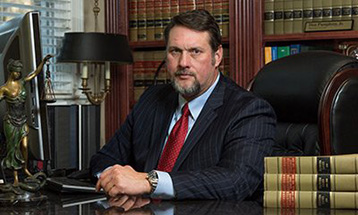
Attorney Don Pumphrey, Jr. is a former prosecutor, former law enforcement officer, and a successful and experienced criminal defense attorney. Don has achieved over 100 not guilty verdicts at trial and over 2,000 dismissals.