- DUI
- Criminal Defense
- Florida DUI
- Traffic Offenses
- Drug Charges
- Marijuana Charges
- Violent Crimes
- Domestic Violence
- Temporary Injunctions
- Weapons Charges
- Theft Crimes
- White Collar Crime
- Juvenile Offenses
- Sex Crimes
- Violation of Probation
- Early Termination of Probation
- Seal or Expunge Criminal Record
- Criminal Appeals
- US Federal Offenses
- Misdemeanor Charges
- Felony Charges
- Co-Defendant Cases
- College Student Defense
- College Student Hearings
- FSU Students
- FAMU Students
- Florida Panhandle Arrests
- Extradition to Florida
- Bench Warrants / Warrants
- Emergency Bond Hearings
- Gambling Charges
- Drone Arrests
- Marsy’s Law
- UAS Infractions
- Introduction of Contraband
- Lying to Police
- Locations
- Case Results
- Our Firm
- Media
- Resources
- Blog
- Contact Us
Major Florida Court Reverses Child Sex Crime Conviction Over Biased Juror
October 30, 2025 Don Pumphrey, Jr. Criminal Defense, Sex Crimes Social Share
In Florida, jury selection is a crucial part of criminal trials. This process, known as voir dire, can have a significant influence on the outcome of a case. That’s because during voir dire, attorneys can draw out answers from potential jurors identifying the biases they hold – which may impact their ability to render a fair (impartial) verdict based on the evidence.
In the event that a juror shows a clear bias against a particular defendant or is unable to be fair and impartial due to the nature of the charged crime, that juror may be stricken “for cause.” A for-cause strike occurs when a lawyer (prosecutor or defense attorney) develops an articulable (and race-neutral) reason as to why they don’t want a particular juror seated.
During jury selection, prosecutors and defense attorneys in Florida each have an unlimited number of “for-cause” challenges. However, they also receive a limited number (10 in capital cases, 6 in felonies, 3 in misdemeanors) of “peremptory” challenges. These allow jurors to be stricken without the attorney offering a particular reason.
Sometimes, an attorney will move to strike a juror “for cause,” but will be challenged on this. If the trial judge finds insufficient cause for the strike and denies it, the attorney can decide to do one of two things:
- Allow the potential juror to be impaneled on the jury
- Use a spare peremptory strike to ensure the biased juror (in the eyes of the attorney moving to strike them “for cause”) is not seated
In the majority of cases, an attorney who is seriously concerned about a particular juror’s bias but was denied a for-cause strike will use a peremptory strike on that juror. However, this creates an additional problem – because now, the attorney is unable to use a peremptory strike on another juror that they would have otherwise stricken (since these are limited in number).
Because a biased jury is reversible error at criminal trials, appellate courts in Florida (District Courts of Appeal) review cases where such an allegation is raised quite carefully. One of the most common types of cases where a juror is candid about their bias against a defendant are cases involving allegations of sex crimes against minors.
In such cases, many potential jurors will admit during voir dire that they will always believe a minor who makes an allegation of sexual abuse. If and when that happens, an experienced Florida defense attorney is likely to move for a “for-cause” strike, arguing the juror will be unable to objectively evaluate the evidence due to this bias.
But what happens when that “for-cause” challenge is denied by the judge, leading to a potentially biased jury? Can this lead to the reversal of a defendant’s conviction? Let’s take a look at a key case from Florida’s 4th District Court of Appeal that answers these questions.
MAJOR CASE: Campbell v. State, 241 So. 3d 877 (Fla. 4th DCA 2018)
In Campbell, the defendant (Campbell) was charged with lewd or lascivious molestation and lewd or lascivious exhibition on a minor between age 12 and 16, as well as showing obscene material to a minor. He was convicted on all counts.
During voir dire, potential jurors were asked by Campbell’s lawyer if they thought a child would ever lie about sexual abuse. One potential juror, a social worker, explained:
“I would have to be honest in saying my experience in thirty-five years in being a social worker, in working with kids, my experience has been that kids don’t lie in instances of child abuse and child sexual abuse. I can only talk about my experience.”
The trial judge attempted to “rehabilitate” the juror by noting that jurors were not supposed to “imprint their experience” on jury instructions or the law. The juror said that she could follow the law.
But later in voir dire, Campbell’s attorney asked again for potential jurors to raise their hand if they did not think children ever lied about sexual abuse. The social worker raised her hand, and was then asked how strongly “out of ten” she felt about her position. She rated it a “9 or 9.5.”
At that point, Campbell’s attorney moved to strike the social worker “for cause.” He argued that she would be unable to objectively evaluate the evidence and was biased against Campbell, given what she had said. However, the trial judge denied the move for a for-cause strike, as the social worker said she could follow the law.
Concerned about the social worker and another potential juror after “for-cause” challenges for both were denied, Campbell’s attorney used his final two peremptory strikes on them. He then identified two other jurors he hoped to use the peremptory strikes on, and asked for additional strikes. But the trial court denied the request, and both those jurors were seated.
After Campbell was convicted, he appealed – arguing that the for-cause challenge of the social worker was wrongly denied and that it potentially led to the impanelment of one or more jurors that the defense opposed. Because these “objectionable jurors” were seated when they should not have been, Campbell claimed his conviction had to be reversed.
The 4th District Court of Appeal agreed with Campbell, reversing his conviction and remanding to the lower court for a new trial. It wrote:
“We agree that the trial court erred by denying the challenge for cause as to the social worker. As we recently said in Rentas v. State, ‘[a] juror is not impartial when one side must overcome a preconceived opinion in order to prevail.’ … There, prospective jurors expressed firm beliefs about purported false confessions by defendants, especially in cases involving child molestation, even though attempts were made to rehabilitate them. However, a trial court’s attempt to rehabilitate a juror does not automatically overcome that juror’s inherent bias.”
Put simply, the 4th DCA held it was a mistake for the trial judge to consider the social worker “rehabilitated” after she was instructed on the law. As she admitted to her strong and continued bias upon further questioning, the 4th DCA decided that she should have been stricken from the panel “for cause.”
The 4th DCA ruled that because this mistake by the trial judge led to the impanelment of at least one juror that the defense intended to strike (but could not), it constituted reversible error that required a new trial for Campbell. The 4th DCA wrote:
“[T]he juror rang the proverbial bell twice, one coming after the court’s attempt at rehabilitation. Although she agreed that she could put aside her prior experiences when questioned by the trial judge, she nonetheless doubled-down on her previous statement that children never lie about sexual molestation after further questioning by defense counsel. Thus, any prior concern about the juror’s ability to participate was not dissipated after the court’s instruction.”
“Second, appellant specifically identified an objectionable juror that would have been stricken using the additional peremptory challenge requested when the cause challenge was improperly denied. After the request for additional challenges was rejected, the identified objectionable juror was seated on the jury. Therefore, the process set forth by the Florida Supreme Court in Trotter was followed.”
The 4th DCA cited the Florida Supreme Court’s decision, Trotter v. State, 576 So.2d 691, 693 (Fla. 1990). Trotter ruled that when an “objectionable juror” is seated due to a wrongly denied “for cause” challenge, this is reversible error (requiring a new trial). Since that’s exactly what happened in Campbell, the 4th DCA tossed his convictions.
In sum, Campbell v. State, 241 So. 3d 877 (Fla. 4th DCA 2018) is a significant development in Florida’s corpus of case law surrounding jury selection. The 4th District Court of Appeal made clear that when a for-cause challenge is wrongly denied and a juror that the defense would have otherwise stricken is seated as a result, this is reversible error.
As the 4th DCA noted, this is not subject to a “harmless error” analysis; the court does not ask if the impanelment of a juror that should have been stricken directly led to the guilty verdict. Since it’s considered a violation of the right to due process, the erroneous seating of one or more biased jurors due to the denial of a for-cause challenge requires a new trial in Florida.
If someone is arrested and formally charged in Florida and concerned about jury selection, it is critical to find experienced and trusted legal representation as soon as possible. This decision could make the difference in whether or not someone faces a lengthy prison term and hefty fines.
Criminal Defense Attorney in Tallahassee, FL
Don Pumphrey, Jr. is a Former Prosecutor, Former State Police Officer, Lifetime Member of the Florida Association of Criminal Defense Lawyers; for over 25 years as a private defense attorney who is Trusted, Experienced, Aggressive in Criminal Defense as a Trial Attorney, Criminal Lawyer, Criminal Defense Lawyer for the accused in Florida State Courts located in Tallahassee, Florida but handling cases throughout the State of Florida.
Don Pumphrey, Jr. and the Tallahassee criminal defense lawyers at Pumphrey Law have decades of experience fighting drug charges on behalf of clients and winning. Call Pumphrey Law now at (850) 681-7777 to learn more about what we can do for you. Our lawyers will be happy to provide you with a free consultation.
Don Pumphrey, Jr.
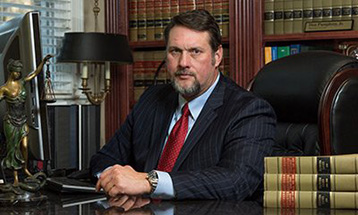
Attorney Don Pumphrey, Jr. is a former prosecutor, former law enforcement officer, and a successful and experienced criminal defense attorney. Don has achieved over 100 not guilty verdicts at trial and over 2,000 dismissals.