- DUI
- Criminal Defense
- Florida DUI
- Traffic Offenses
- Drug Charges
- Marijuana Charges
- Violent Crimes
- Domestic Violence
- Temporary Injunctions
- Weapons Charges
- Theft Crimes
- White Collar Crime
- Juvenile Offenses
- Sex Crimes
- Violation of Probation
- Early Termination of Probation
- Seal or Expunge Criminal Record
- Criminal Appeals
- US Federal Offenses
- Misdemeanor Charges
- Felony Charges
- Co-Defendant Cases
- College Student Defense
- College Student Hearings
- FSU Students
- FAMU Students
- Florida Panhandle Arrests
- Extradition to Florida
- Bench Warrants / Warrants
- Emergency Bond Hearings
- Gambling Charges
- Drone Arrests
- Marsy’s Law
- UAS Infractions
- Introduction of Contraband
- Lying to Police
- Locations
- Case Results
- Our Firm
- Media
- Resources
- Blog
- Contact Us
Major Florida Court Reverses Guilty Verdict Due to Wrongful Child Hearsay Admission
December 4, 2025 Don Pumphrey, Jr. Criminal Defense Social Share
Florida’s 2nd District Court of Appeal found that the admission of child hearsay statements in a sexual abuse case was reversible error, as the trial judge did not make a sufficient, on-the-record finding of the child hearsay’s trustworthiness and reliability.
In Florida, hearsay is formally defined as an out of court statement offered in court for the truth of the matter asserted in the statement. Put simply, it is a statement made outside of the trial that the State or defense is attempting to offer into evidence to prove that the statement is true.
If a statement is considered hearsay, it is generally inadmissible in court unless it qualifies under an eligible exception. For more on hearsay exceptions in Florida (both for unavailable declarants and declarants regardless of availability), click here.
There are two types of hearsay statements (recognized by the U.S. Supreme Court’s Davis v. Washington, 547 U.S. 813, 822 (2006) ruling). These include testimonial and nontestimonial hearsay statements. The rules regarding the admission of these two types of hearsay are different and important to understand.
Testimonial hearsay includes hearsay statements primarily made for the purpose of facilitating a government (e.g. law enforcement) investigation or prosecution. Some examples of testimonial hearsay statements include:
- A 911 call made 2 days after an alleged offense
- A written affidavit by an alleged victim prepared at a police station
- A CPT forensic interview given by a child during a sexual abuse investigation following an initial disclosure/the defendant’s arrest
If a hearsay statement is testimonial in nature, it is considered inadmissible in a court of law unless one of the following two is true (even if the content of statement appears to comply with a designated hearsay exception):
- The declarant testifies at trial and the defendant has the opportunity to cross-examine them
- The declarant is unavailable at trial (does not testify), but the defendant previously had the opportunity to cross-examine the declarant in a setting that satisfies the Confrontation Clause (per the U.S. Supreme Court’s decision in Crawford v. Washington, 541 U.S. 36 (2004))
By contrast, nontestimonial hearsay is a hearsay statement made for the primary purpose of responding to an ongoing emergency. Examples of nontestimonial hearsay include:
- A 911 call describing an ongoing criminal incident (e.g. “He’s shooting at us right now!”)
- An initial disclosure of sexual abuse by a child to a parent, teacher, relative, etc.
- Business records made at or near the time of the event that are sufficiently authenticated under 90.803(6)
A nontestimonial hearsay statement can be introduced at trial as long as it complies with one of Florida’s hearsay exceptions, even if the declarant does not testify (and under 90.804, only if the declarant does not testify). For more on this, click here.
One of Florida’s broadest hearsay exceptions is Fla. Stat. 90.803(23). This allows for admission of hearsay statements made that do not otherwise comply with a designated hearsay exception if it satisfies the following conditions:
- The statement was made by a child with a physical, emotional, or developmental age of 17 or less at the time
- The statement describes any act of child abuse or neglect, sexual abuse against a child, the offense of child abuse or aggravated child abuse, or any unlawful sexual act, contact, intrusion or penetration performed on or in the presence of the child
- The statement and source through which it is reported are sufficiently trustworthy
- The time, content and circumstances of the statement provide sufficient safeguards as to its reliability
Examples of “child hearsay” that may be deemed admissible under 90.803(23) depending on the circumstances include:
- Text messages from the alleged victim describing the abuse
- Testimony from someone that the child disclosed the abuse to regarding the contents of the disclosure
- Tape of a child’s CPT interview (forensic interview) with a state employee after their initial disclosure of abuse
Per Cabrera v. State, 206 So.3d 768 (Fla. 1st DCA 2016), Florida courts have historically relied upon various factors to evaluate whether a statement is sufficiently reliable and trustworthy, such as:
- The mental and physical age and maturity of the child who made the statement
- Nature and duration of the abuse or offense
- Relationship of the child to the offender
- Vagueness or specificity of the accusation
- Contradictions (if any) in the accusation
- The child’s ability to distinguish between reality and fantasy
- Whether the child uses terminology expected of someone of their age
If hearsay is admitted pursuant to the child hearsay exception (90.803(23)), the trial judge must make sufficient findings of fact on the record regarding the trustworthiness and reliability of the child’s statements.
But what happens when the judge rules child hearsay admissible – without creating a sufficient record regarding its reliability or trustworthiness – and the defendant is convicted at trial? Can this seemingly esoteric procedural misstep lead to a conviction being reversed in Florida?
The answer is yes, it absolutely can. Let’s take a look at the 2nd District Court of Appeal’s ruling in Hyre v. State, 240 So.3d 47 (Fla. 2d. DCA 2018) and what it means for Florida defendants in cases involving the introduction of child hearsay.
KEY CASE: Hyre v. State, 240 So.3d 47 (Fla. 2d. DCA 2018)
In Hyre, the defendant (Hyre) was charged with one count of unlawful sexual activity pursuant to Fla. Stat. 794.05 (with a 16 or 17 year old minor). He was ultimately convicted.
On appeal, Hyre challenged the trial judge’s decision to child hearsay statements allegedly made by the victim (A.M.) to her mother and a police sergeant. The judge held a pretrial hearing to determine if the alleged victim’s mother and sergeant would be permitted to testify at trial as to the content of the alleged victim’s statements.
About one month after holding the hearing the trial judge ruled the statements were admissible. According to the 2nd DCA, the judge’s order contained:
- Incomplete recitations of the child hearsay statements (omitting certain portions)
- A generic finding that the statements were trustworthy and reliable, without substantive analysis of any of the statements or explanation as to why
- No acknowledgment of defense evidence undermining the State’s argument
Specifically, the trial judge did not mention the testimony of Jane Smith, a defense witness who shed doubt on the alleged victim’s credibility at the pretrial hearing. The hearsay statements were ultimately introduced (through the alleged victim’s mother and police sergeant’s testimony at Hyre’s trial), and Hyre was found guilty.
On appeal, Hyre argued to the 2nd DCA that because the trial judge’s reliability finding did not sufficiently place facts on the record regarding why each of the statements was reliable and trustworthy (as required by 90.803(23)). The 2nd DCA agreed and tossed Hyre’s conviction, remanding his case to the lower court for a new trial.
The 2nd DCA observed that Florida’s courts have required trial judges to make specific findings of fact on the record as to the reliability of each child hearsay statement that is ruled admissible:
“In ruling on the admissibility of the hearsay statements, the court must place specific findings of fact on the record as to each statement. § 90.803(23)(c) … ‘[L]ist[ing] each statement to be considered and summarily conclud[ing], without explanation or factual analysis, that the circumstances surrounding most of the statements showed them to be trustworthy’ is insufficient and constitutes reversible error. … ‘[L]imited, summary findings [are] insufficient to satisfy the case-specific requirements of the statute because they fail[ ] to address why the time, content, and circumstance of each individual statement provide[s] sufficient safeguards of reliability.’ Garcia v. State, 659 So.2d 388, 392 (Fla. 2d DCA 1995).”
The 2nd DCA applied existing law to Hyre’s case, noting that there was clear evidence calling the reliability and trustworthiness of the alleged victim’s hearsay statements into question that went unaddressed by the trial judge:
“The court’s failure to conduct a factual analysis as to the reliability of each statement is ‘particularly troublesome’ where, as here, it does not appear that the court considered internal inconsistencies within the alleged victim’s recorded statement including: A.M.’s unexplained use of a clinical term where the majority of her statement described the acts in imprecise or vague terms, her inability to provide basic information to the sergeant, her ability to recall only certain, very specific details, and her deviation from prior answers upon further—often leading—questioning by the sergeant; conflicts between the two hearsay statements which reflect on various criteria; and the testimony of a witness which called into doubt the reliability of a statement’s source.”
After concluding the trial judge failed to comply with Fla. Stat. 90.803(23), the court conducted a harmless error analysis. The court found the erroneous admission of the hearsay statements was not harmless error, requiring the reversal of the guilty verdict returned against Hyre. Analyzing the trial record, the 2nd DCA wrote:
“Although physical evidence was presented, it was not unassailable: vaginal swabs resulted in no foreign DNA evidence; the DNA evidence obtained from the victim’s underwear was a partial mixture which included an unidentified third contributor; and testimony established that the lab analyst ‘assumed’ that A.M.’s DNA was present in the mixture. The analyst also testified that she ‘expect[s] relatives to share some’ DNA in common. Only family members were present on the night of the alleged incident. On these facts, we cannot conclude the court’s error in admitting the hearsay statements in the absence of the required reliability findings was harmless beyond a reasonable doubt.”
“The trial court’s order is insufficient. The court did not conduct the necessary factual analysis considering the totality of the circumstances, nor did it consider all of the testimony presented at the hearing. The trial court improperly admitted the sixteen-year-old victim’s hearsay statements under section 90.803(23), and the error was not harmless. Consequently, we reverse Hyre’s judgment and sentence and remand for further proceedings.”
In sum, Hyre v. State, 240 So.3d 47 (Fla. 2d. DCA 2018) is a significant, defendant-friendly development in Florida’s corpus of case law surrounding the child hearsay exception (Fla. Stat. 90.803(23)). Florida’s 2nd District Court of Appeal (which covers the Tampa area) held that:
- The trial judge did not conduct a sufficient reliability/trustworthiness analysis of the hearsay statements introduced at Hyre’s trial
- The trial judge’s failure to do so means that the statements were wrongly admitted as a matter of law
- Because the evidence against Hyre (other than the child hearsay statements) was shaky, it could not be said beyond a reasonable doubt that the jury would have found him guilty even if they never heard the hearsay statements
- As a result, reversal of the guilty verdict was required
Florida defense attorneys and defendants in criminal cases where Fla. Stat. 90.803(23) (the child hearsay exception) is implicated should be aware of Hyre v. State, 240 So.3d 47 (Fla. 2d. DCA 2018). A judge’s failure to make sufficiently specific findings as to child hearsay’s reliability is often reversible error.
The admission of child hearsay can change the outcome of a case, so it is critical to find experienced and trusted legal representation as soon as possible if someone is charged with an offense involving a child victim. This decision could make the difference in whether or not someone faces a lengthy prison term and hefty fines.
Criminal Defense Attorney in Tallahassee, FL
Don Pumphrey, Jr. is a Former Prosecutor, Former State Police Officer, Lifetime Member of the Florida Association of Criminal Defense Lawyers; for over 25 years as a private defense attorney who is Trusted, Experienced, Aggressive in Criminal Defense as a Trial Attorney, Criminal Lawyer, Criminal Defense Lawyer for the accused in Florida State Courts located in Tallahassee, Florida but handling cases throughout the State of Florida.
Don Pumphrey, Jr. and the Tallahassee criminal defense lawyers at Pumphrey Law have decades of experience fighting drug charges on behalf of clients and winning. Call Pumphrey Law now at (850) 681-7777 to learn more about what we can do for you. Our lawyers will be happy to provide you with a free consultation.
Don Pumphrey, Jr.
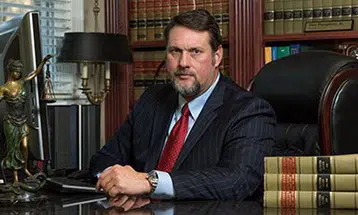
Attorney Don Pumphrey, Jr. is a former prosecutor, former law enforcement officer, and a successful and experienced criminal defense attorney. Don has achieved over 100 not guilty verdicts at trial and over 2,000 dismissals.