- DUI
- Criminal Defense
- Florida DUI
- Traffic Offenses
- Drug Charges
- Marijuana Charges
- Violent Crimes
- Domestic Violence
- Temporary Injunctions
- Weapons Charges
- Theft Crimes
- White Collar Crime
- Juvenile Offenses
- Sex Crimes
- Violation of Probation
- Early Termination of Probation
- Seal or Expunge Criminal Record
- Criminal Appeals
- US Federal Offenses
- Misdemeanor Charges
- Felony Charges
- Co-Defendant Cases
- College Student Defense
- College Student Hearings
- FSU Students
- FAMU Students
- Florida Panhandle Arrests
- Extradition to Florida
- Bench Warrants / Warrants
- Emergency Bond Hearings
- Gambling Charges
- Drone Arrests
- Marsy’s Law
- UAS Infractions
- Introduction of Contraband
- Lying to Police
- Locations
- Case Results
- Our Firm
- Media
- Resources
- Blog
- Contact Us
Major Florida Court Reverses Sexual Battery Conviction Due to Improper Child Hearsay Admission
December 4, 2025 Don Pumphrey, Jr. Criminal Defense, Sex Crimes Social Share
Florida’s 4th District Court of Appeal ruled that because the trial judge failed to make specific findings on the record as to why the victim’s CPT interview was ‘reliable’ and ‘trustworthy’, its admission at trial was grounds for reversing the defendant’s conviction.
In Florida, hearsay is defined as an out of court statement offered in court for the truth of the matter asserted in the statement. Hearsay is generally inadmissible – but a list of exceptions exist under Florida law permitting its use at criminal trials under certain circumstances.
There are two types of hearsay – testimonial hearsay and nontestimonial hearsay. This distinction is important to understand.
Testimonial hearsay is defined as a hearsay statement made for the primary purpose of facilitating a government investigation or future prosecution. Examples may include:
- An alleged victim’s statement about a crime to police investigators
- An alleged victim’s statement to prosecutors while preparing for trial
- 911 calls after a threat has passed (e.g. 2 days later)
- Written affidavits
- An alleged child victim’s CPT (Child Protection Team) forensic interview discussing abuse they suffered prior to the defendant’s arrest
By contrast, nontestimonial hearsay statements are made for the primary purpose of responding to an ongoing emergency. Davis v. Washington, 547 U.S. 813, 822 (2006). These may include:
- A 911 call discussing a crime currently transpiring (e.g. “He’s coming at me with the gun!”)
- A child’s initial disclosure of abuse to a teacher, parent or relative
- Business records kept at or near the time of regularly conducted activity
- Dying declarations
Nontestimonial hearsay is admissible in court regardless of if the declarant (speaker) testifies, as long as a hearsay exception is satisfied. However, testimonial hearsay is inadmissible unless the declarant testifies, or is unavailable at trial and the defendant has had the prior opportunity to cross-examine them. Crawford v. Washington, 541 U.S. 36 (2004)
One of the most contentious types of hearsay disputes in Florida surrounds the admission of child hearsay under Fla. Stat. 90.803(23).
This broad exception allows hearsay statements made by alleged child victims of physical or sexual abuse to be admitted in court if all of the following are true:
- The child had a physical, emotional, or developmental age of 17 or less at the time the statement was made
- The statement describes any act of child abuse or neglect, sexual abuse against a child, the offense of child abuse or aggravated child abuse, or any unlawful sexual act, contact, intrusion or penetration performed on or in the presence of the child
- The statement and source through which it is reported are sufficiently trustworthy
- The time, content and circumstances of the statement provide sufficient safeguards as to its reliability
The final provision here is crucial. Unless the time, content and circumstances of the statement are found to be reliable (and the reasons for such a finding are put on the record by the judge), admission of a child’s hearsay statement is not allowed under Fla. Stat. 90.803(23).
One of the most common uses of the child hearsay exception at trials involving alleged physical or sexual abuse of a child victim is the attempted introduction of CPT interview tapes. A CPT interview is a forensic interview with an alleged child victim conducted by a state investigator, typically after the defendant has been arrested.
There are various grounds upon which a CPT interview tape may be ruled inadmissible at trial:
- If the child is testifying, the defense may move to exclude the interview on the grounds that it is needlessly cumulative, prejudicial, and simply serves to “bolster” the child’s testimony
- If the child is not available to testify, the defense may move to exclude the interview tape on the grounds that the interview is testimonial hearsay and the defendant has not been able to cross-examine the child (meaning the Confrontation Clause is violated)
In the event that a CPT interview is nevertheless found to be admissible under the child hearsay exception (Fla. Stat. 90.803(23)), a trial judge must make specific findings on the record as to why the interview’s contents are sufficiently reliable and trustworthy.
But what happens if the trial judge admits the CPT interview tape and finds its contents to be sufficiently reliable and trustworthy – but the judge does not make a record regarding why they have made that decision?
One major Florida court held that this is reversible error – requiring them to toss out the guilty verdict for sexual battery handed down by the jury and order a new trial for the defendant. Let’s take a look at Platt v. State, 201 So.3d 775 (Fla. 4th DCA 2016) and what it means for admission of child hearsay at Florida criminal trials.
KEY CASE: Platt v. State, 201 So.3d 775 (Fla. 4th DCA 2016)
In Platt, the defendant (Platt) was accused of sexual battery on a minor victim. He was convicted and sentenced to 30 years in prison.
Before trial, the State moved to admit the tape of the alleged victim’s CPT interview (allowing it to be heard by the jury) pursuant to Fla. Stat. 90.803(23). The defense objected – but the judge ultimately ruled that the CPT tape was admissible. The judge reviewed the tape and said at the pretrial hearing that it could be played at trial, but did not elaborate as to why.
During the pretrial hearing, the judge was prompted by Platt’s defense attorney to make a “more specific finding” as to why the CPT interview’s contents were reliable (“I feel like the Court needs to make a more specific finding as to whether the facts somehow indicate a basis for determining the admissibility”).
However, the judge declined and simply reiterated that the tape would be “allowed in” (“And the responses by the alleged victim are sufficient to warrant the Court’s allowing in 90.803(23). And I think that’s all I have to say. That’s all I will say in any event.).
On appeal to the 4th DCA, Platt argued that the CPT interview’s admission violated Fla. Stat. 90.803(23) because the judge did not make any on-the-record findings as to reliability. He also asserted that since the interview tape was a significant piece of evidence against him, this was reversible error (requiring a new trial because his first one was unfair).
Florida’s 4th District Court of Appeal (Southeast Florida) agreed with Platt and reversed the guilty verdict against him on this basis. The court noted:
“Here, when the State sought to introduce, under the child hearsay rule, the video of S.M.’s statement to the detective, the trial court, after reviewing it, at first simply ruled that it was admissible. Even after defense counsel suggested that the court was required to make additional findings, the court merely stated that the detective’s questions ‘[a]nd the responses by the alleged victim are sufficient to warrant the Court’s allowing in 90.803(23). And I think that’s all I have to say.’ The trial court did not make any further findings.”
The 4th DCA concluded that the trial court’s comments were “too sparse” to satisfy Fla. Stat. 90.803(23)’s statutory requirements, and that the CPT tape’s admission constituted reversible error as a result:
“Here, the trial court’s findings are even sparser than the findings in Townsend. The only finding the court made was that the detective’s questions and S.M.’s responses were ‘sufficient to warrant’ admission. The court did not specify any portions of the interview or otherwise explain its ruling. This lack of specific findings of fact constitutes reversible error.”
“Additionally, the court’s failure to make findings was not harmless error. … The court did not make any findings evaluating reliability, and there was some support in the record for the suggestion that there had been fabrication. Had the court reviewed the totality of the circumstances, it might have found that the statement was not reliable or that there were discrepancies. The admission of a corroborative statement can provide powerful evidence to support credibility and reliability. Therefore, the failure to evaluate the reliability created a reasonable possibility that the error affected the outcome of the trial.”
Notably, Judge Artau of the 5th DCA wrote a brief dissenting opinion arguing that although the trial judge did not make the required reliability findings, he believed this was “harmless error” (not requiring reversal):
“I dissent from the majority opinion in that the error was harmless. The video was cumulative of S.M.’s testimony at trial. Because the video was consistent with her trial testimony, the admission of the video does not present a reasonable possibility that it affected the outcome of the trial. Moreover, the record is clear that the trial court admitted corroborating Williams rule evidence. I would therefore affirm.”
However, Judge Artau’s perspective on this did not win over the 5th DCA majority. As a result, Platt’s conviction was reversed and he received a new trial.
In sum, Platt v. State, 201 So.3d 775 (Fla. 4th DCA 2016) is a significant development in Florida’s corpus of case law surrounding the admissibility of child hearsay at criminal trials under Fla. Stat. 90.803(23) – also known as the child hearsay exception.
Florida’s 4th DCA held that because the following occurred, the guilty verdict against Platt could not stand:
- The trial judge in Platt’s case did not make required findings on the record as to why the content of the alleged child victim’s CPT interview were reliable
- The erroneous admission of the CPT interview (due to the lack of an on-the-record reliability finding) may have contributed to the jury finding Platt guilty
The Platt case teaches the importance of trial judges making child hearsay reliability findings on the record. It also makes clear that if this does not occur, the admission of the hearsay (if under Fla. Stat. 90.803(23)) is subject to harmless error review on appeal.
The admission of child hearsay can change the outcome of a case, so it is critical to find experienced and trusted legal representation as soon as possible if someone is charged with an offense involving a child victim. This decision could make the difference in whether or not someone faces a lengthy prison term and hefty fines.
Criminal Defense Attorney in Tallahassee, FL
Don Pumphrey, Jr. is a Former Prosecutor, Former State Police Officer, Lifetime Member of the Florida Association of Criminal Defense Lawyers; for over 25 years as a private defense attorney who is Trusted, Experienced, Aggressive in Criminal Defense as a Trial Attorney, Criminal Lawyer, Criminal Defense Lawyer for the accused in Florida State Courts located in Tallahassee, Florida but handling cases throughout the State of Florida.
Don Pumphrey, Jr. and the Tallahassee criminal defense lawyers at Pumphrey Law have decades of experience fighting drug charges on behalf of clients and winning. Call Pumphrey Law now at (850) 681-7777 to learn more about what we can do for you. Our lawyers will be happy to provide you with a free consultation.
Don Pumphrey, Jr.
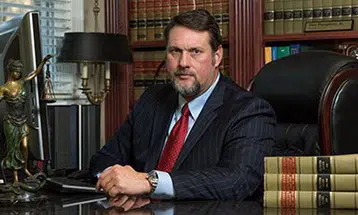
Attorney Don Pumphrey, Jr. is a former prosecutor, former law enforcement officer, and a successful and experienced criminal defense attorney. Don has achieved over 100 not guilty verdicts at trial and over 2,000 dismissals.