- DUI
- Criminal Defense
- Florida DUI
- Traffic Offenses
- Drug Charges
- Marijuana Charges
- Violent Crimes
- Domestic Violence
- Temporary Injunctions
- Weapons Charges
- Theft Crimes
- White Collar Crime
- Juvenile Offenses
- Sex Crimes
- Violation of Probation
- Early Termination of Probation
- Seal or Expunge Criminal Record
- Criminal Appeals
- US Federal Offenses
- Misdemeanor Charges
- Felony Charges
- Co-Defendant Cases
- College Student Defense
- College Student Hearings
- FSU Students
- FAMU Students
- Florida Panhandle Arrests
- Extradition to Florida
- Bench Warrants / Warrants
- Emergency Bond Hearings
- Gambling Charges
- Drone Arrests
- Marsy’s Law
- UAS Infractions
- Introduction of Contraband
- Lying to Police
- Locations
- Case Results
- Our Firm
- Media
- Resources
- Blog
- Contact Us
Major Florida Court Reverses Sexual Battery Conviction Over Biased Juror
October 23, 2025 Don Pumphrey, Jr. Criminal Defense, Sex Crimes Social Share
In Florida, jury selection is a critical part of any criminal case. This occurs during a process called voir dire, in which attorneys for both sides (prosecution and defense) participate. During voir dire (French for “to speak truth”), jurors are asked questions that may be relevant to their ability to be an impartial (fair) fact-finder in the case.
This is critical to ensuring that the verdict is rendered by a group of individuals who are not predisposed towards a particular result – but will instead make their determination of guilt (or lack thereof) based on the evidence at trial.
While voir dire is underway, attorneys for each side are permitted to strike prospective jurors “for cause.” In essence, if a potential juror answers a question (or set of questions) in a manner that shows they are likely to be sympathetic to the State (or defense) from the outset, a lawyer may move to prevent that person from being seated on the jury.
When a juror is challenged “for cause,” opposing counsel may decide to push back against this challenge, making it the judge’s job to determine whether there is an adequate legal basis for the potential juror to be stricken (not seated on the jury). In many cases, the judge will rule in favor of the party making the “for cause” challenge to avoid potential reversal on appeal.
But in some cases, a judge will deny such a challenge in spite of counsel giving a clear rationale as to why they don’t want a particular juror seated (aside from a juror’s immutable characteristics like race, sex, etc.). Though some denials of a for-cause challenge are legitimate, others tend to be heavily scrutinized by appeals courts, as the judge’s decision could have led to a biased jury.
For-cause challenges play an especially critical role in cases involving serious felonies where emotions are likely to run high, such as when the defendant is facing sexual battery charges. But even in these cases, a judge may occasionally deny an attorney’s effort to “strike” a juror.
In such cases, counsel may be forced to use a “peremptory strike” (striking a juror without giving a reason) on the juror they planned to strike “for cause.” These are limited in number – so if a peremptory strike is used in place of a for-cause strike (after a for-cause strike request is denied), an attorney now has one less peremptory strike to use on a potentially objectionable juror.
Recently, a trial judge’s decision to deny a for-cause challenge by a Florida defense lawyer in a sexual battery case led to a guilty verdict in a sexual battery trial being reversed on appeal. Let’s break down this new case, Salomon v. State, and its significant potential impact on jury selection in Florida.
Major New Case: Salomon v. State, 4D2024-0579 (Fla. 4th DCA, April 30, 2025)
In Salomon, the defendant (Salomon) was accused of sexual battery on his minor daughter. He was ultimately charged and convicted. On appeal, he argued that the verdict should be reversed due to a clearly biased juror being seated over his objection.
During jury selection (voir dire), defense counsel asked if prospective jurors would give more credibility to a child witness testifying compared to an adult, simply because the witness was a child. One of the prospective jurors gave the following reply:
“Yes. I just want to say I believe a child, you know, would speak more credibly and honestly than an adult, which gives them time to think about, much about what one is saying. … .A child would just naturally comes [sic] out and speak, you know, what they saw, what’s on the mind or what is before them.”
When Salomon’s defense attorney followed up to confirm whether the potential juror would give a child’s testimony “a little bit more credibility” than other defendants, he again responded in the affirmative (“Absolutely”).
Before the jury was officially chosen, Salomon’s attorney moved to strike the prospective juror. He argued that because the prospective juror said he would assign more credibility to a child witness than others (and Salomon’s daughter would be testifying), this was likely to prejudice Salomon’s case from the outset.
The State replied that the prospective juror was merely making a commonsense observation that kids “have less of a filter” and was not saying he was inherently biased towards child witnesses. The trial judge ruled for the State and denied the defense’s motion to strike for cause.
The defense had a leftover peremptory strike and used it on the juror who provided the answer about children being more credible witnesses. But there was another juror the defense intended to use a peremptory strike on, that they now could not, as the attorney was forced to use the peremptory strike on the juror he intended to strike “for cause.”
Salomon’s attorney requested an additional peremptory strike from the judge to ensure this other juror was not seated, but it was denied. As a result, that juror (who would have been kept off the jury by the peremptory strike if the for-cause challenge was not denied) was seated on the jury over the defense’s objection.
Salomon challenged his conviction, arguing the trial court committed reversible error (requiring the verdict to be thrown out) by seating the juror. Florida’s 4th District Court of Appeal agreed with Salomon, reversing the verdict and remanding to the lower court for a new trial.
The 4th DCA noted that Salomon (through his attorney) not only made a proper initial objection to the seating of the juror, but had a continuing objection throughout the trial and specifically objected yet again right before the jury was sworn. The court wrote:
“Salomon properly preserved his cause challenge by moving to strike Prospective Juror, exercising a peremptory challenge on Prospective Juror, exhausting all peremptory challenges, requesting an additional peremptory strike, and identifying an objectionable juror whom he would have excused. The trial court denied the request for an additional peremptory strike and recognized Salomon’s continuing objection to the jury’s composition. Thus, Salomon properly renewed his objection before the panel was sworn.”
Because the issue was “properly preserved” for appeal, the 4th DCA analyzed whether the for-cause challenge should have been granted. The court ruled that the trial judge erred in denying the defense’s motion, writing:
“In the instant case, per Prospective Juror’s statements regarding the reliability of children’s testimony (“I believe a child . . . would speak more credibly and honestly than an adult”), a reasonable doubt exists that Prospective Juror could render an impartial verdict against Salomon because he would have given more credibility to the child Victim than the adult defendant.”
The 4th DCA also noted that a failure to strike a juror for cause (including a trial court’s denial of a defense motion to do so) is reversible error, not subject to a harmless error analysis. In other words, Salomon did not have to prove the verdict would have likely been different if the juror hadn’t been seated – establishing the juror’s bias was sufficient. The court wrote:
“Here, we cannot conclude that Salomon was judged by a fair and impartial panel of his peers based on Prospective Juror’s responses during voir dire … Because ‘[t]he failure to strike a juror for cause is not subject to a harmless error analysis,’ we reverse the judgment and sentence imposed and remand for a new trial.”
Disagreeing with the majority’s ruling, Judge Artau filed a dissenting opinion in Salomon, arguing that the 4th DCA should have applied a “harmless error” analysis instead of finding that the impanelment of a potentially impartial juror was per se reversible error. He argued:
“I respectfully dissent because, in my view, the ‘per se’ error rule first established by Trotter v. State, 576 So. 2d 691 (Fla. 1990), which this court followed in Campbell v. State, 241 So. 3d 877, 879-80 (Fla. 4th DCA 2018), and the majority now applies in this case, cannot be squared with either the English common law origins of the peremptory challenge or our supreme court’s holding in Seadler v. Marina Bay Resort Condominium Association, Inc., 376 So. 3d 659, 665 (Fla. 2023), that ‘harmless error is the appropriate standard’ for determining whether ‘the erroneous denial of a properly preserved cause challenge’ requires reversal.”
Judge Artau argued that the juror who gave the objectionable answer was stricken (though done with a peremptory), so the automatic tossing out of the trial verdict was an improper remedy. He also argued the trial judge was under no obligation to award Salomon an additional peremptory strike once the juror objected to “for cause” was removed.
But Judge Artau’s opinion did not rule the day. As a result, the 4th DCA’s Salomon decision provides significant insight into the importance of jury selection in Florida, particularly in serious felony cases such as those stemming from sexual battery charges.
If a judge erroneously denies a for-cause strike (based on legitimate concerns about the lack of impartiality of a juror), this is reversible error according to the 4th DCA. Even if that potential juror is subsequently removed using a peremptory strike, the denial of a for-cause challenge can’t be cured unless the defendant is awarded an additional peremptory strike.
If someone is arrested and formally charged in Florida and concerned about jury selection, it is critical to find experienced and trusted legal representation as soon as possible. This decision could make the difference in whether or not someone faces a lengthy prison term and hefty fines.
Criminal Defense Attorney in Tallahassee, FL
Don Pumphrey, Jr. is a Former Prosecutor, Former State Police Officer, Lifetime Member of the Florida Association of Criminal Defense Lawyers; for over 25 years as a private defense attorney who is Trusted, Experienced, Aggressive in Criminal Defense as a Trial Attorney, Criminal Lawyer, Criminal Defense Lawyer for the accused in Florida State Courts located in Tallahassee, Florida but handling cases throughout the State of Florida.
Don Pumphrey, Jr. and the Tallahassee criminal defense lawyers at Pumphrey Law have decades of experience fighting drug charges on behalf of clients and winning. Call Pumphrey Law now at (850) 681-7777 to learn more about what we can do for you. Our lawyers will be happy to provide you with a free consultation.
Don Pumphrey, Jr.
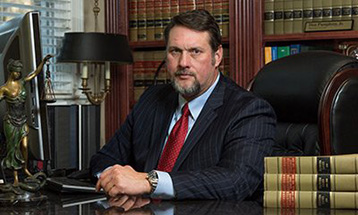
Attorney Don Pumphrey, Jr. is a former prosecutor, former law enforcement officer, and a successful and experienced criminal defense attorney. Don has achieved over 100 not guilty verdicts at trial and over 2,000 dismissals.