- DUI
- Criminal Defense
- Florida DUI
- Traffic Offenses
- Drug Charges
- Marijuana Charges
- Violent Crimes
- Domestic Violence
- Temporary Injunctions
- Weapons Charges
- Theft Crimes
- White Collar Crime
- Juvenile Offenses
- Sex Crimes
- Violation of Probation
- Early Termination of Probation
- Seal or Expunge Criminal Record
- Criminal Appeals
- US Federal Offenses
- Misdemeanor Charges
- Felony Charges
- Co-Defendant Cases
- College Student Defense
- College Student Hearings
- FSU Students
- FAMU Students
- Florida Panhandle Arrests
- Extradition to Florida
- Bench Warrants / Warrants
- Emergency Bond Hearings
- Gambling Charges
- Drone Arrests
- Marsy’s Law
- UAS Infractions
- Introduction of Contraband
- Lying to Police
- Locations
- Case Results
- Our Firm
- Media
- Resources
- Blog
- Contact Us
Major Florida Court Strikes Down ‘Plain Smell Doctrine
October 3, 2025 Don Pumphrey, Jr. Criminal Defense, Drug Charges Social Share
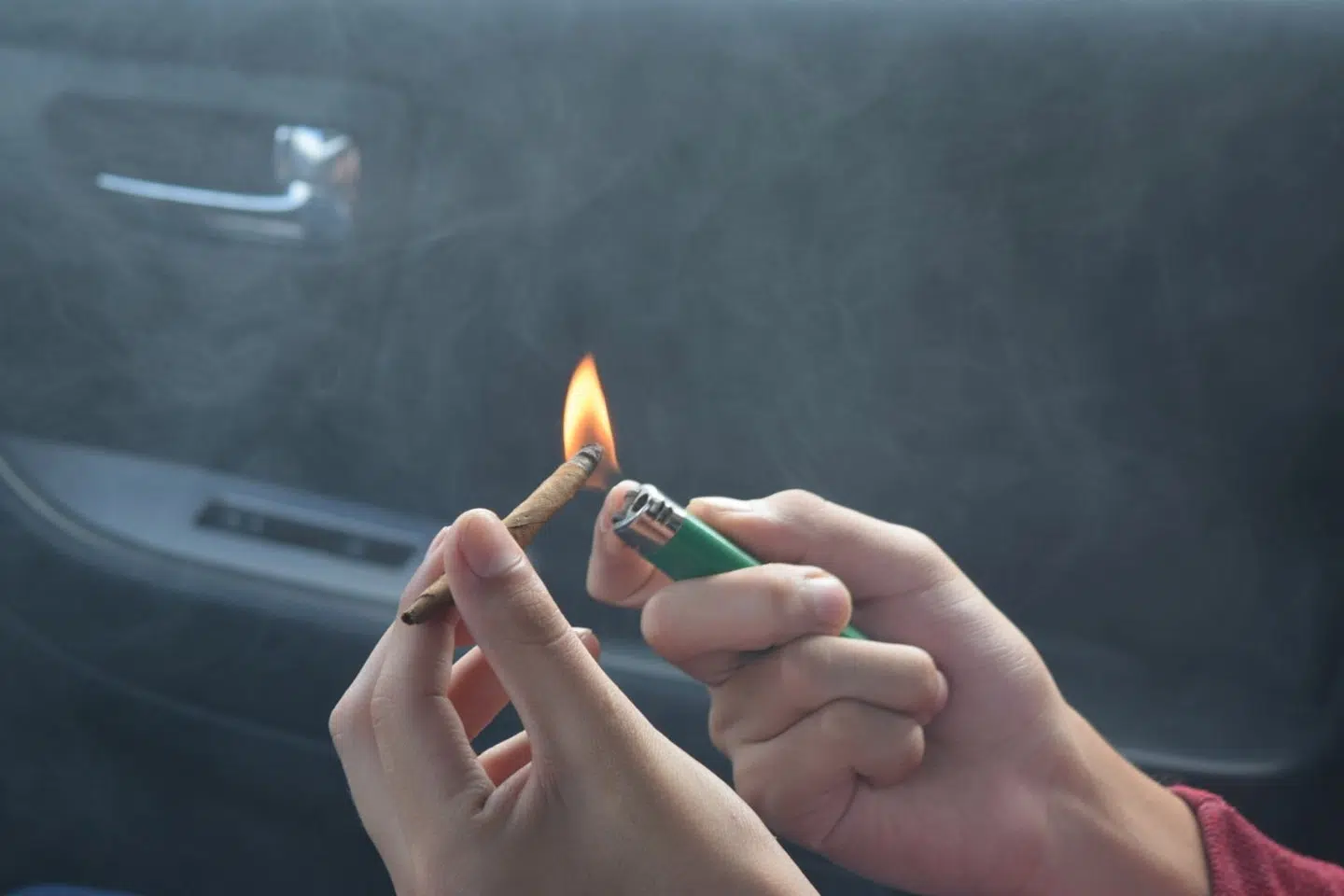
Florida Appeals Court Rules the Smell of Marijuana is No Longer Considered Probable Cause in Florida
On October 2, 2025 a Florida appeals court ruled that the smell of marijuana alone is no longer enough to establish probable cause for a search, reasoning that the odor is indistinguishable from legal substances like hemp and medical marijuana. As a result, law enforcement must now rely on the odor combined with other evidence under a “totality of the circumstances” to justify a warrantless search.
About Probable Cause and Drug Charges in Florida
In Florida, the “plain smell doctrine” allows police officers to perform a probable cause search of a suspect or their vehicle when they detect the odor of an illegal drug. For decades, the “plain smell doctrine” has applied to the odor of marijauna (cannabis).
But that’s begun to change in recent years. Amid the state of Florida’s legalization of hemp and medical marijuana, courts have been increasingly skeptical about continuing to apply the plain smell doctrine to marijuana – as its odor could have a legal explanation.
Now, a major court that affirmed the plain smell doctrine as applied to marijuana in 2021 has reversed itself – finding the odor of marijuana is no longer probable cause of criminal activity. This blog will discuss the 2nd District Court of Appeal’s ruling in Darrielle Ortiz Williams v. State, — So.3d —- (Fla. 2nd DCA, October 1, 2025) and its impact on the plain smell doctrine.
Florida 2nd District Court of Appeal (2nd DCA) covers the greater Tampa area. Four years ago, the court handed down a ruling in Owens v. State, 317 So. 3d 1218 (Fla. 2d. DCA 2021). Owens held that marijuana continues to serve as probable cause sufficient to justify a search (e.g. of a vehicle).
The court reasoned that marijuana was still illegal in Florida for recreational use, and thus, its odor remained probable cause of criminal activity. Under the Pardo rule, this bound all Florida trial courts until 2024 – when Florida’s 5th DCA contradicted Owens in Baxter v. State, 389 So.3d 803 (Fla 5th DCA 2024).
The 5th DCA reasoned that the plain smell doctrine could no longer be applied to the odor of marijuana, as the doctrine requires that the nature of the smell be clearly indicative of criminal activity. Because hemp and medical marijuana (same odor as recreational marijuana) had been legalized, the court held the “plain smell doctrine” no longer applied to marijuana.
Until October 1, 2025, trial courts throughout the state (outside of the 2nd and 5th DCAs, which were bound by Owens and Baxter, respectively) could use either of these decisions as guidance. But Williams v. State significantly changes the legal landscape, as the 2nd DCA overruled its prior decision in Owens v. State.
In Williams, the defendant was a passenger in a car when it was stopped for a traffic violation. Officers walked towards the vehicle and smelled cannabis (marijuana) as they approached, but disagreed on whether the odor was “fresh” or “burnt.” The odor grew much stronger as they approached the car, and as the driver rolled down the window.
Based only on smelling what they believed to be illicit recreational marijuana, officers ordered Williams (a passenger) and the driver out of the car. The officers discovered additional drugs, and Williams was arrested. As Williams was on probation at the time, his probation was revoked.
Before his violation of probation (VOP) hearing, Williams moved to suppress the drugs (prevent them from being used as evidence at the hearing), arguing that they were “fruit of the poisonous tree.” Williams asserted that due to evolving laws regarding marijuana (e.g. legalization of hemp and medical marijuana), “plain smell alone” could not serve as probable cause to search the vehicle.
The trial court, bound by Owens, ruled against Williams. The drugs were admitted as evidence at the hearing, and Williams was found to have violated his probation. Williams appealed to the 2nd DCA, reiterating his argument that “plain smell” of marijuana was not probable cause (in spite of Owens).
Confronted again with this argument, the 2nd DCA reversed itself – overruling Owens and holding that the plain smell of marijuana is no longer probable cause. The court wrote:
“In light of significant legislative amendments to the definition and regulation of cannabis, its mere odor can no longer establish that it is ‘immediately apparent’ that the substance is contraband.”
“Accordingly, the plain smell doctrine can no longer establish probable cause based solely on the odor of cannabis. Rather, we now align the Fourth Amendment analysis for cannabis with the test that applies to other suspected contraband, such that its odor is a valid factor to be considered along with all others under the totality of the circumstances.”
Notably, the court did not hold that the odor of marijuana cannot be considered at all in officers developing probable cause. But law enforcement cannot find probable cause based on the plain smell of the substance alone – there must be additional indicators of criminal activity.
Despite this, the 2nd DCA ruled that due to officers properly relying on Owens at the time (which was binding precedent in the Tampa area), the evidence was properly admitted against Williams under the “good faith exception” to the exclusionary rule. Put simply, the court said Williams himself won’t be released from custody – the decision only applies going forward.
The 2nd DCA also certified the following question to the Florida Supreme Court:
“DOES THE PLAIN SMELL DOCTRINE CONTINUE TO APPLY TO ESTABLISH PROBABLE CAUSE BASED ONLY ON THE ODOR OF CANNABIS?”
If the Florida Supreme Court chooses to resolve this matter, it will be intriguing to see how they rule. Though the Court may affirm Williams and Baxter in striking down the plain smell doctrine as applied to marijuana, this could come out the other way. Only time will tell.
But what is the current legal landscape in the aftermath of Williams? The answer is that for now (due to the Pardo rule), it is unlikely that the odor of marijuana alone can support probable cause anywhere in Florida.
Florida has six District Courts of Appeal, four of which (1st DCA, 3rd DCA, 4th DCA, 6th DCA) have indicated some skepticism towards “plain smell alone” as probable cause. But these DCAs have still not squarely ruled on the issue in the wake of hemp and medical marijuana legalization.
The only two DCAs that have issued firm rulings on the plain smell doctrine since these legislative changes occurred are the 2nd and 5th DCAs. Before October 1, 2025, these were in conflict with one another.
Now that the 2nd DCA has overruled Owens, there is no District Court of Appeal that officially recognizes the odor of marijuana alone as probable cause.
The odor of marijuana is likely to now be seen as one of many factors in establishing probable cause of criminal activity (others may include suspicious activity by a suspect indicating that they are under the influence, presence in a high crime area, etc.).
In sum, the 2nd District Court of Appeal’s ruling in Darrielle Ortiz Williams v. State (October 1, 2025) is a major development in Florida law for the following three reasons:
- The 2nd DCA explicitly found that plain smell of marijuana is not probable cause
- The 2nd DCA overruled its previous decision from just 4 years earlier that held otherwise (Owens v. State, 317 So. 3d 1218 (Fla. 2d. DCA 2021))
- The 2nd DCA was the only District Court of Appeal left in Florida that explicitly held “plain smell” was still probable cause (post-hemp and medical marijuana legalization) before reversing itself in Williams
So, is the plain smell doctrine dead in Florida? For now, it seems to be. However, observers should keep an eye out for other DCAs and even the Florida Supreme Court addressing this issue in the near future.
In the event someone is charged with a marijuana-related offense or was searched based on “plain smell”, it is vital to seek out aggressive and experienced legal counsel as soon as possible. The attorneys at Pumphrey Law have decades of experience fighting to win for clients across Florida who have been charged with marijuana-related crimes.
Marijuana Defense Lawyer in Tallahassee, FL
Don Pumphrey, Jr. and the attorneys at Pumphrey Law have decades of experience fighting on behalf of clients and winning. Call Pumphrey Law now at (850) 681-7777 to learn more about what we can do for you. Our lawyers will be happy to provide you with a free consultation.
Don Pumphrey, Jr.

Attorney Don Pumphrey, Jr. is a former prosecutor, former law enforcement officer, and a successful and experienced criminal defense attorney. Don has achieved over 100 not guilty verdicts at trial and over 2,000 dismissals.