- DUI
- Criminal Defense
- Florida DUI
- Traffic Offenses
- Drug Charges
- Marijuana Charges
- Violent Crimes
- Domestic Violence
- Temporary Injunctions
- Weapons Charges
- Theft Crimes
- White Collar Crime
- Juvenile Offenses
- Sex Crimes
- Violation of Probation
- Early Termination of Probation
- Seal or Expunge Criminal Record
- Criminal Appeals
- US Federal Offenses
- Misdemeanor Charges
- Felony Charges
- Co-Defendant Cases
- College Student Defense
- College Student Hearings
- FSU Students
- FAMU Students
- Florida Panhandle Arrests
- Extradition to Florida
- Bench Warrants / Warrants
- Emergency Bond Hearings
- Gambling Charges
- Drone Arrests
- Marsy’s Law
- UAS Infractions
- Introduction of Contraband
- Lying to Police
- Locations
- Case Results
- Our Firm
- Media
- Resources
- Blog
- Contact Us
Miranda Rights for English vs. Spanish Speakers: Different Under Florida Law?
October 30, 2025 Don Pumphrey, Jr. Criminal Defense Social Share
A major Florida court decision reveals a potential inconsistency regarding what the content of a Miranda warning must be – depending on the language a suspect speaks.
In Florida and throughout the U.S., someone must be notified of their Miranda rights before they are subject to custodial interrogation. Per the U.S. Supreme Court’s landmark decision, Miranda v. Arizona, 384 U.S. 436 (1966), these include:
- The right to remain silent
- The fact that anything you say can and will be used against you in a court of law
- The right to an attorney, including to have one present during police questioning
- The fact that if you cannot afford an attorney, one will be provided for you
If someone is in custody, police must read them their rights before interrogation begins. A person is in custody if a reasonable person in their position would not feel free to end police questioning and leave. Interrogation occurs when officers engage in questioning (or its functional equivalent) that is reasonably likely to elicit an incriminating response from a suspect.
For more on when Miranda rights must be read and when they apply (custody and interrogation), click here.
If someone is read their Miranda rights, the proper next move is to BE SMART and exercise them! Do not “take your chances” and speak to the police without a lawyer present – it will hurt you more than it will help. Invoke your rights by telling law enforcement that you’re remaining silent and requesting an attorney. Say all of this out loud, then be quiet.
In the event that a suspect does waive their rights and agrees to a post-arrest interview without an attorney present, they must have done so knowingly, intelligently, and voluntarily. For someone to validly waive their Miranda rights, they must understand both the nature of their rights and the potential consequences of not invoking them, but freely decide to do so anyway.
This means law enforcement cannot use threats, coercion, or trickery to obtain a Miranda waiver in hopes that a suspect will confess. If the police do so, the suspect’s post-arrest statements are inadmissible in court (e.g. at trial). This is the case even if someone confessed to committing the crime.
A key issue in determining whether a Miranda waiver was valid (knowing, intelligent, voluntary) is whether officers adequately apprised someone of their rights. If officers do not notify someone of one or more rights, or omit key details (e.g. when the right to an attorney kicks in), a suspect’s Miranda waiver is considered invalid. Their statements cannot be used against them in court.
If someone speaks a language other than English, such as Spanish, they are entitled to have their Miranda rights read in their native language. Benitez v. State, 57 So.3d 939 (Fla. 3d DCA 2011). When this does not occur (e.g. a suspect is read Miranda in English and only speaks Spanish), their confession is considered involuntary – as they did not understand their rights.
But do courts require that Miranda warnings in Spanish (or other languages) provide all the same information to a defendant as if they were read in English? Though the answer (in theory) is yes, an intriguing Florida court case from the 4th District Court of Appeal raises some doubt. Let’s break it down.
KEY CASE: Canete v. State, 921 So. 2d 687 (Fla. 4th DCA 2006)
In Canete, the defendant (Canete) was arrested and charged with two counts of third-degree murder and one count of aggravated assault. He was convicted after his post-Miranda statements were used against him at trial (played on tape for the jury).
When he was sat down in the police station, a Spanish-speaking officer began to read Canete his Miranda rights. The officer told Canete the following in Spanish:
- “You have the right to remain silent.”
- “When you talk to me, anything you answer may be presented as evidence in a court against you.”
- “If you cannot employ an attorney .. one will be appointed before we … ask you any questions.”
- “You have the right to speak with an attorney, have an attorney present here before we make any questions.”
- “If you decide to answer the questions now, without an attorney present, you still have the right not to answer my questions at any time until you can speak with an attorney.”
On appeal, Canete argued that the Miranda warnings he received were legally insufficient, which made his confession involuntary and required a new trial (as his incriminating statements should not have been heard by the jury).
Canete observed that he was never told he had the right to a lawyer during questioning – only before questioning. Canete argued that if he knew at the time he could have had a lawyer present during the actual interrogation (rather than merely consulting one beforehand), he may have asked for one.
But Florida’s 4th District Court of Appeal disagreed, affirming Canete’s convictions. The court wrote that Miranda rights did not need to be read off a script, and the warning Canete received adequately apprised him of his rights. The 4th DCA provided the following background:
“In California v. Prysock… the Supreme Court recognized that ‘the ‘rigidity’ of Miranda [does not] exten[d] to the precise formulation of the warnings given a criminal defendant,” and ‘that no talismanic incantation [is] required to satisfy its strictures.’ A verbatim wording of Miranda is not required, and Miranda warnings need not be given in the exact form described in Miranda. Roberts, 874 So.2d at 1227. Rather, the question is whether the warning adequately fulfills Miranda’s substantive requirements.”
The 4th DCA majority attempted to distinguish Canete’s case from Roberts v. State, 874 So.2d 1225 (Fla. 4th DCA 2004), in which the court ruled that a very similar warning to the one that Canete received did not satisfy requirements. The court wrote:
“In Roberts, we recognized that the warning given in that case, as read by sheriff’s deputies, from a Miranda rights warning card, was misleading and inadequate to inform Roberts of his right to counsel ‘during’ interrogation.”
“Although the officers in this case did not use the word ‘during’ or ‘while’ in warning Canete, they did tell him ‘if you decide to answer the questions now without an attorney present you still have the right not to answer my questions at any time until you can speak with an attorney.’ They told him that he had the right to the presence of an attorney before they could ask him any questions, and they further asked Canete if he was willing to answer questions without an attorney present. In totality, this was sufficient.”
But the dissenters in Canete strongly disagreed with the majority’s analysis. The dissent, penned by Judge Stevenson, reasoned that the language of the warning Canete received was effectively indistinguishable from the one read to Roberts:
“Because the Miranda warnings Canete received were inadequate to inform him of his constitutional right to have an attorney present during questioning, and the admission at trial of the statements obtained was not harmless, I would reverse and remand for a new trial.”
“When closely analyzed with respect to whether the right to have an attorney present during questioning was conveyed, the warnings given in the instant case cannot be distinguished in any meaningful way from those given in Roberts.”
Judge Stevenson wrote that even though Miranda does not require that any particular set of words be uttered (“talismanic incantation”), a warning that does not communicate to a suspect the right to have counsel present during police questioning is legally inadequate. Accordingly, Judge Stevenson concluded:
“When closely analyzed with respect to whether the right to have an attorney present during questioning was conveyed, the warnings given in the instant case cannot be distinguished in any meaningful way from those given in Roberts. Since it cannot be concluded that this error was harmless beyond a reasonable doubt, Canete’s conviction and sentence should be reversed and this cause remanded for a new trial.”
This raises a key question. Was Canete’s conviction not reversed solely because the Miranda warning he received was in Spanish? If he’d received an identical warning in English, would the 4th DCA have still held that he could’ve “inferred” the right to have an attorney present during interrogation?
There is no way to definitively answer this question. But the dissent raises the important point that there was really no difference between the Miranda reading heard by Roberts (English) and Canete (Spanish). Despite that, Roberts’s conviction was reversed because he was insufficiently informed of his Miranda rights – while Canete’s was affirmed.
So, are Miranda rights for English speakers and Spanish (or other foreign language speakers) different under Florida law? The answer is – not officially. However, courts seem to be likely to give more “leeway” to officers who read Miranda in foreign languages (e.g. Spanish) when evaluating whether a defendant could have fully understood their rights before waiving them.
As Canete demonstrates, an inadequate Miranda warning may be harder to prove if it was given in a language other than English. But this does NOT mean that all hope is lost.
This is because the 4th DCA did not intentionally create a more lax legal standard for Spanish Miranda warnings compared to English – even though it may have done so accidentally. An experienced and aggressive Florida criminal defense attorney can point this out in a motion to suppress a defendant’s post-Miranda statements (to prevent them from being used at trial).
If someone is arrested and formally charged in Florida in a case involving a Miranda waiver that was not knowing, intelligent, or voluntary, it is critical to find experienced and trusted legal representation as soon as possible. This decision could make the difference in whether or not someone faces a lengthy prison term and hefty fines.
Criminal Defense Attorney in Tallahassee, FL
Don Pumphrey, Jr. is a Former Prosecutor, Former State Police Officer, Lifetime Member of the Florida Association of Criminal Defense Lawyers; for over 25 years as a private defense attorney who is Trusted, Experienced, Aggressive in Criminal Defense as a Trial Attorney, Criminal Lawyer, Criminal Defense Lawyer for the accused in Florida State Courts located in Tallahassee, Florida but handling cases throughout the State of Florida.
Don Pumphrey, Jr. and the Tallahassee criminal defense lawyers at Pumphrey Law have decades of experience fighting drug charges on behalf of clients and winning. Call Pumphrey Law now at (850) 681-7777 to learn more about what we can do for you. Our lawyers will be happy to provide you with a free consultation.
Don Pumphrey, Jr.
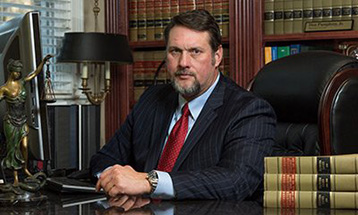
Attorney Don Pumphrey, Jr. is a former prosecutor, former law enforcement officer, and a successful and experienced criminal defense attorney. Don has achieved over 100 not guilty verdicts at trial and over 2,000 dismissals.