- DUI
- Criminal Defense
- Florida DUI
- Traffic Offenses
- Drug Charges
- Marijuana Charges
- Violent Crimes
- Domestic Violence
- Temporary Injunctions
- Weapons Charges
- Theft Crimes
- White Collar Crime
- Juvenile Offenses
- Sex Crimes
- Violation of Probation
- Early Termination of Probation
- Seal or Expunge Criminal Record
- Criminal Appeals
- US Federal Offenses
- Misdemeanor Charges
- Felony Charges
- Co-Defendant Cases
- College Student Defense
- College Student Hearings
- FSU Students
- FAMU Students
- Florida Panhandle Arrests
- Extradition to Florida
- Bench Warrants / Warrants
- Emergency Bond Hearings
- Gambling Charges
- Drone Arrests
- Marsy’s Law
- UAS Infractions
- Introduction of Contraband
- Lying to Police
- Locations
- Case Results
- Our Firm
- Media
- Resources
- Blog
- Contact Us
No 12-Person Jury Right For Attempted Second-Degree Murder, Major Florida Court Rules
December 4, 2025 Don Pumphrey, Jr. Criminal Defense, Violent Crimes Social Share
Florida’s 5th District Court of Appeal found a defendant convicted of attempted second-degree murder and sentenced to 30 years in prison was not entitled to have a 12-person jury decide his case.
In Florida, the vast majority of criminal cases are heard and decided by six-person juries. Florida is one of only two states that continues to rely upon juries of just half a dozen members in the vast majority of felony and misdemeanor cases. Lessard v. State, 232 So. 3d 13 (Fla. 1st DCA 2017)
The only exception to the “six-person jury” rule in Florida is if someone is charged with a capital felony – a felony for which death is a possible penalty. The constitutionality of this framework was affirmed by the U.S. Supreme Court in Williams v. Florida, 399 U.S. 78 (1970).
But since Williams, there has been increasing opposition to the idea that juries of six members are sufficient. In fact, many have argued that Williams was wrongly decided – and that the U.S. Constitution’s 6th Amendment right to a jury trial actually requires 12-person juries.
The U.S. Supreme Court firmly rejected this claim in Williams v. Florida, asserting the following in the process:
- The 6th Amendment does not specify a minimum number of jurors required in criminal jury trials
- Studies have found that six jurors can perform the “deliberative function” required for a jury to reach an informed verdict
- States should be permitted to experiment with jury sizes in the absence of a federal mandate for the sake of judicial economy (e.g. efficiency)
However, the logic of Williams was significantly undermined by a series of subsequent Court decisions that seemed to contradict the Williams majority’s “functionalist” approach to the issue:
- In Ballew v. Georgia (1978), the Court found that juries of five violated the Constitution’s jury trial right, as these were too small to effectively deliberate (e.g. would not facilitate potential dissent)
- In Ramos v. Louisiana (2020), the Court held that despite silence on the issue in the 6th Amendment itself, verdicts in all criminal trials must be unanimous (e.g. every juror must agree with the verdict)
According to current U.S. Supreme Court Justice Neil Gorsuch, these two rulings exposed flaws in Williams. Khorrami v. Arizona, 143 S. Ct. 22, 23-27 (2022) (Gorsuch, J., dissenting). Justice Gorsuch’s 2022 dissent in Khorrami argued that Williams was wrongly decided on the following grounds:
- The “functionalist” (e.g. efficiency-based) approach of the Williams majority has since been repudiated by Ballew and Ramos
- English common law (such as the writings of Sir William Blackstone) which laid the foundation for the 6th Amendment conceptualized the criminal jury trial right as a requirement that a defendant be judged by a “unanimous suffrage of twelve” peers
- Studies since Williams have found that juries of 12 improve the quality of deliberations recall information better, and allow more room for dissenting voices
The 12-person jury debate continues to rage in Florida, but as of now, the law remains that a criminal defendant is only entitled to six jurors. However, this has not stopped defendants in serious felony cases from filing motions (or appeals of convictions) on the grounds that they have the constitutional right to a twelve-person jury.
However, Florida’s courts have routinely rejected such claims – even when a defendant is facing (or has been sentenced to) decades behind bars. Let’s take a look at how one major Florida court (5th DCA) dealt with a defendant’s challenge to the jury verdict at his trial on the grounds that he was constitutionally entitled to a 12-person jury.
KEY CASE: Simpson v. State, 368 So.3d 513 (Fla. 5th DCA 2023)
In Simpson v. State, the defendant (Simpson) was charged with multiple counts of attempted second-degree murder. He was ultimately convicted by a jury of six and sentenced to thirty years in prison.
Note: Florida’s attempted second-degree murder statute has faced serious constitutional scrutiny, but courts have ultimately upheld it. For more on this key legal issue, click here.
On appeal, Simpson raised a variety of claims. This included an argument that because he was charged with a serious felony (attempted second-degree murder), he was constitutionally entitled to a 12-person jury – echoing Justice Gorsuch’s arguments in Khorrami v. Arizona.
But Florida’s 5th District Court of Appeal (Northeast Florida) disagreed, affirming Simpson’s convictions and refusing to order a new trial. Though the majority opinion in the case was quite brief, 5th DCA Judge Soud’s concurring opinion harshly criticized Simpson’s claim that he was entitled to a jury of 12.
Kicking off his concurrence with the claim that Williams v. Florida, 399 U.S. 78 (1970)’s viability only really been questioned after Justice Gorsuch’s Khorrami dissent, Judge Soud wrote:
“Florida’s use of six jurors does not violate the right to trial by jury guaranteed by the Sixth Amendment. … This has been the settled conclusion of binding legal precedent for fifty-three years. However, this old issue has found new energy in light of Justice Gorsuch’s withering rebuke of Williams in his recent dissenting opinion in Khorrami v. Arizona, ––– U.S. ––––, 143 S. Ct. 22, 214 L.Ed.2d 224 (2022).”
Judge Soud argued that because the text of the 6th Amendment does not require a 12-person jury to be impaneled, there is no such right:
“At the outset, it is noteworthy that the text of the Sixth Amendment requires ‘in all criminal prosecutions” a trial that is (1) speedy, (2) public, (3) before an impartial jury, and (4) said jury being of the State and district where the crime was committed. Thus, the text provides the only constitutionally prescribed requirements for a jury to decide a criminal trial—that is, the jury be impartial and from the State and district where the crime was committed. The text of the Sixth Amendment provides no other express requirement—including no requirement as to the exact number of jurors. Yet, the question is raised: what number of jurors is required to constitute a jury guaranteed by the Sixth Amendment?”
Addressing Justice Gorsuch’s (and Simpson’s) contention that English common law (such as the writings of Blackstone) should guide courts in finding a 12-person jury right in the Constitution, Judge Sould wrote:
“When interpreting the United States Constitution, a proper determination of the original public meaning of the Sixth Amendment is not necessarily the product of an exercise that begins and ends with references to the common law developed by judges in England over the centuries. … Viewed through this textual lens, Justice Gorsuch’s insistence that ‘the right to a trial by jury for serious criminal offenses meant a trial before twelve members of the community—nothing less’ is belied by the text of the Sixth Amendment chosen by the Founders.”
Judge Soud echoed 1st District Court of Appeal Judge Bradford Thomas, raising concerns that the reversal of Williams would “open the floodgates” to potentially thousands of convictions being overturned. He concluded:
“Overturning Williams—more than half a century after it was decided—is not justified by the text of the Sixth Amendment. To do so would result in ‘judicial upheaval’—and those who would suffer would be the citizens of the sovereign State of Florida and countless victims of crimes. Timely access to Florida courts would be hindered for those with cases presently pending or otherwise coming before our courts. Further, as to cases that have been concluded, those victims and their families would suffer anew from their re-opened wounds and be robbed of a vital aspect of the peace, incomplete as it is, that courts of law are able to offer them—finality.”
Echoing Judge Soud’s criticism of Simpson’s argument on the issue, 5th DCA Judge Pratt began his concurring opinion by also concluding Simpson had no 12-person jury right:
“Simpson’s attacks on his six-person jury were not raised below, so we review them for fundamental error. … They are easily dispatched in any event. Williams v. Florida, 399 U.S. 78, 90 S.Ct. 1893, 26 L.Ed.2d 446 (1970), upheld Florida’s six-person jury, and it flatly forecloses Simpson’s Sixth Amendment claim. Simpson nonetheless directs our attention to what Judge Soud aptly describes as a ‘crescendoing critique of Williams,’ and Simpson asserts that Ramos v. Louisiana, ––– U.S. ––––, 140 S. Ct. 1390, 206 L.Ed.2d 583 (2020), casts a shadow over Williams’s continued vitality.”
“As Judge Soud’s scholarly opinion explains, there is ample reason to doubt the predictions of Williams’s detractors. But more to the point, Williams indisputably remains good law, and lower courts—including the trial courts within our district—must not allow the scattered critiques of Williams to distract them from their duty to faithfully follow it.”
Proponents of a 12-person jury (such as Justice Gorsuch) would likely raise various responses to Judge Soud’s argument. These may include:
- Even though it is true that the 6th Amendment does not specify a set number of jurors, the Supreme Court has already said that 6 is the bare minimum for criminal jury trials (5 or fewer is unconstitutional under Ballew)
- Recent U.S. Supreme Court decisions (like Ramos v. Louisiana (2020)) used common law to provide a more informed reading of the 6th Amendment jury trial right even where the text was silent, as it guided the Founders
- Judge Soud’s “opening the floodgates” argument has been used in the past, including opposition to the U.S. Supreme Court’s Gideon v. Wainwright decision (giving defendants the right to an attorney) – but such arguments have consistently been rejected if a constitutional right is being actively infringed
In sum, Simpson v. State, 368 So.3d 513 (Fla. 5th DCA 2023) is a significant development in Florida’s corpus of case law surrounding 12-person juries. Concurring judges on Florida’s 5th District Court of Appeal held that Simpson did not have the right to a twelve-person jury at his attempted second-degree murder trial. This was because, according to the judges:
- Florida law (and Williams v. Florida, 399 U.S. 78 (1970)) only requires 12-person juries in capital cases (and this was not one)
- The Constitution does not provide a minimum number of jurors to try a criminal case
- Since the Founders omitted a 12-person jury requirement from the 6th Amendment, this does not exist
- Striking down Williams would “open the floodgates” to countless post-conviction challenges raised by Florida defendants on the grounds that they did not receive a 12-person jury
Many of these arguments have been strenuously objected to by advocates of 12-person juries (and defendants like Simpson). For more on the twelve-person jury debate in Florida, click here.
If someone is arrested and formally charged in Florida and concerned about jury selection in their case, it is critical to find experienced and trusted legal representation as soon as possible. This decision could make the difference in whether or not someone faces a lengthy prison term and hefty fines.
Criminal Defense Attorney in Tallahassee, FL
Don Pumphrey, Jr. is a Former Prosecutor, Former State Police Officer, Lifetime Member of the Florida Association of Criminal Defense Lawyers; for over 25 years as a private defense attorney who is Trusted, Experienced, Aggressive in Criminal Defense as a Trial Attorney, Criminal Lawyer, Criminal Defense Lawyer for the accused in Florida State Courts located in Tallahassee, Florida but handling cases throughout the State of Florida.
Don Pumphrey, Jr. and the Tallahassee criminal defense lawyers at Pumphrey Law have decades of experience fighting drug charges on behalf of clients and winning. Call Pumphrey Law now at (850) 681-7777 to learn more about what we can do for you. Our lawyers will be happy to provide you with a free consultation.
Don Pumphrey, Jr.
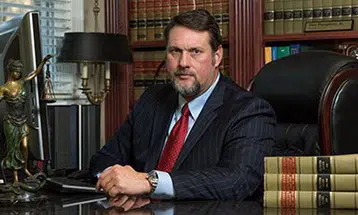
Attorney Don Pumphrey, Jr. is a former prosecutor, former law enforcement officer, and a successful and experienced criminal defense attorney. Don has achieved over 100 not guilty verdicts at trial and over 2,000 dismissals.