- DUI
- Criminal Defense
- Florida DUI
- Traffic Offenses
- Drug Charges
- Marijuana Charges
- Violent Crimes
- Domestic Violence
- Temporary Injunctions
- Weapons Charges
- Theft Crimes
- White Collar Crime
- Juvenile Offenses
- Sex Crimes
- Violation of Probation
- Early Termination of Probation
- Seal or Expunge Criminal Record
- Criminal Appeals
- US Federal Offenses
- Misdemeanor Charges
- Felony Charges
- Co-Defendant Cases
- College Student Defense
- College Student Hearings
- FSU Students
- FAMU Students
- Florida Panhandle Arrests
- Extradition to Florida
- Bench Warrants / Warrants
- Emergency Bond Hearings
- Gambling Charges
- Drone Arrests
- Marsy’s Law
- UAS Infractions
- Introduction of Contraband
- Lying to Police
- Locations
- Case Results
- Our Firm
- Media
- Resources
- Blog
- Contact Us
North Florida’s Highest Court Affirms Juvenile Murder Conviction Despite Miranda Rights Challenge
November 11, 2025 Don Pumphrey, Jr. Criminal Defense, Violent Crimes Social Share
Florida’s 1st District Court of Appeal affirmed a guilty verdict against a juvenile for murder, despite concerns that his Miranda rights were violated during interrogation.
In Florida, someone must be advised of their Miranda rights before being subject to custodial interrogation. Per the U.S. Supreme Court’s landmark decision, Miranda v. Arizona, 384 U.S. 436 (1966), these include:
- The right to remain silent
- The fact that anything they say can and will be used against them in a court of law
- The right to an attorney, including to have one present during questioning
- The fact that if they cannot afford an attorney, one will be provided for them
Custody for Miranda purposes occurs when a reasonable person in the suspect’s position would not feel free to terminate questioning and leave. Interrogation occurs when law enforcement officers subject a suspect to questioning (or its functional equivalent) that is reasonably likely to elicit an incriminating response from a suspect. Rhode Island v. Innis, 446 U.S. 291 (1980)
For more on what is considered custody for purposes of requiring a Miranda reading in Florida, click here. For more on interrogation, click here.
If someone is read their Miranda rights, the proper next move is to exercise them! Tell the police you will be remaining silent and ask for an attorney, then say nothing else. If you do not invoke your rights “out loud,” law enforcement can use your silence as permission to keep questioning you until you “break.” Berghuis v. Thompkins, 560 U.S. 370 (2010)
Someone may nevertheless decide to waive their Miranda rights (not remain silent/ask for an attorney) and agree to speak with officers. If a “Miranda waiver” occurs, this must be knowing, intelligent, and voluntary. The person waiving their rights must both understand the nature of their rights and the potential consequences of choosing not to exercise them (Miranda).
If someone’s Miranda waiver was not knowing, intelligent, and voluntary, their statements are considered inadmissible in court (at trial). When evaluating if someone understood their rights and the potential consequences of not invoking them before a waiver, courts consider:
- Age, education, intelligence and/or background of the suspect
- Experience/lack thereof in the criminal justice system
- Whether coercion, trickery, cajoling or threats were used to obtain a waiver
- Whether officers “minimized” the significance of a suspect’s Miranda rights
Per the Florida Supreme Court’s ruling in Ramirez v. State, 739 So. 2d 568 (Fla. 1999), a similar (but slightly different) list of factors to determine the validity of a Miranda waiver if the suspect is a juvenile. These include:
- How the Miranda warnings were given (coaxing, trickery, etc.)
- Juvenile’s characteristics (age, education, intelligence, background, mental condition)
- Whether the juvenile’s parents were notified/whether they were given a chance to contact a parent or guardian
- Location of the questioning (e.g. police station makes this more coercive)
- Whether law enforcement obtained a written waiver (signed form) or simply an oral agreement to speak without counsel present
When someone invokes their right to an attorney and indicates to officers their wish to remain silent, officers are expected to terminate questioning and leave. Edwards v. Arizona, 451 U.S. 477 (1981). But sometimes, a suspect may offer a “conditional waiver” – such as:
- “I’ll answer some questions, but not all of them…”
- “Depends on the questions you ask…”
- “I’ll only answer if…”
In cases where a suspect seems confused about their Miranda rights or “equivocally” invokes them, law enforcement generally has a duty to clarify the suspect’s intentions/their understanding of a Miranda warning before initiating interrogation. Almeida v. State, 737 So. 2d 520 (Fla. 1999)
Sometimes, a defendant will file a pretrial motion to suppress their post-Miranda statements to law enforcement (e.g. confession) on the grounds that their Miranda rights were violated. If this is granted, the statements become unusable at trial – which may significantly improve the odds of a “not guilty” verdict.
Occasionally, a pretrial Miranda suppression motion will be denied – leading to someone’s being used against them in court. This is a frequent appeal issue, as defendants convicted of a crime are likely to argue that the trial judge erred in allowing their incriminating statements to be heard by a jury.
One such case came before Tallahassee and North Florida’s highest court in 2009. Let’s take a look at how Florida’s 1st District Court of Appeal ruled in Serrano v. State, 15 So. 3d 629 (Fla. 1st DCA 2009) and its impact on what is considered a valid “Miranda waiver” in Florida.
KEY CASE: Serrano v. State, 15 So. 3d 629 (Fla. 1st DCA 2009)
In Serrano, the defendant (Serrano) was accused of conspiring to rob and murder a victim with four of his high school classmates. Serrano was convicted on all counts and sentenced to life in prison.
On appeal, Serrano argued that his statements to law enforcement regarding his involvement in the murder had been obtained in violation of his Miranda rights. Upon being taken into custody, Serrano was read his rights by an officer, who then told Serrano that law enforcement wanted to get “his side” of the story (“What we need to do, we need to get your side of it.”).
Serrano agreed to speak with the officers (“I agree to tell you my side right now”), and was then asked a clarifying question by one officer (“You’re willing to sit down with these two gentlemen and tell them your side?”). Serrano stated he would speak but not answer any questions without a lawyer (“I’ll tell them my side but not answer the questions without my lawyer.”).
The officer (Officer Schultz) then asked a series of biographical questions of Serrano, attempting to gather basic identifying information from him. The following exchange then took place:
Officer Schultz: “Okay. So my understanding is, make it clear, is that you wanted to make a statement. You wanted to tell your side of the story but you’re not willing to answer my questions; is that right?”
Serrano: (Inaudible)
Officer Schultz: “Okay. Tell me whatever you want to tell me.”
Serrano then told Officer Schultz that he had been asked to participate in the robbery of the victim but had said “no” and gone home. The following exchange occurred when Serrano concluded:
Officer Schultz: “Okay. So again, you don’t want me to ask no questions, right? That’s your official—you don’t want me asking no clarification questions. You just want to make your statement, right?”
Serrano: “Well, go ahead, you can ask some questions.”
Serrano proceeded to answer all of Officer Schultz’s questions, resulting in him making a series of incriminating statements that were used against him at his murder trial.
Serrano appealed to the 1st DCA, arguing that his incriminating statements were impermissibly used against him because his Miranda rights were violated. Serrano asserted that after he told Officer Schultz for the first time that he would not answer any questions without a lawyer, the subsequent “clarification” constituted further interrogation designed to get him to change course.
However, the 1st DCA disagreed and ruled against Serrano, affirming his convictions for murder and robbery. Citing case law from both the Florida and U.S. Supreme Courts, the 1st DCA held that Officer Schultz’s clarifying questions were “harmless” and not interrogative in nature. The 1st DCA wrote:
“Owen prohibits further interrogation after an unequivocal assertion of the right to counsel… Nothing in the case law, however, necessarily prevents police officers from asking harmless questions to clarify a suspect’s assertion of the right to counsel, even if a reviewing court determines, in hindsight, that the suspect unequivocally requested an attorney. Miranda applies, for Fifth Amendment purposes, only to questions designed to elicit incriminating testimonial responses: questions ‘the police should know [are] reasonably likely to evoke an incriminating response from a suspect.’”
In essence, the 1st DCA ruled that the “clarification” Officer Schultz sought as to Serrano’s intent was not interrogation – as it was not designed (or “reasonably likely”) to evoke an incriminating response from Serrano. The 1st DCA further reasoned:
“[W]e conclude that appellant’s Miranda rights were not violated and that his eventual confession was admissible. After appellant made an exculpatory statement, Detective Schultz said, ‘So again, you don’t want me to ask no questions, right? That’s your official—you don’t want me asking no clarification questions. You just want to make your statement, right?’ Until that point, appellant’s desire not to answer questions without a lawyer had been clear and unambiguous.
“Had the interrogation proceeded, appellant’s testimonial responses would have been inadmissible. … Schultz’s question, however, did not fall under the ambit of Miranda; he merely asked appellant to confirm he would not undergo interrogation, and appellant’s response—‘Well, go ahead, you can ask some questions’—was non-testimonial. We find nothing in the case law to prohibit such a question under these circumstances, nor does the record suggest that Schultz’s follow-up question ‘badgered’ appellant into confessing, as appellant argues.”
Because there was no “sinister intention” on the part of Officer Schultz in attempting to figure out how Serrano wanted the interrogation to proceed (or if he wanted it to proceed at all), the 1st DCA ruled Serrano’s waiver was knowing, intelligent, and voluntary. Applying Ramirez, the 1st DCA found no issues with Serrano’s ability to understand and waive his rights.
Notably, Judge Browning dissented in the case, arguing that the 1st DCA should have found when applying the Ramirez factors that Serrano’s waiver was not knowing, intelligent, and voluntary. Judge Browning noted that officers made no attempt to contact his parents, which violated Florida law:
“First, and of overarching importance, the state blatantly failed to comply with section 985.207(2), Florida Statutes (2005) … The record reveals no attempt by the Sheriff’s Department to contact Appellant’s parents when he was taken into custody, or at anytime thereafter. … In my view, this factor alone compels reversal, but even assuming arguendo that it does not, I find other circumstances that augment that failure and, under the ‘totality of the circumstances’ test certainly compel reversal of Appellant’s conviction.”
Judge Browning then addressed Serrano’s declaration at the start of interrogation that he would not be answering questions without an attorney. Judge Browning argued that because this was an “unequivocal” assertion of the right to counsel, interrogation should have immediately ceased:
“That next deficiency occurred when Appellant unequivocally asserted his right to counsel by stating he would ‘not answer questions without my lawyer.’ At that point in time, the deputies should have ceased questioning Appellant until a lawyer was appointed. Spradley v. State, 442 So.2d 1039, 1042 (Fla. 2nd DCA 1983). … This exchange vividly reveals what Sgt. Tummond knew before Appellant made his statement adverse to his interest. Accordingly, Sgt. Tummond and the other deputies present should have stopped and provided Appellant with counsel right then and there. For this failure, Appellant’s statements should be inadmissible.”
However, Judge Browning’s perspective did not win out. As a result, Serrano v. State, 15 So. 3d 629 (Fla. 1st DCA 2009) is seen as one of Florida’s more prosecution-friendly cases on the key issues of when (or whether) a Miranda waiver is considered equivocal, and the admissibility of juvenile confessions despite lack of parental contact by law enforcement.
Other critics of Serrano would likely claim that the opinion defines “interrogation” too narrowly. Although Officer Schultz asked “clarifying questions” as to Serrano’s intent, these were arguably designed to get Serrano to answer other questions without a lawyer – despite his desire to have one. The ultimate goal, critics would argue, was to elicit incriminating information from Serrano.
In sum, Serrano v. State, 15 So. 3d 629 (Fla. 1st DCA 2009) is an intriguing contribution to Florida’s corpus of Miranda case law from Tallahassee and North Florida’s highest court. The 1st DCA ruled that even though Serrano said he would not answer questions without an attorney, his subsequent uncounseled confession was admissible at his murder trial.
This is because, according to the 1st DCA, Officer Schultz simply asked Serrano “clarifying questions” in an effort to ascertain his true intent. But critics (like Judge Browning) argue that this gives license to law enforcement to continue “pushing” a suspect with the intent of getting them to answer questions, even after they have requested a lawyer.
Put simply, Serrano v. State, 15 So. 3d 629 (Fla. 1st DCA 2009) shows why it is important not just to tell officers in Florida you are exercising your Miranda rights, but to not waver on this if officers do not immediately disengage!
If someone is arrested and formally charged in Florida in a case involving a Miranda waiver that was not knowing, intelligent, or voluntary, it is CRITICAL to find experienced and trusted legal representation as soon as possible. This decision could make the difference in whether someone faces a lengthy prison term and hefty fines.
Criminal Defense Attorney in Tallahassee, FL
Don Pumphrey, Jr. is a Former Prosecutor, Former State Police Officer, Lifetime Member of the Florida Association of Criminal Defense Lawyers; for over 25 years as a private defense attorney who is Trusted, Experienced, Aggressive in Criminal Defense as a Trial Attorney, Criminal Lawyer, Criminal Defense Lawyer for the accused in Florida State Courts located in Tallahassee, Florida but handling cases throughout the State of Florida.
Don Pumphrey, Jr. and the Tallahassee criminal defense lawyers at Pumphrey Law have decades of experience fighting drug charges on behalf of clients and winning. Call Pumphrey Law now at (850) 681-7777 to learn more about what we can do for you. Our lawyers will be happy to provide you with a free consultation.
Don Pumphrey, Jr.
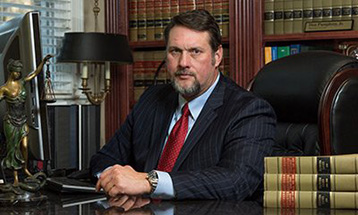
Attorney Don Pumphrey, Jr. is a former prosecutor, former law enforcement officer, and a successful and experienced criminal defense attorney. Don has achieved over 100 not guilty verdicts at trial and over 2,000 dismissals.