- DUI
- Criminal Defense
- Florida DUI
- Traffic Offenses
- Drug Charges
- Marijuana Charges
- Violent Crimes
- Domestic Violence
- Temporary Injunctions
- Weapons Charges
- Theft Crimes
- White Collar Crime
- Juvenile Offenses
- Sex Crimes
- Violation of Probation
- Early Termination of Probation
- Seal or Expunge Criminal Record
- Criminal Appeals
- US Federal Offenses
- Misdemeanor Charges
- Felony Charges
- Co-Defendant Cases
- College Student Defense
- College Student Hearings
- FSU Students
- FAMU Students
- Florida Panhandle Arrests
- Extradition to Florida
- Bench Warrants / Warrants
- Emergency Bond Hearings
- Gambling Charges
- Drone Arrests
- Marsy’s Law
- UAS Infractions
- Introduction of Contraband
- Lying to Police
- Locations
- Case Results
- Our Firm
- Media
- Resources
- Blog
- Contact Us
North Florida’s Highest Court: Jurors Can’t Use “Common Sense” to Estimate Criminal Mischief Damages
November 11, 2025 Don Pumphrey, Jr. Criminal Defense Social Share
Florida’s 1st District Court of Appeal ruled that despite evidence of significant damage to a victim’s vehicle intentionally caused by a defendant, the State had not proved the defendant guilty of felony criminal mischief.
In Florida, criminal mischief is a serious offense under Fla. Stat. 806.13. It occurs when a person willfully and maliciously damages the property of another person by any means – without that person’s consent. To prove someone guilty, the following must be shown beyond a reasonable doubt by the State:
- The defendant injured or damaged the real or personal property of the victim
- The defendant acted willfully and maliciously (intentionally and with the objective of causing damage, or with reckless disregard for the likely damage that would result), per Harris v. State, 318 So. 3d 645 (Fla. 2d. DCA 2021)
- The defendant’s actions were the direct cause of the damage
- The property belonged to someone other than the defendant
- The damage occurred against the will of the victim
Criminal mischief has a “staircase” sentencing scheme in Florida, in that the potential penalties escalate with the amount of the alleged property damage. According to Fla. Stat. 806.13:
- If the damage inflicted is less than $200, criminal mischief is considered a second-degree misdemeanor (up to 60 days in jail and a $500 fine)
- If the damage is between $200 and $1,000, criminal mischief is considered a first-degree misdemeanor punishable by up to 1 year in jail and a $1,000 fine
- If the damage is above $1,000, criminal mischief is a third-degree felony punishable by up to 5 years in prison and a $5,000 fine
- If the damage is to a historical monument or religious facilities (church, synagogue, etc.), criminal mischief is a third-degree felony (if the damage is over $200)
Sometimes, parties involved in a criminal mischief case in Florida may think they can “eyeball” the damage caused to the property. Occasionally, the State may accuse a defendant of criminal mischief involving extensive property damage and try the case without establishing an actual monetary estimate of that damage.
But is this permitted under Florida law? In other words, even when the damage “obviously” seems to total over $1,000, does the State still have to introduce evidence that felony criminal mischief (over $1,000 in damage) was committed?
The answer, according to Tallahassee and North Florida’s highest court, is yes. Without such evidence, someone may not be found guilty of felony criminal mischief as a matter of law. Let’s discuss why by breaking down the 1st District Court of Appeal’s major 1999 ruling – Clark v. State, 746 So. 2d 1237 (Fla. 1st DCA 1999).
KEY CASE: Clark v. State, 746 So. 2d 1237 (Fla. 1st DCA 1999)
In Clark, the defendant (Clark) was accused of aggravated battery and felony criminal mischief (damage over $1,000). He was convicted on both counts.
The case stemmed out of Clark allegedly removing materials from a construction site without permission. An employee (Frost) at the site called his supervisor, and both the employee and supervisor (Lynn) “trapped” Clark with their pickup trucks to prevent him from leaving with the materials.
When the supervisor got out of her truck to speak with Clark, Clark allegedly sped towards her. She jumped back into the vehicle and Clark slammed into it while she was inside, damaging it significantly. Clark also collided with Frost’s vehicle when Frost readjusted to prevent him from fleeing.
On appeal, Clark argued that neither of the charges against him could be supported as a matter of law. He asserted that the alleged “aggravated battery” upon the supervisor (Lynn) did not cause her bodily injury. He also claimed that he could not be convicted of felony criminal mischief, as the State had not shown specific evidence he caused over $1,000 in damage.
The 1st DCA returned a mixed decision. It affirmed Clark’s conviction for aggravated battery despite the fact that he did not inflict serious bodily harm upon Lynn. The court wrote:
“In the instant case, appellant twice drove his truck into Lynn’s vehicle, once spinning Lynn around and causing damage to the front and back end of Lynn’s truck. Although not injured, there is no doubt that Lynn was more than ‘jostled,’ or that a reasonable jury could find, in the language of the Restatement, that he suffered an ‘unpermitted and intentional invasion’ of the inviolability of his person.”
But the 1st DCA came out the other way on Clark’s felony criminal mischief conviction. The 1st DCA held that because the State did not introduce any evidence of the “monetary value of the damage” to Lynn’s vehicle, nor any evidence regarding repair costs, Clark could not be found guilty as a matter of law of felony criminal mischief:
“In the instant case, although the state did produce evidence as to the extent of physical damage to Lynn’s vehicle and the repair required, no evidence of the monetary value of the damage or cost of repair was introduced. We recognize that in theft cases, where the value of an item is so self-evident as to defy contradiction, specific evidence of value need not be introduced. … Here, however, we cannot agree that the cost of motor vehicle body repair is so self-evident that a jury could simply use its life experience or common sense to determine whether the $1,000 damage threshold was met.”
Put simply, the 1st DCA ruled that jurors cannot “eyeball” property damage if felony criminal mischief is alleged. The State must introduce specific evidence proving the amount of property damage that occurred was $1,000 or more beyond a reasonable doubt.
However, the court did not toss Clark’s conviction for criminal mischief altogether. Because the State did prove all the elements of the crime, just not the value of the property damage, the 1st DCA entered a conviction for second-degree misdemeanor criminal mischief (the lowest level). The 1st DCA wrote:
“Because no evidence was introduced of the cost of repair or amount of damages for which appellant was responsible, appellant could only be found to have committed what would be the offense of criminal mischief involving damage of $200 or less, second-degree misdemeanor criminal mischief.”
“Finally, because this court has reduced the felony criminal mischief conviction to second-degree misdemeanor criminal mischief, appellant’s guidelines scoresheet must be corrected. Since appellant received a sentence at the top end of the guidelines under the prior scoresheet, appellant must be resentenced under a corrected scoresheet. See Warren v. State, 673 So.2d 987 (Fla. 1st DCA 1996).”
Clark had to be resentenced on both counts because of the new, significantly less serious criminal mischief conviction (second-degree misdemeanor instead of third-degree felony). As the felony criminal mischief conviction may have led to Clark receiving a harsher sentence, the trial judge was required to resentence him.
In sum, Clark v. State, 746 So. 2d 1237 (Fla. 1st DCA 1999) is a significant contribution to Florida’s corpus of case law surrounding criminal mischief by Tallahassee and North Florida’s highest court.
Under Clark, if the State charges anything more serious than second-degree criminal mischief (e.g. first-degree misdemeanor/third-degree felony), the alleged amount of the property damage must be proven at trial beyond a reasonable doubt.
If no specific evidence on this issue is offered to jurors, they cannot use their “common sense” and infer the property damage was above a certain amount. Though someone may still be found guilty of second-degree misdemeanor criminal mischief, any more serious criminal mischief charge requires a monetary estimate of the damage supported by evidence.
In a criminal mischief case, it is vital to have the best representation possible, as this charge can carry heavy criminal and financial penalties. Don Pumphrey Jr. and the attorneys at Pumphrey Law have decades of experience fighting to win for clients across the state of Florida.
Criminal Defense Attorney in Tallahassee, FL
Don Pumphrey, Jr. is a Former Prosecutor, Former State Police Officer, Lifetime Member of the Florida Association of Criminal Defense Lawyers; for over 25 years as a private defense attorney who is Trusted, Experienced, Aggressive in Criminal Defense as a Trial Attorney, Criminal Lawyer, Criminal Defense Lawyer for the accused in Florida State Courts located in Tallahassee, Florida but handling cases throughout the State of Florida.
Don Pumphrey, Jr. and the Tallahassee criminal defense lawyers at Pumphrey Law have decades of experience fighting drug charges on behalf of clients and winning. Call Pumphrey Law now at (850) 681-7777 to learn more about what we can do for you. Our lawyers will be happy to provide you with a free consultation.
Don Pumphrey, Jr.
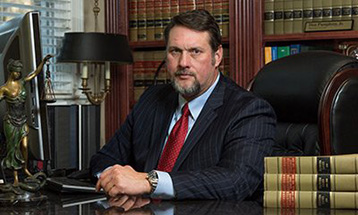
Attorney Don Pumphrey, Jr. is a former prosecutor, former law enforcement officer, and a successful and experienced criminal defense attorney. Don has achieved over 100 not guilty verdicts at trial and over 2,000 dismissals.