- DUI
- Criminal Defense
- Florida DUI
- Traffic Offenses
- Drug Charges
- Marijuana Charges
- Violent Crimes
- Domestic Violence
- Temporary Injunctions
- Weapons Charges
- Theft Crimes
- White Collar Crime
- Juvenile Offenses
- Sex Crimes
- Violation of Probation
- Early Termination of Probation
- Seal or Expunge Criminal Record
- Criminal Appeals
- US Federal Offenses
- Misdemeanor Charges
- Felony Charges
- Co-Defendant Cases
- College Student Defense
- College Student Hearings
- FSU Students
- FAMU Students
- Florida Panhandle Arrests
- Extradition to Florida
- Bench Warrants / Warrants
- Emergency Bond Hearings
- Gambling Charges
- Drone Arrests
- Marsy’s Law
- UAS Infractions
- Introduction of Contraband
- Lying to Police
- Locations
- Case Results
- Our Firm
- Media
- Resources
- Blog
- Contact Us
North FL’s Highest Court Affirms College Football Player’s Conviction, Finds No Miranda Rights Violation
April 16, 2026 Don Pumphrey, Jr. Criminal Defense Social Share
Florida’s 1st District Court of Appeal affirmed the conviction of a college football player who committed a sexual battery at Florida Agricultural & Mechanical University (FAMU), finding his Miranda rights were not violated.
CASE: Monroe v. State, 148 So.3d 850 (Fla. 1st DCA 2014)
Charge(s): Capital Sexual Battery, Lewd or Lascivious Molestation
Outcome: Convictions AFFIRMED, as the defendant was not in custody at the time he was interrogated – thus, no reading of his Miranda rights was required.
Miranda Rights in Florida
In Florida and throughout the U.S., someone must be advised of their Miranda rights before they are subject to custodial interrogation by law enforcement. These rights, per the Supreme Court’s Miranda v. Arizona, 384 U.S. 436 (1966) decision, include:
- The right to remain silent
- The fact that anything they say can and will be used against them in court
- The right to an attorney, including to have one present during police questioning
- The fact that if they cannot afford an attorney, one will be provided for them
If someone is read their Miranda rights, the smart next move is to EXERCISE them! Tell police that you will be remaining silent and request an attorney. Make sure to say this out loud – as if you fail to speak at all (e.g. just sit there silently), law enforcement has permission to continue questioning you. Berghuis v. Thompkins, 560 U.S. 370 (2010)
A major misconception about Miranda rights is that someone must be notified of their rights at the moment they are placed in handcuffs. However, this is not the case. Someone must only be read their rights after they are taken into CUSTODY by law enforcement, but before they are subject to INTERROGATION. State v. Thompson, 193 So. 3d 916 (Fla. 2d DCA 2016)
For Miranda reading purposes, custody occurs when both of the following conditions are met (Ramirez v. State, 739 So.2d 568, 573 (Fla. 1999)):
- A suspect’s freedom of movement is being restrained by law enforcement in a way that is consistent with a formal arrest (or they are formally under arrest)
- A reasonable person in the suspect’s position would not feel free to leave
Interrogation occurs when law enforcement subjects someone to questioning or its “functional equivalent” that is reasonably likely to elicit an incriminating response from them. Rhode Island v. Innis, 446 U.S. 291 (1980). For more on interrogation, click here.
In the event that someone is read their Miranda rights, they have two options (under Miranda v. Arizona, 384 U.S. 436 (1966)):
- Exercise their rights and tell law enforcement that they will be remaining silent/want an attorney (DO THIS!)
- Waive their rights and agree to speak with law enforcement, without an attorney present
If someone has already waived their Miranda rights at the start of interrogation, they can invoke them at any point during questioning. However, an invocation after a Miranda waiver must be unequivocal and unambiguous (e.g. “I think I may want a lawyer” does not require officers to terminate questioning). For more on this, click here.
When a suspect waives their Miranda rights and agrees to speak with law enforcement, this does not mean that their statements can automatically be used against them in court. This is because a suspect’s Miranda waiver must have been knowing, intelligent, and voluntary.
This means both of the following must have been true when the suspect waived their rights (e.g. chose not to invoke them and spoke with law enforcement):
- The defendant understood the nature of their rights (e.g. what they were)
- The defendant understood the potential consequences of not invoking them (e.g. the fact that any inculpatory statements could/would be used against them in court)
Examples of situations where law enforcement acts in a manner that renders a Miranda waiver (and subsequent confession) involuntary include:
- Law enforcement does not read someone their full Miranda rights (e.g. omits one or more rights when notifying a suspect of them, such as not disclosing the right to an attorney)
- Law enforcement minimizes Miranda (e.g. “This is all just a formality…”)
- Law enforcement reads someone their rights in a language that is not their own (e.g. reads a clear Spanish-speaker their rights in English)
- Law enforcement uses threats, coercion, or trickery to get someone to waive their rights – even once they have chosen to exercise them
Note: To learn more about when a Miranda rights waiver is (or is not) knowing, intelligent, and voluntary, click here.
Sometimes, a “Miranda violation” occurs when the police fail to read someone their rights AT ALL. Law enforcement may believe a suspect is not in custody (e.g. during a knock and talk), and thus, decline to read their Miranda rights before engaging them in “voluntary” questioning.
However, custody does not only occur if someone is at a police station. An initially noncustodial environment can “turn” custodial if a reasonable person in the suspect’s position would not feel free to leave and their freedom of movement is restricted consistent with an actual arrest. Evans v. State, 911 So.2d 796 (Fla. 1st DCA 2005)
Per Ramirez v. State, 739 So.2d 568 (Fla. 1999), courts use the following four factors to evaluate if custody of a suspect/defendant existed for purposes of requiring officers to read their Miranda rights:
- The manner in which the police summon the suspect for questioning
- The purpose, place, and manner of the interrogation
- The extent to which the suspect is confronted with evidence of their guilt
- Whether the suspect is informed that he or she is free to leave the place of questioning
In one major case involving alleged capital sexual battery and lewd or lascivious molestation on a minor victim, a defendant challenged the admission of his confession at trial on the basis that he was NOT READ his Miranda rights before he was questioned. The State argued that since he was not in custody, a Miranda warning was not required.
The trial judge agreed with the State and admitted the confession into evidence (e.g. allowed the jury to hear it), finding that the defendant was not in custody (when applying the four Ramirez v. State, 739 So.2d 568 (Fla. 1999) factors).
The defendant appealed to Florida’s 1st District Court of Appeal (Tallahassee and North FL’s highest court), arguing the trial judge got it wrong and this required reversal of his convictions as a matter of law. But the 1st DCA DISAGREED – and AFFIRMED the convictions after finding the defendant was not in custody (thus, no Miranda reading required).
Let’s look at that case – Monroe v. State, 148 So.3d 850 (Fla. 1st DCA 2014) – and discuss what it means for defendants in Florida concerned about their Miranda rights.
KEY CASE: Monroe v. State, 148 So.3d 850 (Fla. 1st DCA 2014)
In Monroe, the defendant (Monroe) was a college freshman who was arrested and charged with capital sexual battery and lewd or lascivious molestation. The incidents allegedly stemmed from Monroe’s employment at FAMU’s Developmental Research School, at which he was employed. According to the 1st DCA, the following facts were revealed at trial:
- Monroe was a college freshman in Alabama at the time of the questioning
- A special agent from the Florida Department of Law Enforcement (FDLE) traveled to Alabama to interview Moore with the intent of getting him to confess
- The FDLE agent had an arrest warrant for Monroe but did not disclose this to him, as he hoped Monroe would confess
- The FDLE agent arranged the interview through the dean of students at Monroe’s college
- The interview with Monroe occurred in an unlocked, publicly accessible conference room on campus (e.g. not in a police station)
- The FDLE agent wore plain clothes, displayed no weapon, and sat across the table from Monroe, who was seated near the exit door
- Before questioning began, Monroe was advised that he could get up and leave any time he wished and had the right to terminate the interview
- The interview lasted approximately 20 minutes – during which the agent was largely nonconfrontational, did not make threats or promises, and did not raise his voice
- Monroe was confronted with “general” evidence of his guilt (e.g. the alleged victim’s identification of him), but not specific details
- Monroe asked the agent towards the end of the interview what would happen if he left “right then” – the agent said he would continue to investigate, but did not say Monroe was under arrest
- Monroe then confessed and formally taken into custody
Before trial, Monroe filed a motion to suppress his post-Miranda statements on the basis that he was IN CUSTODY AND INTERROGATED at the time he confessed. As there was no dispute regarding the interrogation, the only issue was whether Monroe was in custody at the time that he was questioned by the FDLE agent.
The judge ultimately ruled that he was not and allowed the admission of Monroe’s confession into evidence. The judge found that because Monroe was not in custody when the interrogation occurred and he made the incriminating statement(s), they were admissible at his trial. Monroe was convicted after the jury heard his confession.
On appeal to the 1st DCA, Monroe urged the 1st DCA to apply Ramirez v. State, 739 So.2d 568 (Fla. 1999) and conclude that he was in custody at the time of questioning. But the 1st DCA did not agree – and AFFIRMED his convictions, finding the judge did not err in finding no Miranda rights violation. Discussing the law surrounding the case, the 1st DCA wrote:
“The test for determining whether a suspect is in custody for purposes of Miranda is whether “under the totality of the circumstances, a reasonable person in the suspect’s position would feel a restraint of his or her freedom of movement, fairly characterized, so that the suspect would not feel free to leave or to terminate the encounter with police.” Connor, 803 So.2d at 605. For guidance in making this totality-of-the-circumstances assessment, Florida courts consider the following factors, set forth in Ramirez v. State, 739 So.2d 568, 574 (Fla.1999): (1) the manner in which police summon the suspect for questioning; (2) the purpose, place, and manner of the interrogation; (3) the extent to which the suspect is confronted with evidence of his or her guilt; (4) whether the suspect is informed that he or she is free to leave the place of questioning. Under this objective, reasonable-person framework, no single factor may “be considered in isolation”; rather, “[t]he whole context must be considered.” State v. Pitts, 936 So.2d 1111, 1124 (Fla. 2d DCA 2006). “The whole point of the custody analysis is to determine whether, given the circumstances, ‘a reasonable person [would] have felt he or she was … at liberty to terminate the interrogation and leave.”
Applying the Ramirez v. State, 739 So.2d 568 (Fla. 1999) factors to Monroe’s case, the 1st DCA concluded that no custody existed at the time of the interrogation:
“First, we conclude that Agent Thomas’s manner of summoning Monroe does not suggest a custodial environment, as the meeting was arranged through college officials; Monroe was escorted by his football coach, rather than a law enforcement officer; and Agent Thomas greeted Monroe alone and in plain clothes. Second, “the purpose, place, and manner of the interrogation” does not indicate that Monroe was in custody. We find significant that the meeting took place in a publicly accessible, unlocked conference room on a college campus, rather than at a police station. The campus conference room did not present the same “inherently coercive pressures” as the police station questioning did in Miranda…”
“The third Ramirez factor addresses the extent to which Monroe was confronted with evidence of his guilt… The third factor presents a close question, but the record supports the trial court’s decision to weigh it in favor of the defense. The fourth factor is whether law enforcement advised Monroe that he was free to leave. The defendant in Ramirez was never told he was free to leave during the course of his interview at the police station. … In stark contrast, Agent Thomas repeatedly informed Monroe that he was free not to talk and to get up and leave the room anytime.
“While Agent Thomas added that “most cops” would have handcuffed Monroe and taken him away, Monroe understood that he was free to terminate the interview and to leave the room, for he asked the agent what would happen if he did so. Agent Thomas replied truthfully that as a law enforcement officer, he had a legal obligation to continue investigating the allegations. This response in no way indicates that Monroe was in custody; to the contrary, it suggests that additional investigatory work was necessary prior to an arrest. Monroe acknowledges that this fourth factor “arguably weighs” in the State’s favor, the trial court found this to be the case, and we agree. In consideration of the four Ramirez factors, we conclude that the totality of the circumstances supports the trial court’s determination that Agent Thomas’s questioning of Monroe was not custodial for Miranda purposes.”
Because three of the four Ramirez factors weighed in favor of Monroe NOT being in custody at the time he was interrogated, the 1st DCA held that the trial judge properly denied the motion to suppress.
In sum, Monroe v. State, 148 So.3d 850 (Fla. 1st DCA 2014) marks a significant development in Florida’s corpus of case law surrounding Miranda rights. The 1st DCA found that:
- Monroe’s interview did not take place in a traditional custodial environment
- The agent who interviewed him was in plain clothes and told him he was free to leave at any time
- The agent was not confrontational and did not raise his voice/get accusatory during the interrogation
- Monroe was confronted with evidence of his guilt, which weighed in favor of finding that custody existed
- However, this was outweighed by the other 3 out of 4 Ramirez factors
- Because the majority of factors supported a finding that Monroe was not in custody, his confession was not improperly introduced into evidence, requiring his convictions to be AFFIRMED
Florida’s criminal defense community should take note of Evans v. State, 911 So.2d 796 (Fla. 1st DCA 2005), as it provides an intriguing analysis of Miranda rights and when they begin to apply (e.g. when custodial interrogation actually occurs) in Tallahassee and North Florida.
If someone is arrested and formally charged in Florida in a case involving a Miranda waiver that was not knowing, intelligent, or voluntary, it is critical to find experienced and trusted legal representation as soon as possible. This decision could make the difference in whether or not someone faces a lengthy prison term and hefty fines.
Criminal Defense Attorney in Tallahassee, FL
Don Pumphrey, Jr. is a Former Prosecutor, Former State Police Officer, Lifetime Member of the Florida Association of Criminal Defense Lawyers; for over 25 years as a private defense attorney who is Trusted, Experienced, Aggressive in Criminal Defense as a Trial Attorney, Criminal Lawyer, Criminal Defense Lawyer for the accused in Florida State Courts located in Tallahassee, Florida but handling cases throughout the State of Florida.
Don Pumphrey, Jr. and the Tallahassee criminal defense lawyers at Pumphrey Law have decades of experience fighting criminal charges on behalf of clients and winning. Call Pumphrey Law now at (850) 681-7777 to learn more about what we can do for you. Our lawyers will be happy to provide you with a free consultation.
Don Pumphrey, Jr.
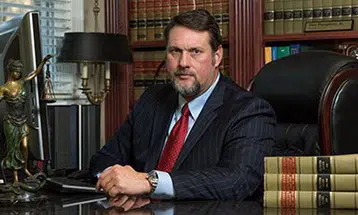
Attorney Don Pumphrey, Jr. is a former prosecutor, former law enforcement officer, and a successful and experienced criminal defense attorney. Don has achieved over 100 not guilty verdicts at trial and over 2,000 dismissals.