- DUI
- Criminal Defense
- Florida DUI
- Traffic Offenses
- Drug Charges
- Marijuana Charges
- Violent Crimes
- Domestic Violence
- Temporary Injunctions
- Weapons Charges
- Theft Crimes
- White Collar Crime
- Juvenile Offenses
- Sex Crimes
- Violation of Probation
- Early Termination of Probation
- Seal or Expunge Criminal Record
- Criminal Appeals
- US Federal Offenses
- Misdemeanor Charges
- Felony Charges
- Co-Defendant Cases
- College Student Defense
- College Student Hearings
- FSU Students
- FAMU Students
- Florida Panhandle Arrests
- Extradition to Florida
- Bench Warrants / Warrants
- Emergency Bond Hearings
- Gambling Charges
- Drone Arrests
- Marsy’s Law
- UAS Infractions
- Introduction of Contraband
- Lying to Police
- Locations
- Case Results
- Our Firm
- Media
- Resources
- Blog
- Contact Us
North FL’s Highest Court: Objections to Child Hearsay Waived on Appeal if Not Made at Trial
January 14, 2026 Don Pumphrey, Jr. Criminal Defense Social Share
Florida’s 1st District Court of Appeal ruled that because a defendant failed to object to a judge’s “insufficient” child hearsay reliability findings at trial, he could not raise the issue on appeal. However, one judge dissented.
In Florida, hearsay is an out of court statement offered in court for the purpose of proving that the statement is true. Hearsay can come not just in the form of the spoken word, but also writings such as medical documents or affidavits as well as video and audio tapes.
There are two types of hearsay in Florida: testimonial and nontestimonial hearsay. Per Crawford v. Washington, 541 U.S. 36 (2004), the difference between them is the following:
- Testimonial hearsay is hearsay made primarily for the purpose of contributing to an ongoing government (e.g. police) investigation and/or facilitating a prosecution
- Nontestimonial hearsay is made primarily for the purpose of responding to an ongoing emergency
Examples of testimonial hearsay in Florida may include:
- A 911 call to report a crime one week after it took place
- A written affidavit by an alleged victim of a violent crime filled out at a police station
- A child’s abuse disclosure to a CPT interviewer after a law enforcement investigation has already begun
Examples of nontestimonial hearsay may include:
- A 911 call made during an ongoing crime (e.g. “He’s shooting right now!”)
- A child’s initial disclosure of physical or sexual abuse to a friend, relative, teacher, etc.
- Statements made to a doctor to respond to a medical emergency/episode
Various exceptions to the general prohibition of hearsay in Florida courts exist under Fla. Stat. 90.803 (exceptions regardless of declarant availability) and 90.804 (exceptions only when the declarant is unavailable).
Note: For a comprehensive breakdown on hearsay in Florida and statutory exceptions allowing for the admission of hearsay under certain circumstances, click here.
If hearsay is determined to be nontestimonial, it is admissible in court if it complies with one or more designated exceptions. If it is testimonial in nature, it is admissible in court if it complies with one or more exceptions and one of the following is true:
- The declarant (speaker/writer of the hearsay) is available to testify and be cross-examined in a manner that complies with Crawford v. Washington (and the Confrontation Clause of the U.S. Constitution), which does not include discovery depositions
- The declarant is unavailable at trial but the defendant previously had the opportunity to cross-examine them in a Crawford-compliant manner
One of the most frequently discussed hearsay exceptions in Florida is the child hearsay exception under Fla. Stat. 90.803(23). The exception allows for the admission of any hearsay statement that abides by the following conditions:
- The child had a physical, emotional, or developmental age of 17 or less at the time the statement was made
- The statement describes any act of child abuse or neglect, sexual abuse against a child, the offense of child abuse or aggravated child abuse, or any unlawful sexual act, contact, intrusion or penetration performed on or in the presence of the child
- The statement and source through which it is reported are sufficiently trustworthy
- The time, content and circumstances of the statement provide sufficient safeguards as to its reliability
Note: If the child hearsay is found to be testimonial (e.g. a CPT interview), the declarant must still be made available for cross-examination. For more on this, click here.
A critical part of 90.803(23) is its requirement that judges make specific findings of fact on the record (if they choose to admit child hearsay into evidence) supporting the conclusion that the child hearsay is sufficiently reliable and trustworthy.
Per Cabrera v. State, 206 So.3d 768 (Fla. 1st DCA 2016), factors courts typically consider when determining whether child hearsay is reliable and trustworthy (required before it can be admitted into evidence) include, among others:
- The mental and physical age and maturity of the child who made the statement
- Nature and duration of the abuse or offense
- Relationship of the child to the offender
- Vagueness or specificity of the accusation
- Contradictions (if any) in the accusation
- Whether the child uses terminology expected of someone of their age
Sometimes, a judge will fail to make sufficiently specific findings before allowing child hearsay to be admitted under 90.803(23). If a judge simply finds the hearsay is “reliable and trustworthy” without discussion of the above factors (and others discussed by Cabrera), it is error to admit it under the child hearsay exception.
This may be grounds to reverse a defendant’s conviction on appeal, if the child hearsay (e.g. out of court abuse allegations) was heard by a jury. This is because child hearsay cannot be admitted unless and until the trial judge makes specific reliability and trustworthiness findings on the record. For more on this, click here.
But what happens if a defendant fails to object in a timely fashion to the judge’s failure to make sufficiently specific findings – and raises the issue for the first time on appeal? Is the erroneous admission of child hearsay still reversible error (if it was not harmless)?
The answer is no – because the issue is automatically waived when a defendant fails to object at trial. Let’s take a look at what Florida’s 1st District Court of Appeal ruled in Coleman v. State, 315 So.3d 166 (Fla. 1st DCA 2021) and what Coleman means for defendants in Florida in cases involving child hearsay.
KEY CASE: Coleman v. State, 315 So.3d 166 (Fla. 1st DCA 2021)
In Coleman, the defendant (Coleman) was charged with two counts of sexual battery on a victim aged 12 to 18. He was convicted and appealed to the 1st DCA (Tallahassee and North Florida’s highest court).
One of the grounds upon which Coleman appealed was the allegedly erroneous admission of the victim’s child hearsay statements. The State introduced these under 90.803(23), the child hearsay exception.
On appeal, Coleman argued the trial judge failed to make sufficiently specific findings on the record about the hearsay’s reliability and trustworthiness before admitting them into evidence.
However, the 1st DCA affirmed Coleman’s convictions on intriguing legal grounds. The court did not do so because it disagreed with Coleman’s claims, but because he failed to preserve the issue at trial for appeal. The 1st DCA wrote:
“On appeal, Coleman argues that the trial court failed to make sufficiently detailed and specific factual findings to support the admission of child-hearsay statements. See § 90.803(23)(c), Fla. Stat. (“The court shall make specific findings of fact, on the record, as to the basis for its ruling under this subsection.”). This argument was never placed before the trial court however, and is unpreserved. … Because the ‘trial court was never placed on notice of any error with respect to its findings and thus was never given an opportunity to correct the deficiency in the findings,’ the ‘issue of the sufficiency of the findings was clearly unpreserved.’”
In essence, Coleman did not object specifically to the failure of the trial judge to comply with 90.803(23)’s requirement that courts make sufficiently detailed reliability and trustworthiness findings before his trial took place.
Thus, even if Coleman was technically correct that the judge erred, his convictions could not be reversed on that basis (due to the failure to object). Though the 1st DCA noted that Coleman did object to the hearsay reliability in general, it claimed this was a separate issue from whether the trial judge complied with 90.803(23).
“Coleman argued pretrial that the victim’s statements to the two hearsay witnesses were unreliable, and later renewed this argument and made general objections to hearsay. But Coleman never asserted that the trial court’s findings were legally insufficient, which would permit the court to review and correct its findings if necessary. Therefore, his argument is unpreserved, and we affirm the judgment and sentence.”
But not every member of the 1st DCA agreed on this point. Judge Makar wrote a fiery dissent, arguing that a Florida Supreme Court case cut directly against the Coleman majority’s argument. Judge Makar noted:
“As to preservation, Coleman continues to correctly point out that a defendant’s objections to the reliability and trustworthiness of child hearsay evidence necessarily encompass the sufficiency of findings of reliability and trustworthiness. That is precisely the holding of our supreme court in Hopkins v. State, 632 So. 2d 1372, 1375 (Fla. 1994). In Hopkins, the defendant “argue[d] that the trial court failed to make sufficient findings under section 90.803(23) to admit the out-of-court statements of the child victim.” … As here, a detailed pre-trial hearing was held at which the defendant “objected to the admissibility of the hearsay statements, arguing that there was no showing of reliability.” Id.”
“On appeal, the supreme court held that the issue of the sufficiency of the trial court’s factual findings was preserved because “defense counsel’s objection to the reliability of the evidence necessarily encompassed the sufficiency of the judge’s findings as to that reliability. Counsel was not required to specify each finding of fact to which he was objecting.” Id. Because Hopkins is directly on point, it controls the preservation issue in this appeal, ending the inquiry.”
In essence, Judge Makar argued the 1st DCA was at odds with the Florida Supreme Court. Judge Makar asserted Coleman’s “reliability” objection also served as an objection to the sufficiency of the trial judge’s findings – citing Hopkins.
But Judge Makar’s opinion did not rule the day. As a result, the majority opinion in Coleman v. State, 315 So.3d 166 (Fla. 1st DCA 2021) now binds North Florida’s trial courts.
In sum, Coleman v. State, 315 So.3d 166 (Fla. 1st DCA 2021) is a significant development in Florida’s corpus of case law surrounding child hearsay. The 1st DCA concluded:
- Coleman failed to object to the trial judge’s allegedly “insufficiently detailed” reliability and trustworthiness findings
- Even if the admission of the child hearsay would have otherwise been reversible error, Coleman failed to preserve the issue since he did not object at trial
- Because the issue was not preserved on appeal, Coleman’s convictions were affirmed
Judge Makar strongly disagreed in his dissent, arguing:
- Coleman did object to the admission of the child’s statement on reliability grounds
- Under Hopkins v. State, 632 So. 2d 1372, 1375 (Fla. 1994), this also functioned as an objection to the judge’s “insufficiently detailed” findings – properly preserving the issue for appeal
- Since Hopkins is binding precedent (Florida Supreme Court), Coleman deserved a new trial (if the judge’s findings were not sufficiently specific/compliant with 90.803(23))
Florida’s criminal defense community should be aware of Coleman, as it is a major decision that should inform trial strategy in cases involving the admission of child hearsay.
If a trial judge’s “reliability and trustworthiness” findings do not comply with the child hearsay exception (90.803(23)), Coleman makes clear the defendant must object immediately on those grounds – or risk waiving the issue for appeal.
If someone is arrested and formally charged in Florida in a case involving child hearsay, it is critical to find experienced and trusted legal representation as soon as possible. This decision could make the difference in whether or not someone faces a lengthy prison term and hefty fines.
Criminal Defense Attorney in Tallahassee, FL
Don Pumphrey, Jr. is a Former Prosecutor, Former State Police Officer, Lifetime Member of the Florida Association of Criminal Defense Lawyers; for over 25 years as a private defense attorney who is Trusted, Experienced, Aggressive in Criminal Defense as a Trial Attorney, Criminal Lawyer, Criminal Defense Lawyer for the accused in Florida State Courts located in Tallahassee, Florida but handling cases throughout the State of Florida.
Don Pumphrey, Jr. and the Tallahassee criminal defense lawyers at Pumphrey Law have decades of experience fighting drug charges on behalf of clients and winning. Call Pumphrey Law now at (850) 681-7777 to learn more about what we can do for you. Our lawyers will be happy to provide you with a free consultation.
Don Pumphrey, Jr.
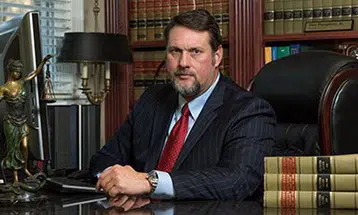
Attorney Don Pumphrey, Jr. is a former prosecutor, former law enforcement officer, and a successful and experienced criminal defense attorney. Don has achieved over 100 not guilty verdicts at trial and over 2,000 dismissals.