- DUI
- Criminal Defense
- Florida DUI
- Traffic Offenses
- Drug Charges
- Marijuana Charges
- Violent Crimes
- Domestic Violence
- Temporary Injunctions
- Weapons Charges
- Theft Crimes
- White Collar Crime
- Juvenile Offenses
- Sex Crimes
- Violation of Probation
- Early Termination of Probation
- Seal or Expunge Criminal Record
- Criminal Appeals
- US Federal Offenses
- Misdemeanor Charges
- Felony Charges
- Co-Defendant Cases
- College Student Defense
- College Student Hearings
- FSU Students
- FAMU Students
- Florida Panhandle Arrests
- Extradition to Florida
- Bench Warrants / Warrants
- Emergency Bond Hearings
- Gambling Charges
- Drone Arrests
- Marsy’s Law
- UAS Infractions
- Introduction of Contraband
- Lying to Police
- Locations
- Case Results
- Our Firm
- Media
- Resources
- Blog
- Contact Us
North FL’s Highest Court Reverses Conviction After Judge Stops Defense From Asking Jurors About Entrapment
March 5, 2026 Don Pumphrey, Jr. Criminal Defense Social Share
Case Summary
Florida’s 1st District Court of Appeal reversed a defendant’s drug trafficking conviction after the trial judge prohibited his attorney from asking potential jurors about whether they would accept an entrapment defense.
- CASE: Harrison v. State, 172 So.3d 1018 (Fla. 1st DCA 2015)
- Charge(s): Drug Trafficking (Cocaine)
- Outcome: Conviction REVERSED, as the trial judge impermissibly prevented the defense from questioning potential jurors about an entrapment defense.
Jury Selection in Florida Criminal Cases
In Florida, jury selection is a critical part of any criminal proceeding. Jury selection (also known as voir dire) is an opportunity for both the State and defense (e.g. the parties to the case) to ask potential jurors questions, with the intent of evaluating whether they can fairly and impartially render a verdict in the case – or if preexisting bias(es) will improperly influence them.
In the event that a party to the case believes a potential juror is clearly biased, they are likely to move for a cause challenge of that potential juror. Cause challenges are unlimited in number – and involve the “challenging” party advising the trial judge that they wish to excuse a potential juror from service while explaining why (e.g. due to fairness/impartiality concerns).
Sometimes, the opposing party (e.g. State or defense) will stipulate to a cause challenge – but on some occasions, they may argue that the potential juror should not be excused for cause. After hearing from both sides, the trial judge has two choices:
- Grant the cause challenge, excusing the potential juror for cause (sending them home)
- Deny the cause challenge, keeping the potential juror seated in the venire (for now)
Examples of cases in which an experienced and aggressive Florida criminal defense attorney is likely to move to excuse a potential juror for cause may include:
- A potential juror is a former police officer and will automatically believe the testimony of law enforcement witnesses over everyone else
- A potential juror personally knows the victim in the case and feels tremendous sympathy for them
- A potential juror says the defendant is guilty because they are “sitting at that table” and nothing can change their mind
Though cause challenges would likely be granted in the above (hypothetical) cases, a trial judge may deny a cause challenge if it is not clear that a potential juror cannot be “rehabilitated” (e.g. set their bias aside and be fair and impartial). To learn more about rehabilitation, click here.
But just because a cause challenge is denied, does not mean that the objectionable potential juror will be seated on the eventual jury. This is because each party (e.g. State and defense) to the case is awarded a set of peremptory strikes.
A peremptory strike (also referred to as a peremptory challenge) occurs when a party to the case “strikes” a potential juror without having to explain to the judge or opposing party why the strike is being exercised. This can be done for practically any reason, so long as it is not based on the potential juror’s race, sex or ethnicity. Batson v. Kentucky, 476 U.S. 79 (1986)
In the event that a party to the case (usually the defense) believes the other party is exercising a peremptory strike based on a potential juror’s immutable characteristic (e.g. race/sex/ethnicity), a Neil challenge is likely to occur.
This three-pronged inquiry consisting of the following “steps”:
- #1: A party (typically the defense) announces they are performing a Neil challenge of the latest peremptory strike by the opposing party (typically the State).
- #2: The striking party must provide a race/sex/ethnicity-neutral explanation for why they chose to peremptorily strike the potential juror.
- #3: The judge can either “buy” this and allow for the strike, or “call B.S.” (e.g. believe the reason given by the striking party is pretextual) and deny the peremptory strike
Note: Unlike cause challenges, peremptory strikes are limited in number. Each party to the case receives 3 in misdemeanor cases, 6 in non-capital/life felony cases, and 10 in capital/life felony cases. The trial judge has discretion to award a party additional peremptory strikes if requested. For more, click here.
It can be helpful to categorize potential jurors by “emojis” – a smiling face when the potential juror is desirable, a frowning face if the potential juror should be a top priority to strike, and a “neutral” face if unsure.
Once the objectionable jurors have been identified (e.g. jurors that are a priority to challenge), it is useful to separate them into two buckets:
- Group “A” jurors: Jurors that are likely to be successfully cause-challenged (e.g. due to the fact that they have made one or more remarks indicating impartiality)
- Group “B” jurors: Jurors that are “suspect” (e.g. likely not defense-friendly), but have not said anything that provides clear support for a cause challenge
During jury selection, an experienced and aggressive Florida criminal defense attorney may seek to ask potential jurors about a defense that will be relied upon at trial.
Though parties to the case are generally prohibited from discussing specific facts and/or making arguments before the jury is sworn, questions about the attitudes of potential jurors towards a “controversial” defense can be quite important to ensure that the eventual jury does not find the defendant guilty simply because they don’t personally like the defense (even if it’s legally valid).
One of the most widely discussed (and “controversial”) defenses in Florida is entrapment. This involves a concession from the start of the case that a defendant committed the crime(s) charged, but this was the result of improper (unlawful) inducement or misconduct by police. For more, click here.
For some who are not acquainted with Florida’s legal system, they may reject the very notion of entrapment out of hand. Someone may have an unwavering belief that if a defendant committed the charged crime(s), even if this was a product of police activity, they are just as guilty.
This means that experienced and aggressive Florida criminal defense attorneys – when they wish to rely upon an entrapment defense at trial – are likely to ask potential jurors if they would ever “accept” an entrapment defense (or outright reject it). However, in past cases, defense attorneys have been stopped from inquiring about this by trial judges. Due to that limit on entrapment-related questioning of potential jurors, defendants who relied upon an entrapment defense have had to argue this to the eventual jury without knowing how they “feel” about the concept of entrapment at all.
In a major drug trafficking case, this is precisely what happened. When a defendant’s attorney went to ask potential jurors about their attitude towards the idea of an entrapment defense, the State objected – and the trial judge forbade any further questioning on this front of the potential jurors. The defendant argued entrapment, and was convicted.
Challenging his conviction to Florida’s 1st District Court of Appeal (Tallahassee and North FL’s highest court), the defendant argued the trial judge’s restriction on voir dire violated his right to a fair trial (and an unbiased jury). The 1st DCA agreed and reversed his conviction, remanding the matter to the lower court for a new trial.
Let’s look at that case – Harrison v. State, 172 So.3d 1018 (Fla. 1st DCA 2015) – and what it means for defendants in Florida who are concerned about jury selection.
KEY CASE: Harrison v. State, 172 So.3d 1018 (Fla. 1st DCA 2015)
In Harrison, the defendant (Harrison) was arrested and charged with drug trafficking (e.g. sale and delivery of cocaine). Harrison was convicted at trial when the jury rejected his entrapment defense.
During jury selection, Harrison’s attorney sought to determine how potential jurors felt about an entrapment defense. He first asked the potential jurors what they believed entrapment was. He clarified their answers were not to be relied upon as “legally correct” and that the judge would be providing the definitions at the end of the case. This was not objected to by the State.
But when Harrison’s attorney then shifted to asking individual members of the venire (potential jurors) about whether they would personally consider an entrapment defense (e.g. to be legally valid), the following occurred:
“Defense counsel then asked a prospective juror who has friends at the sheriff’s office whether he would be open to considering an entrapment defense in the case. At that point, the State objected on the ground that “[t]his is improper,” and the trial court sustained the objection and denied defense counsel’s ensuing request for a sidebar discussion. Defense counsel in turn asked whether he was “being precluded from asking the jury if they will consider an entrapment defense,” and the trial court responded, “You’re precluded from asking them that.” When the parties concluded their questioning of the prospective jurors, the trial court read the legal definition of entrapment to the venire and inquired whether “that change[d] anybody’s ability to be fair and impartial,” to which the jurors responded, “No.”
At trial, the jury was instructed on the defense of entrapment – and found Harrison guilty. This was Harrison’s sole defense at trial (e.g. he did not argue innocence/mistaken identity).
On appeal, Harrison argued that the trial judge abused his discretion by barring his attorney from asking potential jurors about their subjective attitudes towards an entrapment defense. Florida’s 1st DCA agreed and reversed Harrison’s conviction, remanding the case to the lower court for a new trial. The 1st DCA wrote:
“Although a trial court “‘has considerable discretion in determining the extent of counsel’s examination of prospective jurors,’” it “‘must allow counsel the opportunity to ascertain latent or concealed prejudgments by prospective jurors.’ … A trial court should also allow “questions on jurors’ attitudes about issues where those attitudes are ‘essential to a determination of whether challenges for cause or peremptory challenges are to be made…”
“Turning to the instant case, it is clear from the record before us and the case law that although defense counsel was able to inquire about the prospective jurors’ understanding of entrapment in its ordinary sense, he was improperly precluded from inquiring about their willingness and ability to accept an entrapment defense. The trial court’s ruling to preclude defense counsel from asking the jurors whether they would consider an entrapment defense unreasonably limited counsel’s ability to conduct a meaningful voir dire on the defense of entrapment.”
The 1st DCA found the judge’s entrapment instruction and colloquy with the jury to determine if anyone had “issues” with an entrapment defense (e.g. whether they could be fair and impartial) did not “cure” the error of stopping Harrison’s attorney from asking the potential jurors about it:
“Moreover, the trial court’s reading of the legal definition of entrapment and its general inquiry from the venire whether that definition changed their ability to be fair and impartial did not eliminate defense counsel’s right to examine the jurors on Appellant’s sole defense. Therefore, we conclude that the trial court abused its discretion in unreasonably limiting defense counsel’s voir dire on the defense of entrapment. Given that entrapment was the sole defense presented at Appellant’s trial, the trial court’s error cannot be deemed harmless. Accordingly, we reverse Appellant’s judgment and sentence and remand for a new trial.”
In sum, Harrison v. State, 172 So.3d 1018 (Fla. 1st DCA 2015) marks a major development in Florida’s corpus of case law surrounding limits on jury selection. The 1st DCA (Tallahassee and North FL’s highest court) found that:
- The trial judge erred by failing to allow Harrison’s attorney to ask potential jurors about their feelings towards an entrapment defense (e.g. whether the potential jurors personally believed it was “valid”)
- This was permissible questioning, as it did not get into the facts of the actual case and was necessary to ensure the jury could fairly and impartially consider Harrison’s defense
- The trial judge’s instruction and “confirmation” that the jury could fairly and impartially consider an entrapment defense did not cure the error
- Because of this, Harrison’s conviction required reversal and a new trial was ordered
Florida’s criminal defense community should take note of Harrison v. State, 172 So.3d 1018 (Fla. 1st DCA 2015), as it makes clear that defense attorneys in Tallahassee and North Florida can ask potential jurors about their personal attitudes towards the defense(s) they intend to rely upon (including entrapment).
If someone is arrested and formally charged in Florida and concerned about jury selection, it is critical to find experienced and trusted legal representation as soon as possible. This decision could make the difference in whether or not someone faces a lengthy prison term and hefty fines.
Criminal Defense Attorney in Tallahassee, FL
Don Pumphrey, Jr. is a Former Prosecutor, Former State Police Officer, Lifetime Member of the Florida Association of Criminal Defense Lawyers; for over 25 years as a private defense attorney who is Trusted, Experienced, Aggressive in Criminal Defense as a Trial Attorney, Criminal Lawyer, Criminal Defense Lawyer for the accused in Florida State Courts located in Tallahassee, Florida but handling cases throughout the State of Florida.
Don Pumphrey, Jr. and the Tallahassee criminal defense lawyers at Pumphrey Law have decades of experience fighting criminal charges on behalf of clients and winning. Call Pumphrey Law now at (850) 681-7777 to learn more about what we can do for you. Our lawyers will be happy to provide you with a free consultation.
Don Pumphrey, Jr.
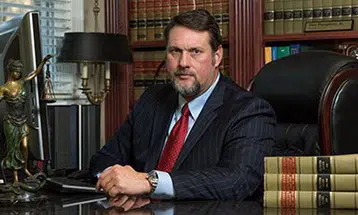
Attorney Don Pumphrey, Jr. is a former prosecutor, former law enforcement officer, and a successful and experienced criminal defense attorney. Don has achieved over 100 not guilty verdicts at trial and over 2,000 dismissals.