- DUI
- Criminal Defense
- Florida DUI
- Traffic Offenses
- Drug Charges
- Marijuana Charges
- Violent Crimes
- Domestic Violence
- Temporary Injunctions
- Weapons Charges
- Theft Crimes
- White Collar Crime
- Juvenile Offenses
- Sex Crimes
- Violation of Probation
- Early Termination of Probation
- Seal or Expunge Criminal Record
- Criminal Appeals
- US Federal Offenses
- Misdemeanor Charges
- Felony Charges
- Co-Defendant Cases
- College Student Defense
- College Student Hearings
- FSU Students
- FAMU Students
- Florida Panhandle Arrests
- Extradition to Florida
- Bench Warrants / Warrants
- Emergency Bond Hearings
- Gambling Charges
- Drone Arrests
- Marsy’s Law
- UAS Infractions
- Introduction of Contraband
- Lying to Police
- Locations
- Case Results
- Our Firm
- Media
- Resources
- Blog
- Contact Us
North FL’s Highest Court REVERSES Conviction Based On Jury Selection Discrimination – One Judge Dissents
April 23, 2026 Don Pumphrey, Jr. Criminal Defense Social Share
Florida’s 1st District Court of Appeal reversed a defendant’s conviction because the State failed to satisfactorily explain their reasons for peremptorily striking Black jurors – but one 1st DCA judge dissented.
CASE: Fleming v. State, 825 So.2d 1027 (Fla. 1st DCA 2002)
Charge(s): Trafficking in Cocaine, Fleeing to Elude
Outcome: Convictions REVERSED due to potential racial discrimination in jury selection – with one judge dissenting.
Jury Selection in Florida
In Florida, jury selection is a critical aspect of any criminal proceeding. Jury selection (referred to as voir dire in the legal community) gives both parties to the case – the State and defense – an opportunity to question potential jurors before a trial begins.
This is done to evaluate whether potential jurors will be able to fairly and impartially decide a case – or whether their preexisting bias(es) will impact their ability to deliver a verdict based on the evidence and testimony they see and hear at trial.
If a party to the case believes that a potential juror has answered one or more questions in a way that indicates they are clearly biased against a party to the case, they are likely to launch a cause challenge of that potential juror. Cause challenges are UNLIMITED in number – and if one is made, the moving party must explain why they are seeking to have that potential juror excused.
Once a cause challenge occurs, the opposing party may either stipulate (common if there is NO WAY a potential juror could be unbiased), or push back against the cause challenge and argue it should not be granted. The trial judge will ultimately determine whether to grant or deny a cause challenge.
Examples of cases in which an experienced and aggressive Florida criminal defense attorney is likely to make a cause challenge to a potential juror include:
- A potential juror says they will “absolutely” hold a defendant’s silence against him if he decides not to testify
- A potential juror says they will value the testimony of law enforcement over all other witnesses
- A potential juror says they know the victim in the case and feel a tremendous sympathy for them
In the event that the judge DENIES a cause challenge, a potential juror will remain seated in the venire (for now). However, this does not mean they will automatically be impaneled on the jury.
How can this be the case? The answer is that there is ANOTHER type of challenge that can be exercised to excuse a potential juror (e.g. send them home). A peremptory challenge, commonly referred to as a peremptory strike, occurs when a party to the case unilaterally strikes (excuses) a potential juror, sending them home without having to explain why to the judge or opposing party.
Unlike cause challenges, peremptory strikes are LIMITED. The typical number of peremptory strikes awarded at the start of a criminal proceeding is:
- THREE to each party (State and defense) in misdemeanor cases
- SIX to each party in non-capital/non-life felony cases (e.g. first-degree felonies or below)
- TEN to each party in capital/life felony cases
It is important to note that a judge retains discretion to award either party to the case additional peremptory strikes, if they are requested.
A party is likely to ask for an additional peremptory strike if they believe a cause challenge was wrongly denied. A trial judge’s failure to award one or more additional peremptories after erroneously denying a cause challenge is reversible error (if the defendant is convicted).
Though a party’s discretion to exercise a peremptory strike is NEARLY unlimited, there are clear legal limits to this. The U.S. Supreme Court has said that a potential juror cannot be peremptorily stricken based on their race, gender/sex, or ethnicity. Batson v. Kentucky, 476 U.S. 79 (1986); J.E.B. v. Alabama ex rel. T.B., 511 U.S. 127 (1994)
In the event that the opposing party (e.g. non-moving party) believes that a peremptory strike is being improperly exercised on this basis, they are likely to initiate a Neil challenge (otherwise known as a Neil inquiry). This involves the following three-step process:
- #1: The objecting party (e.g. the defense) announces they are performing a Neil challenge of the peremptory strike.
- #2: The State provides the trial judge a race-, sex-, or ethnicity-neutral reason (depending on the basis of the objection) for the peremptory strike
- #3: The trial judge either “buys” the State’s explanation (e.g. finds it is good-faith) and allows the strike – or finds the explanation is pretextual (e.g. B.S.) and denies the strike
Note: A Neil inquiry is sometimes referred to as a Melbourne inquiry, as the same “three-step” process was also outlined in Melbourne v. State, 679 So.2d 759 (Fla. 1996).
If a defendant appeals their conviction after what they allege to be an “incomplete” Neil inquiry, they are likely to hone in on “Step 3.” In certain cases, a trial judge will FAIL to say anything about the genuineness of the State’s offered reason(s) for their peremptory strike(s), and simply accept these at face value.
However, a “genuineness” analysis is REQUIRED. The trial judge must find, either explicitly or implicitly, that the State’s offered “race/sex/ethicity-neutral” reason for the peremptory strike(s) is not pretextual (e.g. a B.S. justification to cover up the fact that they are striking the potential juror(s) on a prohibited basis).
If no reasonable judge could find the State’s ostensible basis for exercising the peremptory strike to be permissible (e.g. the State’s explanation clearly does not pass muster), the defendant MUST receive a new trial if:
- The trial judge allows the peremptory strikes over the defense objection
- The defense objects to the composition of the jury immediately before it is sworn (due to the alleged discriminatory use of the State’s peremptory strikes)
In one major case heard by Florida’s 1st District Court of Appeal (Tallahassee and North FL’s highest court), a defendant was arrested and charged with trafficking in cocaine and fleeing to elude law enforcement. During jury selection, the State peremptorily struck TWO Black jurors, and the defense initiated Neil challenges in both cases.
The State gave highly questionable reasons for peremptorily striking the jurors. Because of this, the defense argued that the judge should DENY the State’s use of the peremptory strikes against the Black jurors. However, the judge overruled the defense’s objection and allowed the strikes to occur.
On appeal, the defendant argued that he was entitled to a new trial because the judge FAILED to evaluate the genuineness of the State’s justifications for the peremptory strikes. If the judge had done so, the defendant claimed, the trial judge would have stopped the State from exercising the strikes because their “race-neutral “justifications for doing so were PRETEXTUAL (B.S.).
The 1st DCA AGREED with the defendant, REVERSING his convictions and remanding the matter to the lower court for a new trial. However, one 1st DCA judge disagreed, and indicated he would have AFFIRMED the defendant’s convictions.
Let’s take a look at this seminal case – Fleming v. State, 825 So.2d 1027 (Fla. 1st DCA 2002) – and discuss what it means for those in Florida concerned about jury selection in Florida.
KEY CASE: Fleming v. State, 825 So.2d 1027 (Fla. 1st DCA 2002)
In Fleming, the defendant (Fleming) was charged with trafficking in cocaine and fleeing to elude law enforcement. He was convicted and appealed on the basis that jury selection in his case was contaminated by RACIAL DISCRIMINATION, requiring that he receive a new trial. During voir dire, the following occurred:
- The State asked if any potential jurors had seen cocaine – 10 of the 28 on the panel said “yes”
- Eight of the ten explained that they had seen cocaine in a party environment
- Of the remaining two, one said she’d seen it on television, and the other said she saw it while her mother was working as a clerk at the courthouse
- The ten were then asked by the State if they had any experiences with drugs that would cause them not to be a good juror – all responded in the negative (e.g. that they did not have such an experience)
- At the end of jury selection, the State moved to peremptorily strike a Black juror (Mr. Smith) – and the defense requested a race-neutral reason
- The State said he’d seen cocaine at a party in Chicago – and that nobody chosen for the jury yet had personally seen cocaine
- The trial judge OVERRULED the defense’s objection to the strike, excusing Mr. Smith from the venire
- Next, the State attempted to peremptorily strike a Black female juror (Ms. Orr)
- When the defense again requested a race-neutral reason, the State replied that although Ms. Orr had only seen cocaine on TV, Ms. Orr’s sister had been recently arrested (3 or 4 years earlier)
- The defense said this was not a valid reason for the strike, as a while male juror’s brother had been arrested 9 years ago
- However, the trial judge overruled the objection
- Ultimately, an all-white jury was sworn over the defense’s objection at the start of trial – and Fleming was convicted
On appeal, Fleming argued that any true evaluation of the “genuineness” of the State’s ostensibly race-neutral justifications for striking Smith and Orr would have led the trial judge to DENY the State’s requests to strike them.
Because there appeared to be racial discrimination during jury selection that went unremediated by the judge at Fleming’s trial, he urged the 1st DCA to REVERSE his convictions and remand the matter to the lower court for a new trial.
The 1st DCA agreed – REVERSING Fleming’s convictions on the basis that the trial judge did not perform “Step #3” of the Neil/Melbourne inquiry (evaluating the genuineness of the State’s offered reasons for the peremptory strikes of Smith and Orr). The 1st DCA majority wrote:
“In the instant case, as in Daniel, the trial court erred in accepting the state’s reasons for striking Mr. Smith and Ms. Orr without determining the genuineness of the challenges. In regard to Mr. Smith, the black juror who was challenged on the basis of his having seen cocaine at a party in Chicago, there was no discussion as to why Ms. Jones, the alternative white juror who had seen cocaine as a result of her mother’s work, was not struck for the same reason. Additionally, when questioning Mr. Calvin, a white juror who was allowed to serve, regarding his son’s arrest, the prosecutor asked him when the arrest occurred and whether it was drug-related.
“On the other hand, Ms. Orr, a prospective black juror who was peremptorily dismissed, was questioned immediately after Mr. Calvin, and was asked only when her sister had been arrested, but not about the nature of the crime. Although the similarity between the two jurors was argued by defense counsel below, the record contains no discussion whatsoever as to why the situations of these jurors should be considered differently. As a consequence, considering the absence of any determination of the genuineness of the strikes, the fact that all … African Americans who were eligible for the jury were struck, and that the state still retained one peremptory challenge even though two retained white jurors underwent similar experiences to the black jurors who had been struck, we must conclude that the trial court’s rulings on the state’s peremptory strikes were clearly erroneous. REVERSED and REMANDED.”
Put simply, if the State’s justifications were legitimate, the 1st DCA found that they would have exhausted a remaining peremptory strike on at least one of the remaining white potential jurors who had similar experiences to the Black jurors that were stricken.
Because the trial judge did not press the State on this and simply allowed the strikes, Step #3 of the Neil/Melbourne inquiry was NOT satisfied – requiring reversal of Fleming’s convictions as a matter of law.
Notably, one 1st DCA judge dissented. Judge Wolf believed that the even if the judge’s decision to allow the two peremptory strikes was questionable, it was not CLEARLY ERRONEOUS:
“The majority finds that the trial court’s acceptance of the State’s race-neutral reasons for excluding certain jurors was in error. I dissent. I cannot say the trial court’s decision concerning the genuineness of the prosecutor’s explanation was clearly erroneous. See Melbourne v. State, 679 So.2d 759, 764-765 (Fla.1996) (noting trial court’s decision will be affirmed unless clearly erroneous). The majority primarily finds the trial court’s determination to be erroneous because the challenges to the black jurors were exercised for reasons equally applicable to unchallenged white jurors. I do not find the reasons to be equally applicable, especially as to the jurors who had seen cocaine.”
“Mr. Smith, a black prospective juror, was challenged on the basis of having seen cocaine at a party; Ms. Jones, a white prospective juror who was not challenged, had seen cocaine at her mother’s job. Mr. Smith’s response that he had seen cocaine utilized in a party environment may lead a prosecutor to reasonably infer that the person has a somewhat liberal attitude toward drugs. See Symonette v. State, 778 So.2d 500, 503 (Fla. 3d DCA 2001). Mr. Smith’s direct observation of cocaine being used at a party is vastly different from Ms. Jones’ observation of cocaine in connection with her mother’s employment as clerk of the court. These situations are clearly not equal. The distinction between Ms. Orr, a black prospective juror who was stricken, and Mr. Calvin, a white prospective juror who was not stricken, is not as clear. However, as with the Smith challenge, the circumstances are not equal. The reason given for the strike was that Ms. Orr’s sister had been arrested three or four years earlier, while the son of Mr. Calvin had been arrested nine years earlier. The trial court’s decision as to genuineness of the challenge is also supported by the fact that the State accepted the jury panel on two occasions with African American jurors. It was only after the defense had exercised peremptory challenges that the State utilized the disputed challenges.”
Put simply, Judge Wolf found a basis to reasonably conclude that the “situations” of the Black jurors that were stricken differed from those of the white jurors that were impaneled. However, his opinion DID NOT win the day.
In sum, Fleming v. State, 825 So.2d 1027 (Fla. 1st DCA 2002) marks a significant development in Florida’s corpus of case law surrounding jury selection. The 1st DCA (Tallahassee and North FL’s highest court) ruled that:
- The reasons given for the peremptory strikes of 2 Black jurors were clearly pretextual
- The judge’s failure to deny the State’s strike requests after the defense objected meant that he DID NOT engage in a “genuineness” analysis (Step #3 of the Neil/Melbourne inquiry), as he would have found the State was indeed attempting to strike Smith and Orr on the basis of race
- This required REVERSAL of Fleming’s convictions due to racial discrimination during jury selection
Judge Wolf dissented – believing that the “situations” of the Black potential jurors that the State chose to strike differed from those of the white jurors that were impaneled (to the point where the trial judge did not “clearly err” by allowing the strikes).
Florida’s criminal defense community should take note of Fleming v. State, 825 So.2d 1027 (Fla. 1st DCA 2002), as it is a defendant-friendly case on the issue of jury selection and the utilization of peremptory strikes in Tallahassee and North Florida.
If someone is arrested and formally charged in Florida and concerned about jury selection, it is critical to find experienced and trusted legal representation as soon as possible. This decision could make the difference in whether or not someone faces a lengthy prison term and hefty fines.
Criminal Defense Attorney in Tallahassee, FL
Don Pumphrey, Jr. is a Former Prosecutor, Former State Police Officer, Lifetime Member of the Florida Association of Criminal Defense Lawyers; for over 25 years as a private defense attorney who is Trusted, Experienced, Aggressive in Criminal Defense as a Trial Attorney, Criminal Lawyer, Criminal Defense Lawyer for the accused in Florida State Courts located in Tallahassee, Florida but handling cases throughout the State of Florida.
Don Pumphrey, Jr. and the Tallahassee criminal defense lawyers at Pumphrey Law have decades of experience fighting criminal charges on behalf of clients and winning. Call Pumphrey Law now at (850) 681-7777 to learn more about what we can do for you. Our lawyers will be happy to provide you with a free consultation.
Don Pumphrey, Jr.
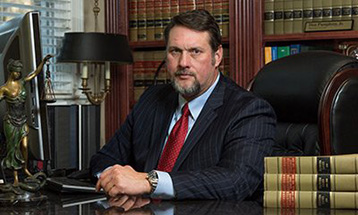
Attorney Don Pumphrey, Jr. is a former prosecutor, former law enforcement officer, and a successful and experienced criminal defense attorney. Don has achieved over 100 not guilty verdicts at trial and over 2,000 dismissals.