- DUI
- Criminal Defense
- Florida DUI
- Traffic Offenses
- Drug Charges
- Marijuana Charges
- Violent Crimes
- Domestic Violence
- Temporary Injunctions
- Weapons Charges
- Theft Crimes
- White Collar Crime
- Juvenile Offenses
- Sex Crimes
- Violation of Probation
- Early Termination of Probation
- Seal or Expunge Criminal Record
- Criminal Appeals
- US Federal Offenses
- Misdemeanor Charges
- Felony Charges
- Co-Defendant Cases
- College Student Defense
- College Student Hearings
- FSU Students
- FAMU Students
- Florida Panhandle Arrests
- Extradition to Florida
- Bench Warrants / Warrants
- Emergency Bond Hearings
- Gambling Charges
- Drone Arrests
- Marsy’s Law
- UAS Infractions
- Introduction of Contraband
- Lying to Police
- Locations
- Case Results
- Our Firm
- Media
- Resources
- Blog
- Contact Us
Northeast FL’s Highest Court REVERSES Murder Conviction Over Improper Closing Argument
April 23, 2026 Don Pumphrey, Jr. Criminal Defense, Violent Crimes Social Share
Florida’s 5th District Court of Appeal REVERSED a second-degree murder conviction after a prosecutor improperly commented on the defendant’s failure to tell law enforcement about a detail at the center of his defense – constituting an improper attack on his right to remain silent.
CASE: Robbins v. State, 891 So.2d 1102 (Fla. 5th DCA 2004)
Charge(s): Second-Degree Murder
Outcome: Conviction REVERSED, as the prosecutor’s improper comments on the defendant’s right to remain silent during closing argument were not “harmless error” – requiring a new trial.
Closing Arguments in Florida Criminal Trials
In Florida, closing arguments are a critical aspect of any criminal trial. Closing arguments serve as the “final word” of the State and defense to the jury – before deliberations commence and a verdict is ultimately rendered. Closing arguments come after all of the evidence and testimony has been presented.
Though many believe that closing arguments involve the State speaking, followed by the defense (and then the judge instructing the jury), this is not entirely correct. Closing arguments operate using a “sandwich” structure in Florida:
- First, the State gives its initial closing
- Second, the defense gives its closing (which often will involve rebuttals of what the State said during its first closing statement)
- Finally, the State (e.g. prosecutor) gives a REBUTTAL CLOSING (which is the true “last word” before deliberations) to refute the defense’s closing statement
After closing arguments occur, the trial judge will instruct the jury and send them to deliberate. Eventually, a verdict will be rendered (or, in the very rare case that a jury is unable to reach a verdict, a mistrial will be declared).
It is important to note that closing arguments are NOT to be considered as evidence. However, a good closing argument will help a jury view the evidence and testimony in a light that is more favorable to the “arguing” party. Thus, even though a closing argument is not itself evidence, it can be very powerful – impacting how the jury evaluates (and in some cases, decides) the case.
The closing argument is especially important to the defense in a Florida criminal case for various reasons. The first of these is the fact that the defense gets just ONE opportunity to close, but the State gets two (their initial closing, and rebuttal). Thus, the defense’s closing statements must be compelling and well-structured to maximize the odds of a not guilty verdict being returned.
Moreover, as a general matter, closing arguments are especially important to the defense because it’s the defense’s chance to reframe the evidence and testimony that has been presented at trial. In some cases, the State will appear to be “in control” for the duration of the trial by calling more witnesses/introducing more evidence than the defense.
But if an experienced and aggressive Florida criminal defense attorney “pokes holes” in the case against a defendant throughout the trial, a strong closing can improve the odds that the jury will see and fully appreciate the problems with the State’s case. This increases the likelihood that the defendant will be found not guilty.
It is critical to note that there are various rules surrounding closing arguments. Closings can be particularly “heated” (e.g. emotional) in cases involving violent crimes and sex crimes. In some cases, this may result in a prosecutor going “over the line” and making improper remarks that undermine the integrity of the trial.
Some examples of objectionable tactics employed during closing arguments include (Rodriguez v. State, 210 So.3d 750 (Fla. 5th DCA 2017)):
- Impugning the character of opposing counsel by calling them a “liar” or “evil”
- Calling the defendant ugly names/insulting them
- Relying on facts not in evidence or misrepresenting the law
- Commenting on the defendant’s right to remain silent (e.g. “If he wasn’t guilty, he would have said XYZ…”
- Saying the case is about getting “justice” for the victim (Cardona v. State, 185 So.3d 514, 521 (Fla. 2016))
Though defense attorneys may also make objectionable comments during closing arguments, the State has a lot to lose by consistently violating the restrictions surrounding what is permitted to be said during closing arguments.
Such behavior seriously risks a mistrial – or even the reversal of a conviction on appeal. Pacifico v. State, 642 So.2d 1178 (Fla. 1st DCA 1994). For more on mistrials, click here.
The likelihood of a mistrial (or the defendant’s conviction being reversed by a Florida appellate court) significantly increases if the defense OBJECTS contemporaneously during a prosecutor’s closing arguments. This is because:
- WITH AN OBJECTION: Courts apply a “harmless error” analysis (e.g. if there was NO reasonable possibility the jury’s verdict was impacted by the comments) – if the improper remarks were not harmless error, a conviction requires reversal (Petruschke v. State, 125 So.2d 274 (Fla. 4th DCA 2013))
- WITHOUT AN OBJECTION: The improper comments are reviewed for fundamental error, which is a far higher standard (e.g. whether improper comments were so unfairly prejudicial that it made the jury’s verdict inherently illegitimate, per Brinson v. State, 153 So.3d 972 (Fla. 5th DCA 2015))
In one major Florida case involving improper closing arguments, a defendant was arrested and charged with second-degree murder. The defendant allegedly shot the victim after believing the victim had taken his knife and attempted to stab him with it.
During his initial interview with law enforcement, the defendant did not mention that he thought the victim had a knife at the time he fired. At trial, the State attempted to ask the officer when he testified about whether the defendant said anything about this when he initially spoke with him – and the officer said no.
This was done despite the judge forbidding the State from doing so, as the trial judge ruled that it constituted improper commentary on the defendant’s right to remain silent. However, no mistrial occurred – and instead, the judge opted to give a curative instruction (telling the jury to disregard the question and answer).
Nevertheless, in closing arguments, the prosecutor AGAIN made a reference to the defendant’s silence on that issue. Despite the trial judge’s instruction not to do so, the prosecutor used this to claim the defendant was now lying about the victim having a knife. The defense objected and asked for a mistrial.
Ultimately, no mistrial occurred, and the defendant was found guilty. On appeal to Florida’s 5th District Court of Appeal (Northeast FL’s highest court), he argued that his request for a mistrial should have been granted – as his right to a fair trial was violated by the prosecutor’s improper commentary (during closing arguments) on his silence.
The 5th DCA agreed with the defendant and REVERSED his conviction, remanding the matter to the lower court for a new trial. Let’s take a look at that case – Robbins v. State, 891 So.2d 1102 (Fla. 5th DCA 2004) – and discuss what it means for those in Florida concerned about their right to a fair trial being violated during closing arguments.
KEY CASE: Robbins v. State, 891 So.2d 1102 (Fla. 5th DCA 2004)
In Robbins, the defendant (Robbins) was charged with second-degree murder and convicted. He was sentenced to life in prison. At trial, the following was revealed:
- Robbins got into an argument with two college-aged males who made a rude remark to his friend inside a convenience store
- One of the men (Starkey) chased Robbins as he attempted to drive away in his van
- Starkey jumped onto the passenger side running board and reached for Robbins through an open window
- Robbins maneuvered and was able to shake Starkey off the van, but this caused the van to stall and Robbins could not restart it
- Starkey approached the van and began to beat up Robbins
- Starkey then summoned his friend (Coffman) for assistance
- Moments later, both men were punching Robbins, who was in intense pain and “seeing stars” (according to his testimony)
- Robbins felt the men grab for his wallet, which was chained to his belt, then felt a poke or prick in the palm of his hand
- This led Robbins to believe Starkey had seized Robbins’s knife and was trying to use it against him
- Robbins ultimately shoved Starkey hard in the chest, but this caused Robbins to begin to fall over
- Robbins grabbed his gun from his waistband and fired at Starkey, hitting him and killing him
- Robbins did not initially tell law enforcement that he believed Starkey was an imminent deadly threat at the time he shot (e.g. did not tell the police he thought Starkey had taken his knife)
- At trial, the State attempted to ask the interrogating police officer about Robbins’s failure to disclose this, and the defense objected on the basis that it constituted improper State commentary on Robbins’s right to remain silent
- The trial judge instructed the jury to DISREGARD this and gave a curative instruction, while warning the prosecutor not to do this again
- However, during closing arguments, the prosecutor claimed Robbins was fabricating the “knife” story because he did not tell officers about it when he was first arrested
- The defense objected and moved for a mistrial, but this was DENIED
- The jury ultimately deliberated and Robbins was convicted
On appeal, Robbins argued to the 5th DCA that his motion for a mistrial should’ve been granted. According to Robbins, the prosecutor’s improper comment on his right to remain silent during closing arguments was so egregious, that it could not be said to have been “harmless error” (the legal standard, because Robbins objected).
The 5th DCA AGREED and REVERSED Robbins’s murder conviction, remanding the matter to the lower court for a new trial. Finding the judge and defense properly construed the prosecutor’s comments as a violation of the prohibition on the State commenting on the defendant’s right to remain silent, the 5th DCA wrote:
“Based on its interpretation of article I, section 9 of the Florida Constitution, the court in Hoggins held that a prosecutor may not comment upon or attempt to impeach a defendant with his or her post-arrest, pre-Miranda or post-Miranda silence. This prohibition is premised upon the generally accepted principle that a defendant does not waive his or her right to remain silent at the time of arrest by testifying in his or her own defense at trial. The same test applies regardless of whether the evidence of post-arrest silence is admitted in the state’s case in chief or during impeachment of the defendant: “If the comment is fairly susceptible of being construed by the jury as a comment on the defendant’s exercise of his or her right to remain silent, it violates the defendant’s right to silence.” Hoggins, 718 So.2d at 769. The fairly susceptible standard is a “very liberal rule,” which leads us to conclude that the questions and remarks during closing argument concerning the failure of Robbins to offer exculpatory statements about the knife after his arrest are fairly susceptible of being construed by the jury as comments on Robbins’ right to silence.”
Applying the law to the facts, the 5th DCA found Robbins was so prejudiced by the prosecutor’s improper comments that his right to a fair trial was violated, requiring that he receive a new one:
“The record indicates that Robbins offered a prima facie case of self-defense. The improper testimony and repeated argument by the prosecutor relating to Robbins’ silence and the fact that he had not mentioned the knife at the time he was arrested were clearly prejudicial, not isolated, and went to the heart of Robbins’ self-defense theory. Robbins testified to his fear and belief of great bodily harm or imminent death, supported by the fact that the two much younger men attacked him and beat him in the head and face. He believed that he had been stuck with the knife and, in fact, his knife was later found by the police in the vicinity of the fight.”
“By eliciting testimony of Robbins’ failure to mention the knife and by presenting closing argument that emphasized his silence, Robbins was so prejudiced that he was denied a fair trial. The State attempts to avert the pangs of reversal and the burdens associated with a new trial by arguing that the curative instruction cured the harm caused by the improper testimony and that a timely objection was not made to the improper remarks during closing argument. The curative instruction did not cure the prejudice caused by the improper testimony, and even if we were to believe it had, the prosecutor capitalized on the improper testimony by repeatedly emphasizing Robbins’ silence and failure to disclose the knife during closing argument. Hence, any curative effect the instruction may have had was eviscerated by the improper comments made by the prosecutor during closing arguments.”
In sum, Robbins v. State, 891 So.2d 1102 (Fla. 5th DCA 2004) marks a significant development in Florida’s corpus of case law on the issue of when improper remarks during closing arguments can result in the reversal of a defendant’s conviction. The 5th DCA (Northeast Florida’s highest court) held that:
- The prosecutor violated the rule prohibiting comments on the defendant’s right to remain silent by asking the interrogating officer about the fact that Robbins DID NOT mention a knife to him
- Despite the fact that the objection to this was sustained, the prosecutor made it a central theme of his closing argument (e.g. claiming Robbins’s initial “silence” on the issue was indicative of the fact that he was lying)
- This required the trial judge to GRANT Robbins’s request for a mistrial
- Because the request for a mistrial was erroneously denied and Robbins was convicted, REVERSAL and a new trial was required
Florida’s criminal defense community should take note of Robbins v. State, 891 So.2d 1102 (Fla. 5th DCA 2004), as it makes clear that improper comments on details not initially offered by the defendant to law enforcement can lead to a conviction being REVERSED on appeal (if objected to/a mistrial is moved for).
Crimes involving firearms can carry lengthy prison sentences and heavy financial penalties. If someone is arrested and formally charged in Florida, it is vital to find experienced and aggressive legal representation as soon as possible.
Criminal Defense Attorney in Tallahassee, FL
Don Pumphrey, Jr. is a Former Prosecutor, Former State Police Officer, Lifetime Member of the Florida Association of Criminal Defense Lawyers; for over 25 years as a private defense attorney who is Trusted, Experienced, Aggressive in Criminal Defense as a Trial Attorney, Criminal Lawyer, Criminal Defense Lawyer for the accused in Florida State Courts located in Tallahassee, Florida but handling cases throughout the State of Florida.
Don Pumphrey, Jr. and the Tallahassee criminal defense lawyers at Pumphrey Law have decades of experience fighting criminal charges on behalf of clients and winning. Call Pumphrey Law now at (850) 681-7777 to learn more about what we can do for you. Our lawyers will be happy to provide you with a free consultation.
Don Pumphrey, Jr.
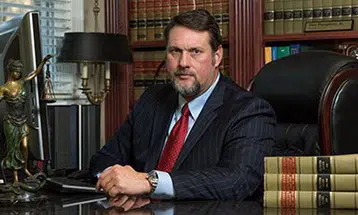
Attorney Don Pumphrey, Jr. is a former prosecutor, former law enforcement officer, and a successful and experienced criminal defense attorney. Don has achieved over 100 not guilty verdicts at trial and over 2,000 dismissals.