- DUI
- Criminal Defense
- Florida DUI
- Traffic Offenses
- Drug Charges
- Marijuana Charges
- Violent Crimes
- Domestic Violence
- Temporary Injunctions
- Weapons Charges
- Theft Crimes
- White Collar Crime
- Juvenile Offenses
- Sex Crimes
- Violation of Probation
- Early Termination of Probation
- Seal or Expunge Criminal Record
- Criminal Appeals
- US Federal Offenses
- Misdemeanor Charges
- Felony Charges
- Co-Defendant Cases
- College Student Defense
- College Student Hearings
- FSU Students
- FAMU Students
- Florida Panhandle Arrests
- Extradition to Florida
- Bench Warrants / Warrants
- Emergency Bond Hearings
- Gambling Charges
- Drone Arrests
- Marsy’s Law
- UAS Infractions
- Introduction of Contraband
- Lying to Police
- Locations
- Case Results
- Our Firm
- Media
- Resources
- Blog
- Contact Us
Not All Fatal Crashes Qualify as Vehicular Homicide, North Florida’s Highest Court Explains
December 4, 2025 Don Pumphrey, Jr. Criminal Defense Social Share
Florida’s 1st District Court of Appeal reversed a defendant’s conviction for vehicular homicide despite her clear negligence leading up to a fatal crash.
In Florida, vehicular homicide (Fla. Stat. 782.071) is a very serious offense. For the State to prove someone guilty, all of the following must be established beyond a reasonable doubt:
- The defendant was operating a motor vehicle
- The operation of the motor vehicle was reckless (in a manner likely to cause death or great bodily harm to another person)
- The operation of the motor vehicle caused the death of another person or their unborn child
Vehicular homicide is typically charged as a second-degree felony (up to 15 years in prison and a $5,000 fine). However, it is a first-degree felony (up to 30 years in prison and a $10,000 fine) if either of the following are true:
- The defendant failed to stop after the accident, failed to give information to authorities, or failed to render aid to the victim(s)
- The defendant has a prior conviction for vehicular homicide, vessel homicide, DUI manslaughter or BUI manslaughter (Trenton’s Law)
A common question is – if someone dies in a car accident, will a surviving driver automatically face vehicular homicide charges? The answer is no. This is because a key element of proving vehicular homicide is establishing that the defendant operated their vehicle recklessly in the lead-up to the fatal collision. W.E.B. v. State, 553 So. 2d 323 (Fla. 1st DCA 1989)
For purposes of supporting a vehicular homicide conviction, recklessness is defined as more than a failure to simply use ordinary care. Someone must drive in a manner they know to be likely to cause death or great bodily injury to others – and have a conscious, intentional indifference to the potential consequences of doing so. Berube v. State, 6 So.3d 624 (Fla. 5th DCA 2008)
Recklessness is determined based on the totality of the circumstances. Some of the factors that Florida’s courts have historically relied upon to determine whether a defendant was reckless include:
- Whether the defendant was speeding at the time of the crash, and if so, by how much
- Whether the defendant disregarded traffic signals, such as stop signs
- Time of day (or night)
- Whether visibility was poor or good
- Whether the roads were crowded/empty
- Whether a defendant was looking continuously at a device for a long period of time (Andriotis v. State, 399 So.3d 1235 (Fla. 5th DCA 2025))
Note: Speeding alone – without the presence of other aggravating factors (e.g. poor visibility, heavy traffic) – is insufficient to establish recklessness in vehicular homicide cases. Luzardo v. State, 147 So.3d 1083 (Fla. 3d. DCA 2014)
As you can see, it is not easy for the State to prove recklessness beyond a reasonable doubt in a vehicular homicide case. Courts are consistent about the fact that there must be clear evidence that the defendant operated a vehicle recklessly to be convicted. Mere carelessness behind the wheel is insufficient.
This principle was echoed in a fairly recent major vehicular homicide case heard by Tallahassee and North Florida’s highest court, Stracar v. State, 126 So.3d 379 (Fla. 1st DCA 2013). Let’s break down Stracar and what it means for proving recklessness in Florida vehicular homicide cases.
KEY CASE: Stracar v. State, 126 So.3d 379 (Fla. 1st DCA 2013)
In Stracar, the defendant (Stracar) was charged with two counts of vehicular homicide. She moved at trial for a judgment of acquittal (MJOA), arguing the evidence was insufficient to convict her of vehicular homicide because the State could not establish recklessness. However, the trial judge denied the motion, and Stracar was found guilty by the jury.
Stracar appealed to Florida’s 1st District Court of Appeal, reiterating her argument. The 1st DCA ruled in her favor and reversed her convictions, finding that the State had not proven Stracar was reckless as a matter of law – precluding a vehicular homicide conviction. The 1st DCA recounted the following:
“The evidence at trial was that the Defendant [Stracar] was driving a vehicle which left the roadway, traveled along a sidewalk and a grassy area, crossed a divided roadway and hit a sign which launched the car over a median of the intersecting street and land[ed] on the victims car crushing the two occupants. Ms. Stracar traveled … for over 500 feet at approximately 40 miles per hour. She suffered no serious injuries and was found conscious in her vehicle at the scene. She had to be removed through the roof due to crash damage.”
“There was no evidence of any braking or other attempt by appellant to avoid the crash, nor were there any curves in the roadway which would have contributed to appellant losing control of her vehicle. The evidence showed that, at the time of the incident, the weather conditions were optimal and the pavement was dry. Appellant was transported to the local hospital, and her blood was drawn approximately three hours after the crash. Test results showed her blood alcohol concentration was less than .02%, THC from marijuana use at some undetermined time, oxycodone at a potentially therapeutic level, and Xanax within therapeutic levels.”
Noting the trial judge’s comments that it was “difficult to conceive” how Stracar’s driving could not be considered reckless, the 1st DCA disagreed. The court pointed out that the presence of controlled substances in Stracar’s system was “insufficient to support a finding of reckless driving”:
“The evidence presented at trial showed that appellant’s actions, while certainly negligent, did not rise to the level of recklessness sufficient to sustain the convictions for vehicular homicide… The presence of central nervous system depressants in appellant’s blood stream after the crash, in and of itself, is insufficient to support a finding of reckless driving.”
The 1st DCA analogized Stracar’s case to one also involving the reversal of a vehicular homicide conviction due to lack of recklessness, Berube v. State, 6 So.3d 624, 625 (Fla. 5th DCA 2008):
“As in Berube, what was missing from the State’s proof in this case is evidence that the appellant, in an intentional, knowing and purposeful manner, was driving at the time of the incident in a manner demonstrating a conscious and intentional indifference to consequences and with knowledge that damage is likely to be done to persons or property. … Therefore, appellant’s convictions for vehicular homicide rested on legally insufficient evidence. Accordingly, these convictions and sentences are reversed and the cause remanded for entry of a judgment of acquittal on these charges.”
Essentially, the 1st DCA found that because there was no evidence that Stracar knew her driving was likely to cause death or serious bodily harm and disregarded that risk, her convictions for two counts of vehicular homicide could not stand.
In sum, Stracar v. State, 126 So.3d 379 (Fla. 1st DCA 2013) is a significant contribution by Tallahassee and North Florida’s highest court to state case law on the issue of recklessness in vehicular homicide cases.
The court found that even though Stracar did all of the following could not be proven guilty of recklessly driving (element of vehicular homicide) beyond a reasonable doubt:
- Had substances including alcohol (though at very low levels), trace amounts of THC, oxycodone and Xanax in her system
- Swerved off the roadway
- Traveled along a sidewalk and over a patch of grass
- Crossed an adjacent divided road and hit a sign
- Flew over the median in her vehicle and crushed two occupants of another vehicle
The Stracar case reinforces the lofty burden the State has to prove recklessness in vehicular homicide cases beyond a reasonable doubt. Florida defendants and defense attorneys should be familiar with Stracar and, accordingly, would be wise to move for a judgment of acquittal in such cases if recklessness has not been established beyond a reasonable doubt.
Important: Recklessness for purposes of vehicular homicide and vessel homicide in Florida is the same legal standard. For more on this, click here.
It is critical to find experienced and trusted legal representation as soon as possible if someone is charged with vehicular homicide, DUI manslaughter, BUI manslaughter or vessel homicide. This decision could make the difference in whether or not someone faces a lengthy prison term and hefty fines.
Criminal Defense Attorney in Tallahassee, FL
Don Pumphrey, Jr. is a Former Prosecutor, Former State Police Officer, Lifetime Member of the Florida Association of Criminal Defense Lawyers; for over 25 years as a private defense attorney who is Trusted, Experienced, Aggressive in Criminal Defense as a Trial Attorney, Criminal Lawyer, Criminal Defense Lawyer for the accused in Florida State Courts located in Tallahassee, Florida but handling cases throughout the State of Florida.
Don Pumphrey, Jr. and the Tallahassee criminal defense lawyers at Pumphrey Law have decades of experience fighting drug charges on behalf of clients and winning. Call Pumphrey Law now at (850) 681-7777 to learn more about what we can do for you. Our lawyers will be happy to provide you with a free consultation.
Don Pumphrey, Jr.
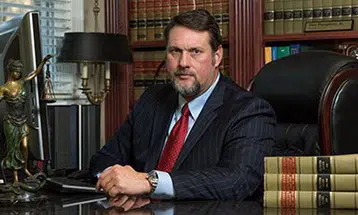
Attorney Don Pumphrey, Jr. is a former prosecutor, former law enforcement officer, and a successful and experienced criminal defense attorney. Don has achieved over 100 not guilty verdicts at trial and over 2,000 dismissals.