- DUI
- Criminal Defense
- Florida DUI
- Traffic Offenses
- Drug Charges
- Marijuana Charges
- Violent Crimes
- Domestic Violence
- Temporary Injunctions
- Weapons Charges
- Theft Crimes
- White Collar Crime
- Juvenile Offenses
- Sex Crimes
- Violation of Probation
- Early Termination of Probation
- Seal or Expunge Criminal Record
- Criminal Appeals
- US Federal Offenses
- Misdemeanor Charges
- Felony Charges
- Co-Defendant Cases
- College Student Defense
- College Student Hearings
- FSU Students
- FAMU Students
- Florida Panhandle Arrests
- Extradition to Florida
- Bench Warrants / Warrants
- Emergency Bond Hearings
- Gambling Charges
- Drone Arrests
- Marsy’s Law
- UAS Infractions
- Introduction of Contraband
- Lying to Police
- Locations
- Case Results
- Our Firm
- Media
- Resources
- Blog
- Contact Us
Time Limits on Jury Selection? North FL’s Highest Court Says That’s (Usually) Okay
March 5, 2026 Don Pumphrey, Jr. Criminal Defense Social Share
Case Summary
Florida’s 1st District Court of Appeal affirmed a defendant’s convictions after he challenged the trial judge’s 75-minute limit on questioning potential jurors – finding this “rule” did not violate the defendant’s due process rights.
- CASE: McMath v. State, 409 So.3d 1271 (Fla. 1st DCA 2025)
- Charge(s): Armed burglary with assault, possession of burglary tools, sexual battery, domestic battery
- Outcome: Convictions AFFIRMED, as the trial judge’s “reasonable” time limit on jury selection did not violate the defendant’s rights.
Florida Jury Selection
In Florida, jury selection (also known as voir dire) is a critical aspect of any criminal proceeding. During jury selection, each party to the case (e.g. the State and defense) is given the opportunity to question potential jurors in an effort to determine if they will render their verdict in the case fairly and impartially – or have their decision influenced by preexisting bias(es).
If a party to the case heavily suspects a potential juror will be biased (usually against the moving party) during jury selection, they may “cause challenge” that potential juror.
A cause challenge occurs when the State or defense attempts to convince the judge to excuse a potential juror from service (e.g. send them home) due to one or more remarks that indicate they won’t be fair and impartial. Cause challenges are unlimited in number.
Examples of cases in which an experienced and aggressive Florida criminal defense attorney is likely to make a cause challenge to a potential juror include:
- A potential juror says they will “absolutely” hold a defendant’s silence against him if he decides not to testify
- A potential juror says they will value the testimony of law enforcement over all other witnesses
- A potential juror says they know the victim in the case and feel tremendous sympathy for them
Just because a potential juror makes an “objectionable” comment, this does not mean they will be excused for cause. Any party to the case (and the judge) can “rehabilitate” them by asking a series of questions to determine whether the potential juror can set aside their bias and follow the law – or if they will truly be unable to be fair and impartial. For more, click here.
Once a cause challenge is made, the other party may stipulate to the challenge or oppose it (e.g. tell the trial judge why the cause challenge should not be granted). The trial judge then has two options:
- Grant the cause challenge, excusing the potential juror from service
- Deny the cause challenge, allowing the potential juror to remain in the venire (for now)
If the judge denies a cause challenge, this does not mean a potential juror will automatically be impaneled (e.g. sit for the trial). This is because each party to the case receives a limited number of peremptory challenges (otherwise known as peremptory strikes) – which are most likely to be used on potential jurors that are unsuccessfully cause-challenged. For more, click here.
A peremptory strike occurs when a party to the case excuses a potential juror from service (e.g. sends them home) without having to ask the trial judge to do so or justify their reasoning to the opposing party.
Unlike cause challenges, peremptory strikes are limited in number. Typically, each side receives 3 peremptories in misdemeanor cases, 6 peremptories in non-capital/life felony cases, and 10 in life/capital felony cases. The trial judge has the discretion to award each side additional strikes, if requested.
Though peremptory strikes can be done for almost any reason, the U.S. Supreme Court has made clear that a potential juror cannot be peremptorily stricken based on their race, sex, or ethnicity. Batson v. Kentucky, 476 U.S. 79 (1986); J.E.B. v. Alabama ex rel. T.B., 511 U.S. 127 (1994)
In the event that the opposing party in a case believes a peremptory strike was motivated by a potential juror’s race, sex, or ethnicity (usually the defense), they may make a Neil challenge of the peremptory strike.
A Neil challenge (also known as a Neil inquiry) involves the following:
- #1: The objecting party (e.g. the defense) announces they are performing a Neil challenge of the peremptory strike.
- #2: The State provides the trial judge a race-, sex-, or ethnicity-neutral reason (depending on the basis of the objection) for the peremptory strike
- #3: The trial judge either “buys” the State’s explanation (e.g. finds it is good-faith) and allows the strike – or finds the explanation is pretextual (e.g. B.S.) and denies the strike
As a general principle, jury selection is extremely important to the defense in particular. Ensuring that only those who truly believe in the principles of “beyond a reasonable doubt” and presuming a defendant innocent sit on the jury is critical to maximizing the odds of a favorable outcome.
In some cases, however, trial judges will place limits on jury selection.
There are generally three “categories” of restrictions on questions/jury selection generally under Florida law:
- Accepted Restrictions: For example, the attorneys on the case cannot tell the jury about the specific facts of the case during voir dire to get their opinion about it
- Rejected Restrictions: For example, trial judges cannot restrict general questions that are directly relevant to the broader legal issues in the case (e.g. a Florida defense attorney can ask potential jurors how they feel about entrapment if the defense plans to argue this, per Walker v. State, 724 So.3d 1232 (Fla. 4th DCA 1999))
- “Gray Area” Restrictions: Sometimes allowed, sometimes not – an example being time limits on counsel questioning of potential jurors during voir dire.
One of the most intriguing legal issues surrounding jury selection in Florida is whether (or when) trial judges can impose “time limits” on voir dire. Sometimes, trial judges will set limits on how long each party can spend asking potential jurors questions during jury selection.
If this occurs, a defendant will commonly appeal their conviction (if found guilty) to the Florida District Court of Appeal that has jurisdiction over the trial court. Rodriguez v. State, 675 So. 2d 189, 191 (Fla. 3d DCA 1996)
The DCA will then decide if the trial judge’s temporal restriction on questioning (e.g. “no more than an hour”) was reasonable and permissible – or if it deprived the defendant of due process by rendering the defense unable to effectively “vet” the potential jurors (to make sure that they are truly fair and impartial).
A recent case in which a “time restriction” was imposed on jury selection – prompting an appeal – was heard by Florida’s 1st District Court of Appeal (Tallahassee and North FL’s highest court). However, the 1st DCA rejected the defendant’s argument that a 75-minute time limit on voir dire violated his rights to due process and an unbiased jury – affirming his convictions as a result.
Let’s look at that case – McMath v. State, 409 So.3d 1271 (Fla. 1st DCA 2025) – and discuss what it means for defendants in Florida concerned about jury selection.
KEY CASE: McMath v. State, 409 So.3d 1271 (Fla. 1st DCA 2025)
In McMath, the defendant (McMath) was convicted of a series of felonies – including:
- Armed burglary with assault
- Possession of burglary tools
- Sexual battery
- Domestic battery
McMath appealed his convictions to the 1st DCA, arguing the trial judge “abused his discretion” by imposing a 75-minute time limit on jury questioning during voir dire. According to McMath, his right to an unbiased jury (and due process rights) were violated by this arrangement – as he could not truly assess which jurors were “best” for the case. As the 1st DCA put it:
“McMath argues it is per se prejudicial error to impose a time limit on voir dire that results, as it did below, in less than two minutes per prospective juror. In support, McMath relies upon Gosha v. State, 534 So. 2d 912 (Fla. 3d DCA 1988). In Gosha, the Third District held that “as a matter of law, it is unreasonable and an abuse of discretion to limit counsel’s voir dire examinations of each potential juror to one-to-three minutes.” Id. at 912. The Gosha court concluded, “Although a trial court has ‘considerable discretion in determining the extent of counsel’s examination of prospective jurors,’ here, the extreme time constraints imposed by the court prevented counsel from pursuing a reasonable voir dire examination.””
However, the 1st DCA rejected McMath’s argument. While it conceded that some time limits on jury questioning would infringe a defendant’s right to meaningfully participate in jury selection, such restrictions must be assessed on a “case-by-case” basis to determine if it is “reasonable”:
“The State argues, and we agree, that the reasonableness of an imposed time limit on voir dire is dependent on the facts of each case. See Cassaday v. State, 289 So. 3d 915, 920 (Fla. 4th DCA 2020) … Though not per se prejudicial, the time allotment itself is a factor to be considered by the trial judge. Where time limits on voir dire are imposed, trial courts should remain flexible as the circumstances of individual cases may necessitate additional time … Thus, we look to the facts and circumstances of voir dire as it occurred below to determine whether the court abused its discretion in limiting voir dire to seventy-five minutes. McMath must demonstrate prejudice suffered because of the limitation and, if the circumstances justify the limitation, then the trial court did not abuse its discretion.”
The 1st DCA observed that at jury selection, the trial judge gave out questionnaires to potential jurors to identify relevant information – cutting against McMath’s argument that 75 minutes was not a sufficient amount of time to determine if any “issues” (e.g. potential biases) existed among potential jurors:
“At jury selection, the trial court administered a general questionnaire to prospective jurors and each juror answered those questions, which ranged from occupation and marital status to personal or familial relationships or experiences with law enforcement or the courts. The prosecutor queried the prospective jurors on military service and their ability to serve on the jury. Defense counsel also questioned prospective jurors both collectively and individually.”
Moreover, the 1st DCA found that McMath’s attorney did not use his time questioning potential jurors very “productively” (e.g. asked about many topics that seemed irrelevant):
“Because McMath challenges only the time limit on voir dire, defense counsel’s use of the time allotted is a factor in adjudging the reasonableness of the limitation. While defense counsel did ask pointed background questions of some individual jurors, other questions included what books jurors had read, whether anyone had seen a particular movie or if they enjoyed movies generally, personal knowledge of the legal standards of the termination of parental rights, and what some jurors saw in a picture of an optical illusion. While these questions may be relevant, the responses and discussion that followed indicated their minimal significance.”
The 1st DCA concluded that because both parties were on notice of the restriction and prejudice to McMath was not evident (and if it did occur, was easily avoidable), reversal of his convictions was not warranted:
“Analyzing the circumstances of this specific case, the parties knew at least one month prior to voir dire that a seventy-five-minute limitation had been imposed. Further, the trial court administered a general questionnaire to prospective jurors that allowed the parties to narrowly tailor additional questions within the period provided. Although defense counsel averred that she was unable to address certain matters, we note that both the general jury questions and the State’s voir dire examination covered some of these same topics. Having considered the context of the limitation on voir dire, the use of the allotted time by defense counsel, and the basis of the objection to the limitation, we conclude that the trial court did not abuse its discretion. … Affirmed.”
In sum, McMath v. State, 409 So.3d 1271 (Fla. 1st DCA 2025) marks a significant development in Florida’s corpus of case law on jury selection – and in particular, restrictions on voir dire that are imposed by judges in a criminal case. The 1st DCA found that:
- All parties were on notice of the 75-minute restriction for over a month
- At the start of the proceeding, potential jurors received a questionnaire that identified copious relevant information that would otherwise need to be extracted via questioning (and the answers were read out loud)
- McMath’s attorney did not use the allotted time effectively despite knowing about the restriction
- The issues McMath’s attorney was “unable to address” were largely covered by the State
- Because there was no evidence of prejudice (and if prejudice occurred, it was avoidable), the 75-minute limit was “reasonable” – requiring affirmance of McMath’s convictions
Florida’s criminal defense community should take note of McMath v. State, 409 So.3d 1271 (Fla. 1st DCA 2025), as it makes clear trial judges have discretion to “set rules” surrounding jury selection – but that discretion is not unlimited (e.g. must be reasonable).
If someone is arrested and formally charged in Florida and concerned about jury selection, it is critical to find experienced and trusted legal representation as soon as possible. This decision could make the difference in whether or not someone faces a lengthy prison term and hefty fines.
Criminal Defense Attorney in Tallahassee, FL
Don Pumphrey, Jr. is a Former Prosecutor, Former State Police Officer, Lifetime Member of the Florida Association of Criminal Defense Lawyers; for over 25 years as a private defense attorney who is Trusted, Experienced, Aggressive in Criminal Defense as a Trial Attorney, Criminal Lawyer, Criminal Defense Lawyer for the accused in Florida State Courts located in Tallahassee, Florida but handling cases throughout the State of Florida.
Don Pumphrey, Jr. and the Tallahassee criminal defense lawyers at Pumphrey Law have decades of experience fighting criminal charges on behalf of clients and winning. Call Pumphrey Law now at (850) 681-7777 to learn more about what we can do for you. Our lawyers will be happy to provide you with a free consultation.
Don Pumphrey, Jr.
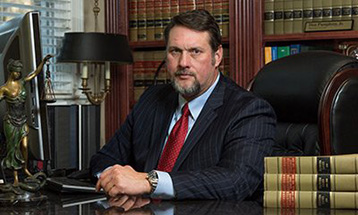
Attorney Don Pumphrey, Jr. is a former prosecutor, former law enforcement officer, and a successful and experienced criminal defense attorney. Don has achieved over 100 not guilty verdicts at trial and over 2,000 dismissals.