- DUI
- Criminal Defense
- Florida DUI
- Traffic Offenses
- Drug Charges
- Marijuana Charges
- Violent Crimes
- Domestic Violence
- Temporary Injunctions
- Weapons Charges
- Theft Crimes
- White Collar Crime
- Juvenile Offenses
- Sex Crimes
- Violation of Probation
- Early Termination of Probation
- Seal or Expunge Criminal Record
- Criminal Appeals
- US Federal Offenses
- Misdemeanor Charges
- Felony Charges
- Co-Defendant Cases
- College Student Defense
- College Student Hearings
- FSU Students
- FAMU Students
- Florida Panhandle Arrests
- Extradition to Florida
- Bench Warrants / Warrants
- Emergency Bond Hearings
- Gambling Charges
- Drone Arrests
- Marsy’s Law
- UAS Infractions
- Introduction of Contraband
- Lying to Police
- Locations
- Case Results
- Our Firm
- Media
- Resources
- Blog
- Contact Us
FL Attorney General REVERSES Position on Felon In-Possession Law: What to Know
March 5, 2026 Don Pumphrey, Jr. Criminal Defense, Violent Crimes Social Share
In a recent brief to Florida’s 1st District Court of Appeal, Florida’s Attorney General voiced the opinion that Florida’s law permanently prohibiting all felons from possessing firearms (unless they are pardoned or granted clemency) is UNCONSTITUTIONAL.
In Florida, possession of a firearm by a convicted felon (Fla. Stat. 790.23) is a serious offense.
For someone to be proven guilty of possession of a firearm by a convicted felon in Florida, the State must prove all of the following beyond a reasonable doubt:
- The defendant has been convicted of a felony (in Florida, another state, federal court), or was found delinquent in a felony juvenile case and is the under age of 24
- The defendant owned (or had in their care, custody, possession, or control) a firearm, ammunition, or electric weapon or device
- The defendant knew the firearm (or ammunition/device) was present and intentionally exercised control over it
Felon in-possession is considered a second-degree felony in Florida, punishable by up to 15 years in prison and a $10,000 fine. If a felon is found to have been in actual possession of the firearm (e.g. it is discovered on their person or found in their hands), this carries a three-year mandatory minimum prison sentence. For more, click here.
It is important to note that Florida’s felon in -possession law, as it is currently applied, extends to all persons who are:
- Convicted of a felony in the state of Florida
- Convicted of a felony (or any crime) in another state that is also a felony in Florida
- Convicted of a crime in another country that is a felony in Florida
Florida’s felon in-possession law currently prohibits felons from owning or possessing a firearm permanently unless any of the following occur:
- Someone was a juvenile found delinquent and turns 24 without committing an additional felony
- The jurisdiction in which the felony occurred restores someone’s full civil rights and firearm authority
- Expungement of criminal history/record
- Clemency by the Florida Clemency Board (must be approved by at least three cabinet members and the Governor)
- Presidential pardon
However, this strict prohibition may soon change. This is because in a recent supplemental brief to Florida’s 1st District Court of Appeal (Tallahassee and North Florida’s highest court), Florida Attorney General James Uthemeier indicated Florida’s strict prohibition of any felon possessing a firearm is unconstitutional.
For many years, Florida’s felon in-possession law has faced legal challenges from defendants – who have argued their Second Amendment rights should not be forfeited if they were convicted of a nonviolent felony (or the “felony” they were found guilty of has since been reclassified as a misdemeanor, such as marijuana possession).
Though state courts have heard such claims in the past, they have consistently rejected them. Walker v. State, 137 So.3d 594 (Fla. 2d. DCA 2014). That all may change, however, with the Attorney General’s declaration that Fla. Stat. 790.23 is unlawfully depriving many nonviolent felons of their right to keep and bear arms even after they have served their sentence.
Skepticism towards 790.23 has grown significantly since the U.S. Supreme Court handed down its decision in New York State Rifle & Pistol Association, Inc. v. Bruen, 597 U.S. 1 (2022). There, the Court established a two-step test to evaluate the legal validity of state laws that allegedly “infringe” upon the Second Amendment:
- First, ask if the plain text of the Second Amendment covers the individual’s conduct (e.g. carrying a gun in self-defense, keeping a gun at home)
- If so, the government bears the burden of justifying the regulation by showing that it is consistent with America’s historical tradition of firearm regulation
Given Bruen, many Second Amendment advocates in Florida (including Governor DeSantis and the Attorney General) have begun to rethink the breadth of the state’s felon in-possession law. As there appears to be no “historical” precedent for depriving all felons of their Second Amendment rights for the rest of their lives, 790.23 may fail the Bruen test (e.g. it is likely unconstitutional).
This conclusion was reached by the Attorney General’s Office in a recent case being appealed to the 1st DCA, Christopher Morgan v. State of Florida. The defendant in that case (Morgan) was convicted of carrying a firearm without a license in Pennsylvania twenty years ago. This was a third-degree felony in the state at the time.
Fifteen years later (in 2022), Morgan was driving in Florida when he was stopped for speeding by a police officer. Morgan informed the officer that he had a firearm in the center console of his vehicle and that he had a prior conviction for illegal firearm possession in Pennsylvania. Morgan was arrested, charged, and convicted under Fla. Stat. 790.23.
Morgan appealed his conviction to Florida’s 1st DCA, arguing that under Bruen, Florida’s felon in-possession statute does not pass constitutional muster. Though the Attorney General’s initial brief resisted this claim, a supplemental brief filed on February 13, 2026 indicated the State had changed its position and now agreed with Morgan. The supplemental brief read, in part:
“The State previously filed an answer brief taking the position that Appellant Christopher Morgan was properly convicted of being a felon in possession of a firearm. On further reflection, the Attorney General is of the view that the conviction violated Morgan’s Second Amendment right to keep and bear arms. Properly understood, the Second Amendment permits the government to dispossess felons whose convictions indicate that the felon is dangerous, but not merely all felons as a categorical matter. The Attorney General therefore notifies the Court of this amended position in advance of the oral argument scheduled for Monday, February 16, 2026.”
So, what does this mean for the future of Florida’s felon in-possession statute? Though it is not yet entirely clear, the Attorney General’s change in tone may mean that Fla. Stat. 790.23 (as it’s currently applied to nonviolent felons) is struck down by the 1st DCA. Such a ruling would be a death knell for enforcement of Fla. Stat. 790.23 for “nondangerous” felons.
If the 1st DCA does not clearly identify in its forthcoming opinion which crimes make someone a “dangerous” (versus nondangerous) felon in Florida, the Florida Legislature will likely go to the drawing board and outline which specific felonies do and do not trigger Fla. Stat. 790.23.
Although the 1st DCA may defy both parties to the case and find that Fla. Stat. 790.23 does not fail the Bruen test (e.g. conclude 790.23 is constitutional), this is made much less likely by the fact that BOTH the Attorney General and Morgan are in agreement that he should not have been charged and convicted.
In sum, the Florida Attorney General’s supplemental brief in Morgan v. State is likely to lead to a significant change in the state’s felon in-possession law.
The odds are high that the 1st DCA will strike down Fla. Stat. 790.23 as it is currently applied to “nondangerous” felons. For thousands of Floridians, a restoration of their gun rights may be right around the corner.
If someone is concerned about a case involving alleged possession of a firearm by a convicted felon, it is crucial to find experienced and aggressive legal representation as soon as possible. This vital decision could make the difference in whether or not a person is subject to a lengthy prison term and hefty fines.
Criminal Defense Attorney in Tallahassee, FL
Don Pumphrey, Jr. is a Former Prosecutor, Former State Police Officer, Lifetime Member of the Florida Association of Criminal Defense Lawyers; for over 25 years as a private defense attorney who is Trusted, Experienced, Aggressive in Criminal Defense as a Trial Attorney, Criminal Lawyer, Criminal Defense Lawyer for the accused in Florida State Courts located in Tallahassee, Florida but handling cases throughout the State of Florida.
Don Pumphrey, Jr. and the Tallahassee criminal defense lawyers at Pumphrey Law have decades of experience fighting criminal charges on behalf of clients and winning. Call Pumphrey Law now at (850) 681-7777 to learn more about what we can do for you. Our lawyers will be happy to provide you with a free consultation.
Don Pumphrey, Jr.
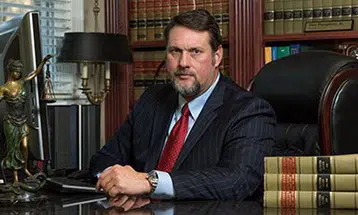
Attorney Don Pumphrey, Jr. is a former prosecutor, former law enforcement officer, and a successful and experienced criminal defense attorney. Don has achieved over 100 not guilty verdicts at trial and over 2,000 dismissals.