- DUI
- Criminal Defense
- Florida DUI
- Traffic Offenses
- Drug Charges
- Marijuana Charges
- Violent Crimes
- Domestic Violence
- Temporary Injunctions
- Weapons Charges
- Theft Crimes
- White Collar Crime
- Juvenile Offenses
- Sex Crimes
- Violation of Probation
- Early Termination of Probation
- Seal or Expunge Criminal Record
- Criminal Appeals
- US Federal Offenses
- Misdemeanor Charges
- Felony Charges
- Co-Defendant Cases
- College Student Defense
- College Student Hearings
- FSU Students
- FAMU Students
- Florida Panhandle Arrests
- Extradition to Florida
- Bench Warrants / Warrants
- Emergency Bond Hearings
- Gambling Charges
- Drone Arrests
- Marsy’s Law
- UAS Infractions
- Introduction of Contraband
- Lying to Police
- Locations
- Case Results
- Our Firm
- Media
- Resources
- Blog
- Contact Us
Florida’s 1st DCA REVERSES Trial Judge’s Finding of Miranda Rights Violation in Lewd Molestation Case
April 20, 2026 Don Pumphrey, Jr. Criminal Defense, Sex Crimes Social Share
Florida’s 1st District Court of Appeal found that the defendant’s Miranda rights weren’t violated when he asked an interrogating detective if he would need a lawyer – finding that the detective gave an “honest, straightforward” answer to his question.
CASE: State v. Hineline, 159 So.3d 293 (Fla. 1st DCA 2015)
Charge(s): Lewd or Lascivious Molestation
Outcome: Trial judge’s order to suppress Hineline’s confession REVERSED, as the interrogating detective provided an honest, straightforward answer to Hineline’s question about his right to an attorney.
In Florida and throughout the U.S., someone must be advised of their Miranda rights before they are subject to custodial interrogation by law enforcement. These rights, per Miranda v. Arizona, 384 U.S. 436 (1966), include:
- The right to remain silent
- The fact that anything they say can and will be used against them in court
- The right to an attorney, including to have one present during police questioning
- The fact that if they cannot afford an attorney, one will be provided for them
In the event that someone is advised of their Miranda rights by law enforcement, the SMART next move is to exercise them! Tell officers you will be remaining silent and are requesting an attorney. Say this out loud – if you simply sit there quietly, the police have legal permission to keep questioning you. Berghuis v. Thompkins, 560 U.S. 370 (2010)
It is a common misconception (due to movies and television shows) that any time officers take someone into custody, they must read them their Miranda rights. But this is not the case. This must only occur if someone is both in law enforcement CUSTODY, and about to be subject to INTERROGATION. For more on this, click here.
For a person to be considered in custody for purposes of requiring them to be notified of their Miranda rights, both of the following must be true:
- The suspect must have their freedom of movement constrained in a manner consistent with a formal arrest (this includes a formal arrest)
- A reasonable person in the suspect’s position would not feel free to leave (J.G. v. State, 883 So.2d 915 (Fla. 1st DCA 2004))
Interrogation occurs when law enforcement subjects a suspect to questioning or its “functional equivalent” that is reasonably likely to elicit an incriminating response from them. Rhode Island v. Innis, 446 U.S. 291 (1980). For more on interrogation, click here.
If and when someone is taken into custody and is notified of their Miranda rights before the start of interrogation, they have two options:
- Invoke their rights by telling law enforcement they will be remaining silent/requesting an attorney (DO THIS!)
- Waive their Miranda rights and agree to speak with law enforcement without an attorney present
Note: Even if someone does not immediately exercise their Miranda rights (e.g. waives them and speaks to law enforcement without an attorney), they retain the right to do so at any time during interrogation. However, once interrogation has started, an invocation must be UNEQUIVOCAL and UNAMBIGUOUS (e.g. “I think I may want a lawyer” won’t work). For more, click here.
If someone waives their Miranda rights, this must be knowing, intelligent, and voluntary. For a Miranda waiver to be considered knowing, intelligent, and voluntary, the following two things must have been true:
- The suspect/defendant understood the nature of their rights (e.g. right to remain silent and right to an attorney, including during questioning)
- The suspect/defendant understood the potential consequences of giving them up (e.g. the fact that their statements may be used against them).
Examples of situations where law enforcement acts in a manner that renders a Miranda waiver (and subsequent confession) involuntary include:
- Law enforcement does not read someone their full Miranda rights (e.g. omits one or more rights when notifying a suspect of them, such as not disclosing the right to an attorney)
- Law enforcement fails to read someone their rights at all before custodially interrogating them (Evans v. State, 911 So.2d 796 (Fla. 1st DCA 2005))
- Law enforcement reads someone their rights in a language that is not their own (e.g. reads a clear Spanish-speaker their rights in English)
- Law enforcement uses threats, coercion, or trickery to get someone to waive their rights – even once they have chosen to exercise them
- Law enforcement minimizes Miranda (e.g. “This is all just a formality…”)
Note: To learn more about when a Miranda rights waiver is knowing, intelligent, and voluntary in Florida, click here.
If someone believes their post-Miranda statements did not follow a knowing, intelligent, and voluntary waiver, an experienced and aggressive Florida criminal defense attorney can file a MOTION TO SUPPRESS on their behalf. If granted, any statements made during interrogation (including confessions) are inadmissible against that person in a court of law.
A key issue that often drives motions to suppress due to Miranda violations is when officers do not sufficiently answer a suspect’s “prefatory questions.” A prefatory question often deals with the nature of the suspect’s rights/whether they should or should not invoke them. Examples of these may include:
- “Can I have an attorney right now, or later?”
- “Do these rights kick in now or when I go to trial?”
- “Does this mean I shouldn’t talk to you?”
Prefatory questions are often asked before and during interrogation. If police officers do not acknowledge and honestly answer prefatory questions, a subsequent confession is inadmissible in court because it is “contaminated” by the failure to address the prefatory question. Almeida v. State, 737 So. 2d 520 (Fla. 1999)
In one major Florida case, a defendant was accused of lewd or lascivious molestation. He was subject to custodial interrogation, requiring law enforcement to notify him of his Miranda rights.
When they did so, the defendant (who was then a suspect) asked the interrogating detective if he thought he needed a lawyer. The detective indicated to him that they would “discuss that here in just a second,” then advised the suspect that it was “up to you.” The suspect/defendant signed the Miranda waiver moments later, and confessed to the charged offense.
Before trial, the defendant moved to SUPPRESS his post-Miranda statements, arguing that his prefatory question was not answered in an “honest, straightforward” manner (as is required by Almeida v. State, 737 So. 2d 520 (Fla. 1999)).
The defendant claimed that the detective’s “just a second” comment was the reason he waived his rights, and this was designed to “dodge” answering the question. The trial judge agreed and suppressed his confession – making it inadmissible against him in court (e.g. the jury would not hear it).
The State appealed the trial judge’s order to Florida’s 1st District Court of Appeal (Tallahassee and North FL’s highest court), arguing the judge erred as a matter of law in granting the motion. The State argued that by telling the defendant the decision was his a moment later, this was the “simple, straightforward” answer to the prefatory question that Almeida required.
The 1st DCA AGREED and REVERSED the judge’s ruling, allowing the defendant’s confession to be used against him at trial. Let’s look at that case – State v. Hineline, 159 So.3d 293 (Fla. 1st DCA 2015) – and discuss what it means for those concerned about Miranda rights in Florida.
KEY CASE: State v. Hineline, 159 So.3d 293 (Fla. 1st DCA 2015)
In Hineline, the defendant (Hineline) was charged with lewd or lascivious molestation. He filed a motion to suppress. At the hearing on that motion, the following facts were revealed:
- Hineline was accused of unlawfully touching a twelve-year-old
- A detective called him and he agreed to come into the police station to give a statement
- Hineline was notified by the detective that his Miranda rights would be read before the start of the interview
- Hineline asked if he was under arrest, but the detective said he was not
- The detective (Tiburzio) ultimately read Hineline his Miranda rights, to which Hineline replied: “Okay, do you think I’m going to need a lawyer? I mean…”
- The detective said: “Well, we’ll discuss that here in just a second.”
- Hineline said: “Okay.”
- The detective then continued: “That’s up to you. Do you understand those rights?”
- Hineline answered in the affirmative, then said “yes” when asked by the detective if he wished to speak with him
- He ultimately confessed and was charged with lewd or lascivious molestation
Hineline filed a motion to suppress his post-Miranda statements, arguing that the detective failed to answer his “prefatory question” (“Okay, do you think I’m going to need a lawyer?”) honestly and straightforwardly. The 1st DCA said the following of the trial judge’s ruling and the State’s subsequent appeal:
“At the conclusion of the hearing, the trial court granted the motion, finding that “we wouldn’t be sitting here” had the detective not said, “[w]e’ll discuss that here in just a second.” The court reasoned that the response was not honest and fair, that the detective glossed over the prefatory question, and that while he did not “steamroll” Hineline, the officer engaged in “gamesmanship.”
“In a written decision, the court found that Detective Tiburzio “never returned to a discussion of whether or not the defendant needed a lawyer” after Hineline’s question, and reiterated that, “[a]lthough the Detective did not ‘steamroll’ the defendant, the Detective did “gloss over” the defendant’s question and engaged in ‘gamesmanship.’ On appeal, the State argues that it was error to grant the motion to suppress because Detective Tiburzio appropriately responded to Hineline’s prefatory question by telling him, “That’s up to you. Do you understand?” but Hineline nonetheless agreed to talk to the detective, and went on to waive his rights.”
The 1st DCA ruled that the judge got it wrong and REVERSED his suppression order, allowing Hineline’s confession to be used against him at trial. Discussing the law that governed the case, the 1st DCA noted:
“The resolution of this case—as stipulated to by the parties below—turns on the answer to the third question outlined in Almeida; namely, whether the officer made a good-faith effort to give a simple and straightforward answer. … In Almeida, our supreme court outlined a three-step analysis to “an un-equivocal question that was prefatory to—and possibly determinative of—the invoking of a right” as follows: (1) whether the defendant was in fact referring to his right to counsel; (2) whether the utterance was a clear, bona fide question calling for an answer, not a rumination or a rhetorical question; and (3) whether the officer made a good-faith effort to give a simple and straightforward answer.”
The 1st DCA found Detective Tiburzio gave a simple and straightforward answer to Hineline’s prefatory question despite what appeared “out of context” to be a violation of Almeida v. State, 737 So. 2d 520 (Fla. 1999):
“When viewed in isolation and out of context, the officer’s statement, “[w]ell, we’ll discuss that here in just a second,” appears to be inconsistent with the requirements of Almeida, warranting suppression. Instead, viewing the video interaction between Detective Tiburzio and Hineline in context, as is required … what occurred was a fluid conversation between Hineline and the officer (in which Hineline was cooperative), and there was no pause between the officer’s response of “[w]ell, we’ll discuss that here in just a second,” and “[t]hat’s up to you. Do you understand those rights?”
“In fact, immediately following this latter question, Hineline indicated he understood his rights, and, when the officer again asked whether—in lieu of understanding his rights, and hearing “[t]hat’s up to you”—if he wished to speak to him, Hineline responded affirmatively. Only after answering Hineline’s question, and after Hineline indicated his continued willingness to speak to the detective after being fully advised of his rights, did Detective Tiburzio resume the interrogation.”
“Once the officer properly answers the [defendant’s prefatory] question, the officer may then resume the interview (provided of course that the defendant in the meantime has not invoked his or her rights).” Almeida, 737 So.2d at 525. That is exactly what happened here. Under the circumstances, the officer had nothing left to do to be compliant with Almeida ‘s mandate. That the officer never returned to Hineline’s prefatory question then was wholly appropriate, as Miranda does not require the interrogator to give legal advice … Accordingly, the motion to suppress should have been denied.”
Put simply, by telling Hineline it was up to him whether to contact a lawyer, Detective Tiburzio accurately conveyed to him that he had the right to an attorney and could exercise it. Because he was not required to tell Hineline if he should get a lawyer, Almeida v. State, 737 So. 2d 520 (Fla. 1999) was satisfied by Detective Tiburzio’s reply, requiring reversal of the trial judge’s order.
In sum, State v. Hineline, 159 So.3d 293 (Fla. 1st DCA 2015) marks a significant development in Florida’s corpus of case law surrounding Miranda waivers when prefatory questions are asked by a suspect before they choose not to invoke their rights. The 1st DCA (Tallahassee and North FL’s highest court) found that:
- Hineline asked if he SHOULD get a lawyer, not if he COULD have one
- The detective’s response, telling Hineline that the choice of whether or not to do so was his, was a simple, straightforward answer that accurately represented the law
- Hineline’s subsequent waiver of his rights was done with the knowledge that he could get a lawyer
- The detective was not obligated to give him legal advice
- Because Hineline’s Miranda rights were not violated, the trial judge’s order was reversed, allowing Hineline’s confession to be used against him
Florida’s criminal defense community should take note of State v. Hineline, 159 So.3d 293 (Fla. 1st DCA 2015), as it makes clear how Tallahassee and North FL’s highest court evaluates if the defendant’s Miranda rights were violated by an officer’s failure to accurately answer a prefatory question.
If someone is arrested and formally charged in Florida in a case involving a Miranda waiver that was not knowing, intelligent, or voluntary, it is critical to find experienced and trusted legal representation as soon as possible. This decision could make the difference in whether or not someone faces a lengthy prison term and hefty fines.
Criminal Defense Attorney in Tallahassee, FL
Don Pumphrey, Jr. is a Former Prosecutor, Former State Police Officer, Lifetime Member of the Florida Association of Criminal Defense Lawyers; for over 25 years as a private defense attorney who is Trusted, Experienced, Aggressive in Criminal Defense as a Trial Attorney, Criminal Lawyer, Criminal Defense Lawyer for the accused in Florida State Courts located in Tallahassee, Florida but handling cases throughout the State of Florida.
Don Pumphrey, Jr. and the Tallahassee criminal defense lawyers at Pumphrey Law have decades of experience fighting criminal charges on behalf of clients and winning. Call Pumphrey Law now at (850) 681-7777 to learn more about what we can do for you. Our lawyers will be happy to provide you with a free consultation.
Don Pumphrey, Jr.
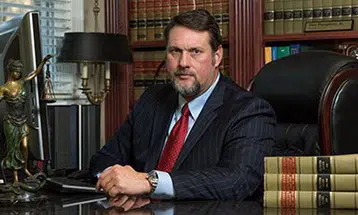
Attorney Don Pumphrey, Jr. is a former prosecutor, former law enforcement officer, and a successful and experienced criminal defense attorney. Don has achieved over 100 not guilty verdicts at trial and over 2,000 dismissals.