- DUI
- Criminal Defense
- Florida DUI
- Traffic Offenses
- Drug Charges
- Marijuana Charges
- Violent Crimes
- Domestic Violence
- Temporary Injunctions
- Weapons Charges
- Theft Crimes
- White Collar Crime
- Juvenile Offenses
- Sex Crimes
- Violation of Probation
- Early Termination of Probation
- Seal or Expunge Criminal Record
- Criminal Appeals
- US Federal Offenses
- Misdemeanor Charges
- Felony Charges
- Co-Defendant Cases
- College Student Defense
- College Student Hearings
- FSU Students
- FAMU Students
- Florida Panhandle Arrests
- Extradition to Florida
- Bench Warrants / Warrants
- Emergency Bond Hearings
- Gambling Charges
- Drone Arrests
- Marsy’s Law
- UAS Infractions
- Introduction of Contraband
- Lying to Police
- Locations
- Case Results
- Our Firm
- Media
- Resources
- Blog
- Contact Us
Florida’s 2nd DCA REVERSES Aggravated Assault, Robbery Convictions For Unusual Reason
April 24, 2026 Don Pumphrey, Jr. Criminal Defense, Theft/Property Crimes Social Share
Florida’s 2nd District Court of Appeal reversed a defendant’s convictions after condemning the prosecutor’s improper appeals to the jury to decide the case based on sympathy for the alleged victim during closing arguments.
CASE: Brown v. State, 593 So.2d 1210 (Fla. 2d. DCA 1992)
Charge(s): Aggravated Assault, Robbery, Cocaine Possession
Outcome: Conviction REVERSED, as the prosecutor’s repeated appeals to the jury to decide the case based on sympathy for the victim (rather than the evidence).
Aggravated Assault with a Deadly Weapon in Florida
In Florida, aggravated assault with a deadly weapon (Fla. Stat. 784.021(1)(a)) is a very serious felony. It is typically considered a third-degree felony, punishable by up to 5 years in prison and a $5,000 fine. But under certain circumstances, aggravated assault is a second-degree felony (up to 15 years in prison and a $10,000 fine). For more, click here.
For someone to be guilty of aggravated assault with a deadly weapon without intent to kill, the State must prove all of the following beyond a reasonable doubt:
- The defendant made an intentional and unlawful threat of imminent violence
- The defendant had the apparent apparent ability to carry out the threat
- The threat was of such a nature as to create well-founded fear in the victim that violence was about to occur
- A deadly weapon was used in the course of making the threat (e.g. brandished, pointed, swung)
Examples of aggravated assault with a deadly weapon without intent to kill in Florida include the following:
- During a road rage incident, A runs up to B’s vehicle and points a gun at B outside of his window, without the intent to actually shoot him
- In the middle of a heated argument over college basketball, C grabs a knife and rushes at D while making stabbing motions
- Furious at an umpire for calling a strike while his son was at bat, E grabs a baseball bat and chases after the umpire while threatening to “bash his brains in”
You may be asking: “Wait, a baseball bat is a deadly weapon?” The answer is – absolutely, under circumstances like those described. A deadly weapon in Florida is any instrument or object that is covered by either of the following definitions:
- The object/instrument causing death or great bodily harm is “within the contemplation of its ordinary design” (e.g. firearms, knives, machetes)
- The object/instrument was used or threatened to be used in a manner that was likely to cause death or great bodily harm (Daniels v. State, 308 So. 3d 212 (Fla. 1st DCA 2020))
Examples of deadly weapons include beer bottles, BB guns, spear guns, vehicles (e.g. cars and trucks), rocks and sticks (depending on the circumstances), chairs, and many more. L.R.W. v. State, 848 So.2d 1263 (Fla. 5th DCA 2003). For more on this, click here.
Closing Arguments in Florida Criminal Trials
When crimes like aggravated assault with a deadly weapon are charged, this can lead to emotions running high at trial. This is especially the case in closing arguments – the “last word” each party to the case (State and defense) gets before the jury is instructed on the law and sent to deliberate.
The goal of a closing argument is to give the jury a LENS through which to view the case (e.g. the evidence and testimony they have seen/heard), improving the odds that they will return a favorable verdict for the arguing party.
Though many believe the State goes first during closings, followed by the defense, this is NOT the entire story. Closing arguments are structured in the following way (Williams v. State, 673 So.2d 974 (Fla. 1st DCA 1996)):
- First, the State gives its initial closing
- Second, the defense gives its closing (which often will involve rebuttals of what the State said during its first closing argument)
- Finally, the State (e.g. prosecutor) gives a REBUTTAL CLOSING (which is the true “last word” before deliberations) to refute the defense’s closing argument
It is important to note that a closing argument cannot be considered as evidence. But that doesn’t change the fact that closings can influence the outcome of a case. This is because people tend to think in narratives – thus, effective closing arguments “tell a story” to the jury that makes it more likely they will resolve the case in favor of the arguer.
The defense’s closing argument is critical, for a few reasons. The first of these is that the defense gets only one “bite at the apple.” As the defense is SANDWICHED by the State’s initial closing AND rebuttal, it is critical for the defense to close strong. This increases the chance that the jury will find reasonable doubt rather than believing “the last thing they hear” (e.g. the prosecutor).
Moreover, a closing argument may result in the jury reframing how they view the evidence. As the State may introduce more evidence/testimony than the defense (though this is not universally true), a jury may initially be inclined to believe the State’s version of events.
But if the jury already has questions about the State’s case (and they usually do), an experienced, aggressive Florida criminal defense attorney can give voice to their skepticism and explain why it is justified. This can be very effective in pushing the jury towards rendering a NOT GUILTY verdict.
Although many believe closing arguments have few to no rules surrounding them (due to movies and television shows), this is NOT the case. There are “lines” that cannot be crossed – and if they are, OBJECTING contemporaneously is important.
Examples of objectionable tactics employed during closing arguments include (Rodriguez v. State, 210 So.3d 750 (Fla. 5th DCA 2017)):
- Impugning the character of opposing counsel by calling them a “liar” or “evil”
- Calling the defendant ugly names/insulting them
- Relying on facts not in evidence or misrepresenting the law (Pacifico v. State, 642 So.2d 1178 (Fla. 1st DCA 1994))
- Improperly bolstering the testimony of an alleged victim or law enforcement officers (Williams v. State, 673 So.2d 974 (Fla. 1st DCA 1996))
- Saying the case is about getting “justice” for the victim (Cardona v. State, 185 So.3d 514, 521 (Fla. 2016))
- Improperly commenting on the defendant’s right to remain silent
- GOLDEN RULE arguments (e.g. “Imagine how scared the victim was at that moment – so find the defendant guilty!”)((Jenkins v. State, 563 So.2d 791 (Fla. 1st DCA 1990))
The State – in particular – has a lot to lose by violating the rules surrounding closing arguments. This is because a MISTRIAL may occur, or a conviction may be reversed on appeal if a mistrial is not granted over the defense’s objection.
If the State’s closing veers into “unacceptable” territory (e.g. a prosecutor relies on one or more of the above tactics), an objection from the defense makes it more likely a conviction will be REVERSED on appeal if no mistrial is granted. This is because:
- WITH AN OBJECTION: Courts apply a “harmless error” analysis (e.g. if there was NO reasonable possibility the jury’s verdict was impacted by the comments) – if the improper remarks were not harmless error, a conviction requires reversal (Petruschke v. State, 125 So.2d 274 (Fla. 4th DCA 2013))
- WITHOUT AN OBJECTION: The improper comments are reviewed for fundamental error, which is a far higher standard (e.g. whether improper comments were so unfairly prejudicial that it made the jury’s verdict inherently illegitimate, per Brinson v. State, 153 So.3d 972 (Fla. 5th DCA 2015))
In one Florida case, a defendant was charged with aggravated assault with a deadly weapon (a firearm), robbery, and cocaine possession. He was convicted on all counts.
But during the CLOSING ARGUMENTS at the defendant’s trial, the prosecutor made a series of improper remarks that effectively encouraged the jury to find the defendant GUILTY because of what the victim had endured, rather than rendering their verdict based on the evidence/testimony.
The defendant appealed to Florida’s 2nd District Court of Appeal (Greater Tampa area’s highest court), claiming the prosecutor’s improper remarks violated his right to a fair trial. The 2nd DCA AGREED, REVERSING his convictions because the jury may have improperly found him guilty because of the prosecutor’s misconduct.
Let’s look at that case – Brown v. State, 593 So.2d 1210 (Fla. 2d. DCA 1992) – and discuss what it means for defendants in Florida concerned about improper closing arguments at their trial.
KEY CASE: Brown v. State, 593 So.2d 1210 (Fla. 2d. DCA 1992)
In Brown, the defendant (Brown) was charged with aggravated assault, robbery, and possession of cocaine. He was found guilty on all counts. At trial, the following was revealed:
- The evidence against Brown was somewhat conflicting
- During closing arguments, the prosecutor began by saying there was “something wrong” with the criminal justice system because the alleged victim was being forced to testify about the events and “have his character impugned”
- The prosecutor also said at the end of his argument that he hoped to be able to call the victim when the case was over and say the jury “had the courage to see the truth”
- The prosecutor also improperly commented on the defendant’s failure to call witnesses (improperly shifting the burden of proof)
- Brown was found GUILTY, despite objecting (e.g. no mistrial occurred)
On appeal, Brown cited the prosecutor’s improper remarks during closing arguments and argued that a new trial was necessary in his case because of them. Florida’s 2nd DCA AGREED with Brown, reversing his convictions and remanding the matter to the lower court for a new trial. The 2nd DCA wrote:
“The prosecutor began his closing argument by stating that it seemed to him that there was something wrong with the criminal justice system when a victim of a crime has to be victimized again by having to testify concerning the events of a crime and have his character impugned. He continued by stating that it seemed to him there was something wrong when the victim was the one put on trial. He concluded his argument by stating that when the case was over he wanted to be able to call the victim and say that the jury had the courage to see the truth and that he was not victimized a second time.”
“He also told the jurors that they were the only ones that could give the victim back his dignity. This argument was not only an improper appeal for sympathy for the victim which would have the natural effect of creating hostile emotions toward the accused, Edwards v. State, 428 So.2d 357 (Fla. 3d DCA 1983), but also an improper expression of personal belief. Singletary v. State, 483 So.2d 8 (Fla. 2d DCA 1985). During the course of his argument, the prosecutor also improperly commented on the appellant’s failure to call a witness. This comment indicated that the defendant had the burden to come forward with evidence and prove his innocence and was therefore prejudicial. Dunbar v. State, 458 So.2d 424 (Fla. 2d DCA 1984). The combination of these improper comments requires us to reverse and remand for a new trial. Redish v. State, 525 So.2d 928 (Fla. 1st DCA 1988); Singletary. Reversed and remanded.”
Put simply, the cumulative impropriety of the prosecutor’s comments was so significant, that the 2nd DCA ruled a new trial was required in Brown’s case (since his right to a fair trial had been violated).
In sum, Brown v. State, 593 So.2d 1210 (Fla. 2d. DCA 1992) marks a significant development in Florida’s corpus of case law surrounding improper closing arguments at criminal trials, and when these can be a basis for REVERSAL of a conviction/a mistrial. The 2nd DCA (Greater Tampa’s highest court) held:
- The prosecutor improperly said that it was “wrong” for the victim to have to testify
- He also indicated that he thought it was “wrong” the victim was being “put on trial” and having his character attacked
- His other “appeals for sympathy” for the victim included telling the jury that they were the only ones who could give the victim back his dignity
- Moreover, the prosecutor impermissibly criticized Brown for not calling witnesses
- All of this required REVERSAL of Brown’s convictions, as it violated his right to a fair trial
Florida’s criminal defense community should take note of Brown v. State, 593 So.2d 1210 (Fla. 2d. DCA 1992), as it makes clear that Florida’s appellate courts will reverse felony convictions due to prosecutorial misconduct during closing arguments.
Firearm-related offenses often carry lengthy prison sentences and heavy financial penalties. If someone is charged, it is vital to find experienced and aggressive legal representation as soon as possible.
Criminal Defense Attorney in Tallahassee, FL
Don Pumphrey, Jr. is a Former Prosecutor, Former State Police Officer, Lifetime Member of the Florida Association of Criminal Defense Lawyers; for over 25 years as a private defense attorney who is Trusted, Experienced, Aggressive in Criminal Defense as a Trial Attorney, Criminal Lawyer, Criminal Defense Lawyer for the accused in Florida State Courts located in Tallahassee, Florida but handling cases throughout the State of Florida.
Don Pumphrey, Jr. and the Tallahassee criminal defense lawyers at Pumphrey Law have decades of experience fighting criminal charges on behalf of clients and winning. Call Pumphrey Law now at (850) 681-7777 to learn more about what we can do for you. Our lawyers will be happy to provide you with a free consultation.
Don Pumphrey, Jr.
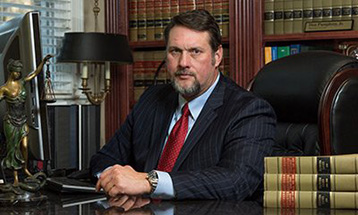
Attorney Don Pumphrey, Jr. is a former prosecutor, former law enforcement officer, and a successful and experienced criminal defense attorney. Don has achieved over 100 not guilty verdicts at trial and over 2,000 dismissals.