- DUI
- Criminal Defense
- Florida DUI
- Traffic Offenses
- Drug Charges
- Marijuana Charges
- Violent Crimes
- Domestic Violence
- Temporary Injunctions
- Weapons Charges
- Theft Crimes
- White Collar Crime
- Juvenile Offenses
- Sex Crimes
- Violation of Probation
- Early Termination of Probation
- Seal or Expunge Criminal Record
- Criminal Appeals
- US Federal Offenses
- Misdemeanor Charges
- Felony Charges
- Co-Defendant Cases
- College Student Defense
- College Student Hearings
- FSU Students
- FAMU Students
- Florida Panhandle Arrests
- Extradition to Florida
- Bench Warrants / Warrants
- Emergency Bond Hearings
- Gambling Charges
- Drone Arrests
- Marsy’s Law
- UAS Infractions
- Introduction of Contraband
- Lying to Police
- Locations
- Case Results
- Our Firm
- Media
- Resources
- Blog
- Contact Us
Major FL Court AFFIRMS Lewd or Lascivious Conduct Conviction In New Case… Here’s Why
April 16, 2026 Don Pumphrey, Jr. Criminal Defense, Sex Crimes Social Share
Florida’s 3rd District Court of Appeal affirmed a defendant’s conviction for lewd or lascivious conduct, finding that the trial judge DID NOT improperly limit his attorney’s ability to question prospective jurors about a child potentially fabricating an allegation of sexual abuse.
CASE: Zapata v. State, — So.3d —- (Fla. 3d. DCA 2026)
Charge(s): Lewd or Lascivious Conduct
Outcome: Conviction AFFIRMED, as the judge did not improperly limit the ability of Zapata to conduct voir dire.
Jury Selection in Florida
In Florida, jury selection is a key aspect of any criminal proceeding. Jury selection (also known as voir dire) is a process by which each party to the case (e.g. State and defense) has the chance to question potential jurors – with the intent of determining if they can be truly fair and impartial if chosen to hear a case.
During jury selection, the State and defense receive an unlimited number of cause challenges. A cause challenge occurs when a party to the case believes that a potential juror has offered one or more responses that indicate they will be unable to fairly and impartially decide the case. In other words, something about the potential juror indicates they are biased and can’t be rehabilitated.
Examples of situations in which an experienced and aggressive Florida criminal defense attorney would likely move for a cause challenge include:
- A potential juror personally knows the victim and expresses sympathy for them
- A potential juror is a law enforcement officer and says they will automatically believe the testimony of anyone who wears the uniform over a non-police witness
- A potential juror indicates that whoever is sitting at the defendant’s table is guilty because they are “not there by accident” – and they can’t be convinced otherwise
The above are strong grounds for a successful cause challenge. Though the State may stipulate to a defense cause challenge, in many cases, prosecutors often attempt to argue the potential juror is not incapable of being REHABILITATED (e.g. setting bias aside and deciding the case fairly and impartially). Peters v. State, 874 So.2d 677 (Fla. 4th DCA 2004). For more on this, click here.
In the event that a trial judge hears a cause challenge (and a State counterargument), they have two options:
- Grant the cause challenge, excusing the potential juror from service (e.g. sending them home)
- Deny the cause challenge, allowing the potential juror to remain seated in the venire (for now)
Note: Though a trial judge has broad discretion to deny a cause challenge, this is not unlimited. If a judge denies a cause challenge that should have been granted, this is generally grounds for a NEW TRIAL in the defendant’s case (e.g. reversal of their conviction) due to jury bias. For more on this, click here.
If a trial judge DENIES a cause challenge on the grounds that a potential juror can indeed be fair and impartial (e.g. follow the judge’s instructions and apply the law faithfully), this DOES NOT mean the potential juror will automatically be seated on the eventual jury. This is because there is a second set of “challenges” that can be used to excuse a potential juror from service.
A peremptory challenge (usually referred to as a peremptory strike) occurs when the State or the defense unilaterally excuses a potential juror from service – without explaining why to the State or the trial judge. For more, click here.
Unlike cause challenges, peremptories are limited in number. In Florida, the State and defense are each awarded:
- Three peremptory strikes in misdemeanor cases
- Six peremptory strikes in non-capital or life felony cases
- Ten peremptory strikes in capital or life felony cases
Though this is the “usual” number, the trial judge has the discretion to award either party to the case additional peremptory strikes if these are requested. Files v. State, 586 So.2d 352 (Fla. 1st DCA 1991)
If a peremptory strike is used, the potential juror is usually sent home immediately. However, the other side may occasionally challenge a peremptory strike (Neil challenge) if this appears to be solely on the basis of the race, ethnicity or sex of the potential juror – which is not permitted. Batson v. Kentucky, 476 U.S. 79 (1986); J.E.B. v. Alabama ex rel. T.B., 511 U.S. 127 (1994)
During jury selection, it is important for judges to allow attorneys broad latitude to ask potential jurors questions that could highlight biases they may hold. If voir dire is improperly limited by a judge (e.g. a judge does not permit the defense to ask permissible questions of potential jurors), this is REVERSIBLE ERROR. Harrison v. State, 172 So.3d 1018 (Fla. 1st DCA 2015)
Examples of cases in which Florida courts have reversed a defendant’s conviction(s) and ordered a new trial due to improper limits on questioning during jury selection include:
- A trial judge instructing a defense attorney to NOT ask potential jurors whether they’d be able to “personally accept” (consider) an entrapment defense, if entrapment was argued at trial (Harrison v. State, 172 So.3d 1018 (Fla. 1st DCA 2015))
- A trial judge instructing a defense attorney NOT to discuss the meaning of concepts such as the presumption of innocence, the burden of proof, and the right to remain silent after addressing them in a boilerplate instruction from the bench (Mendez v. State, 898 So.2d 1141 (Fla. 5th DCA 2005))
In a case recently decided by a major Florida court, the issue of improper limits on defense voir dire of potential jurors came up again. There, the defendant was convicted of lewd or lascivious conduct on a minor under 16 – a second-degree felony (up to 15 years in prison and a $10,000 fine). For more on lewd or lascivious conduct, click here.
During jury selection (voir dire), the defendant’s attorney attempted to ask potential jurors if they believed a child would be capable of “making up” sexual abuse allegations as a way to control who has custody over them. The State objected – arguing this was an effort to improperly argue the facts of the trial before it began.
The trial judge SUSTAINED the objection, finding that the questions were too “specific” before instructing the defense attorney to move on. The jury was impaneled without being questioned on this specific issue – and the defendant was convicted.
Challenging his conviction, the defendant argued before Florida’s 3rd District Court of Appeal (Miami’s highest court) that his attorney’s questioning during voir dire was improperly cut off by the trial judge. The defendant argued that because he was wrongly stopped from asking potential jurors about an issue that was directly relevant to the case, a new trial was necessary.
However, the 3rd DCA disagreed and AFFIRMED the defendant’s conviction. Let’s take a look at the case – Zapata v. State, — So.3d —- (Fla. 3d. DCA 2026) – and find out why:
KEY CASE: Zapata v. State, — So.3d —- (Fla. 3d. DCA 2026)
In Zapata, the defendant (Zapata) was arrested and charged with lewd or lascivious conduct on a minor under 16. At trial, the following facts were revealed:
- Zapata was accused of sexual abuse by the minor victim – the teenaged daughter of his girlfriend
- Zapata was charged with one count of lewd or lascivious conduct on a minor under the age of 16
- Zapata’s defense was that the alleged victim (J.E.) fabricated the allegation to be removed from the custody of her mother
- During jury selection, the State asked potential jurors if they could “neutrally evaluate” testimony from child victims
- The defense did the same, questioning potential jurors about whether a child victim could (or would) lie – which was not objected to by the State
- The defense then concluded its questioning by asking: “Now, are you all open to the idea that a child could be making up these serious allegations as a way to control who has custody over them?”
- The State objected on the basis that the defense was attempting to “pre-try” the case (e.g. litigate the facts before the start of trial)
- The trial judge SUSTAINED the objection, directing defense counsel to move on and for the potential jurors not to answer
- The jury was ultimately sworn, and Zapata was tried and convicted
On appeal, Zapata argued that the judge’s failure to allow the potential jurors to be asked about the specific issue of custody-related abuse allegations was a violation of his right to conduct a comprehensive voir dire. According to Zapata, this required a new trial in his case – pursuant to Walker v. State, 724 So. 2d 1232, 1233 (Fla. 4th DCA 1999).
The 3rd DCA DISAGREED and affirmed Zapata’s conviction. Concluding Zapata’s attorney had already “repeatedly questioned” potential jurors on the issue of potentially fabricated allegations, the 3rd DCA wrote:
“Here, defense counsel repeatedly questioned the prospective jurors on their willingness to accept the basis of its defense—whether a child could lie. [DEFENSE COUNSEL]: Would anyone require the Defense to present a motive for the child to lie? … [DEFENSE COUNSEL]: …Does anyone else need the Defense to present a motive for the child to lie? …. [DEFENSE COUNSEL]: So, would you require the Defense to provide a motive for the child to lie? So a reason for the child to lie. …. [DEFENSE COUNSEL]: … So, Juror … I know you said earlier with the State that you would assume a child is telling the truth until they prove that they aren’t. Do you still agree with that? …. [DEFENSE COUNSEL]: … So, [children] don’t even have to have a reason sometimes? PROSPECTIVE JUROR PIERRE: No.”
“[DEFENSE COUNSEL]: All right. Does everyone agree with that, that a child can lie? (The Venire responds.) …. [DEFENSE COUNSEL]: Now, I think we all agree that a child can lie, but could a child lie about something this serious? Does everyone agree with that? (The Venire responds.) [DEFENSE COUNSEL]: Is there anyone that thinks a child could not lie about something this serious? What about you, Juror…. Do you think it’s possible for a child to lie about something this serious? Based on this record, the defense sufficiently questioned prospective jurors to discern whether they could fairly, and impartially, consider the defense theory of a child lying. Importantly, the State likewise questioned the panel along these same lines.”
Noting that all of this occurred before the defense’s final question was objected to, the 3rd DCA found that the defense had “ample opportunities” to ask potential jurors about an alleged victim fabricating an abuse allegation. Thus, the judge did NOT “abuse his discretion” by sustaining the State’s objection:
“Again, the record in this case reflects that defense counsel had ample opportunities to inquire whether the prospective jurors would need a motive to accept the theory of a child lying. The specific question under review, in essence, restates prior questions and derivative forms thereof. In other words, the question (whether a prospective juror could believe a child could lie) had already been asked, in some form, both collectively and individually. The additional details sought by defense counsel regarding a potential/hypothetical incentive to lie for purposes of custody were included, in the general sense, in the multiple instances of questioning on this issue. See Ferreiro, 936 So. 2d at 1142-43. For these reasons, we affirm.”
In sum, Zapata v. State, — So.3d —- (Fla. 3d. DCA 2026) marks a significant development in Florida’s corpus of case law on the issue of voir dire limitations in child sex crime cases. The 3rd DCA (Miami’s highest court) held:
- Zapata’s attorney had many chances to ask the potential jurors about whether an alleged child victim could/would fabricate sexual abuse allegations
- Given this, the trial judge did NOT err as a matter of law by instructing the defense not to ask the potential jurors about the “theory of the case” at the end of voir dire
- Because the judge permissibly sustained the State’s objection, no new trial was required on the basis that questioning was improperly restricted
- As a result, Zapata’s conviction was AFFIRMED
Florida’s criminal defense community should take note of Zapata v. State, — So.3d —- (Fla. 3d. DCA 2026), as it makes clear when a trial judge’s limits on questioning during jury selection are (and are not) reversible error in sex abuse cases.
If someone is arrested and formally charged in Florida and concerned about jury selection, it is critical to find experienced and trusted legal representation as soon as possible. This decision could make the difference in whether or not someone faces a lengthy prison term and hefty fines.
Criminal Defense Attorney in Tallahassee, FL
Don Pumphrey, Jr. is a Former Prosecutor, Former State Police Officer, Lifetime Member of the Florida Association of Criminal Defense Lawyers; for over 25 years as a private defense attorney who is Trusted, Experienced, Aggressive in Criminal Defense as a Trial Attorney, Criminal Lawyer, Criminal Defense Lawyer for the accused in Florida State Courts located in Tallahassee, Florida but handling cases throughout the State of Florida.
Don Pumphrey, Jr. and the Tallahassee criminal defense lawyers at Pumphrey Law have decades of experience fighting criminal charges on behalf of clients and winning. Call Pumphrey Law now at (850) 681-7777 to learn more about what we can do for you. Our lawyers will be happy to provide you with a free consultation.
Don Pumphrey, Jr.
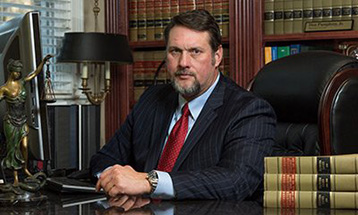
Attorney Don Pumphrey, Jr. is a former prosecutor, former law enforcement officer, and a successful and experienced criminal defense attorney. Don has achieved over 100 not guilty verdicts at trial and over 2,000 dismissals.