- DUI
- Criminal Defense
- Florida DUI
- Traffic Offenses
- Drug Charges
- Marijuana Charges
- Violent Crimes
- Domestic Violence
- Temporary Injunctions
- Weapons Charges
- Theft Crimes
- White Collar Crime
- Juvenile Offenses
- Sex Crimes
- Violation of Probation
- Early Termination of Probation
- Seal or Expunge Criminal Record
- Criminal Appeals
- US Federal Offenses
- Misdemeanor Charges
- Felony Charges
- Co-Defendant Cases
- College Student Defense
- College Student Hearings
- FSU Students
- FAMU Students
- Florida Panhandle Arrests
- Extradition to Florida
- Bench Warrants / Warrants
- Emergency Bond Hearings
- Gambling Charges
- Drone Arrests
- Marsy’s Law
- UAS Infractions
- Introduction of Contraband
- Lying to Police
- Locations
- Case Results
- Our Firm
- Media
- Resources
- Blog
- Contact Us
Failure to Excuse Juror for Cause Leads to Reversal in Florida Cocaine Case
February 9, 2026 Don Pumphrey, Jr. Criminal Defense, Drug Charges Social Share
Florida’s 4th District Court of Appeal reversed a defendant’s conviction for cocaine-related offenses, finding that a potential juror who was close friends with prosecutors and expressed reservations about his impartiality should have been excused for cause.
In Florida, jury selection (also known as voir dire) is a key aspect of criminal trials. During jury selection, each party to the case (State and defense) has the chance to question potential jurors, with the goal of evaluating whether they will be the “right fit” for the case (e.g. have the ability to fairly and impartially consider the evidence and render a verdict).
Sometimes, a potential juror will give one or more responses to questioning indicating they may not be able to be truly fair and impartial. This is a good thing – as if potential jurors are open and honest about their potential biases during jury selection, attorneys can more readily identify who should and should not sit on the eventual jury.
In the event that a party to the case (e.g. State or defense) identifies a biased potential juror, they are likely to “cause challenge” that potential juror. Cause challenges are unlimited in number – and occur when one side asks the judge to excuse a potential juror (e.g. send them home) for a legally valid reason (such as likely bias against the State/defense).
If a cause challenge is made, a trial judge has one of two options:
- Grant the cause challenge, sending the potential juror home (e.g. excusing them from further service)
- Deny the cause challenge
If a cause challenge is denied, the potential juror will either be seated on the eventual jury (if not successfully cause challenged by the other side) – or peremptorily stricken. A peremptory strike occurs when one party unilaterally excuses a potential juror, without having to justify why to the court or opposing party.
Peremptory strikes are limited in number. In Florida, each party receives 3 peremptory strikes in misdemeanor cases, 6 in non-capital felony cases, and 10 in capital felony cases (per defendant). This is the “default number,” but the trial judge has discretion to award additional peremptory strikes (also known as peremptory challenges) to each side if they request them.
Though the ability to use a peremptory strike is broad, it is not unlimited. Striking a juror on the basis of their race, sex or ethnicity is impermissible. Batson v. Kentucky, 476 U.S. 79 (1986); J.E.B. v. Alabama ex rel. T.B., 511 U.S. 127 (1994)
If one party suspects that an opposing party is exercising a peremptory against a potential juror on any of these grounds, a Neil challenge is likely to occur. This requires the party to offer a reason for the strike that is race-, sex-, or ethnicity-neutral.
The trial judge can then allow the peremptory strike or deny it, depending on whether the judge “buys” the striking party’s explanation (or believes the peremptory challenge is truly being used on the basis of race, sex, or ethnicity).
It is a useful heuristic for Florida criminal defense attorneys to divide jurors they aim to strike into two categories:
- “Group A” jurors: Potential jurors who have made one or more comments that provide what appears to be a strong basis for the judge granting a cause challenge
- “Group B” jurors: Potential jurors who may not be as clearly biased based on what they have said or how they have acted, but that the defense believes are likely to be potentially “problematic” on a non-prohibited basis (e.g. not due to race/sex/ethnicity)
The “ideal” next step once this sorting has occurred is to strike Group A jurors for cause (e.g. using cause challenges), while saving the limited number of peremptory challenges for Group B jurors – as a cause challenge of these potential (Group B) jurors would be less likely to succeed.
In the event that the trial judge denies a cause challenge of a “Group A” juror, the defense may be forced to use a peremptory strike to ensure that potential juror is not impaneled (e.g. chosen for the jury). This creates a problem – as now, there is one fewer peremptory strike to use on a Group B juror.
Though a trial judge is given almost complete authority to deny a cause challenge, the judge may occasionally “abuse their discretion” by wrongly denying a cause challenge when there is a clear legal basis for doing so. Examples may include:
- A potential juror openly admits that they hate the defendant – yet the judge denies a cause challenge of the potential juror
- A potential juror says they will always believe a police officer’s testimony over testimony of any other witness – yet the judge denies a cause challenge of the potential juror
- A potential juror says they are not confident that they can put aside their bias in the case against a particular side – yet the judge denies a cause challenge of the potential juror
In the above examples, the judge “abuses their discretion” by denying a defense cause challenge. This is considered reversible error on appeal due to the defendant receiving a biased jury – unless one of the following occurs:
- The other party successfully cause challenges the potential juror (or the same party elicits additional responses from that juror resulting in a later cause challenge being granted)
- The potential juror is peremptorily stricken (due to the failure of the cause challenge) and the judge awards an additional peremptory strike to the defense to strike any remaining objectionable jurors (e.g. “Group B” jurors that would have been peremptorily stricken if the cause challenge was successful)
If the defense is wrongly denied a cause challenge and receives no additional peremptories when these are requested, this requires reversal of a defendant’s conviction on appeal. Greathouse v. State, 371 So. 3d 406 (Fla. 2d. DCA 2023)
One case that illustrates this principle is Williams v. State, 638 So.2d 976 (Fla. 4th DCA 1994). Let’s take a look at Williams and what it means for defendants concerned about jury selection in Florida.
KEY CASE: Williams v. State, 638 So.2d 976 (Fla. 4th DCA 1994)
In Williams, the defendant (Williams) was accused of cocaine delivery and possession of drug paraphernalia. He was ultimately convicted.
During jury selection, it was revealed that one of the potential jurors (Medina) had various close relationships with lawyers in the U.S. Attorney’s Office (federal prosecutors). Williams’s lawyer asked Medina if he could put aside any pro-prosecution bias and ensure that his verdict was fair and impartial.
Medina expressed reservations about this. Though he said he would “like to think he could” set aside any personal bias that may stem from his friendships with lawyers at the U.S. Attorney’s Office, Medina conceded that he was not sure he would be able to presume Williams innocent.
After Medina’s colloquy with Williams’s attorney concluded, the judge asked Medina a series of leading questions to “rehabilitate him.” Though Medina indicated he could follow the law and be unbiased in response to the trial judge’s questions – he volunteered to the court at the end of the colloquy that Williams would “want a pure or slightly more pure attitude” than Medina had.
At the end of jury selection, Williams (through his lawyer) moved to strike Medina for cause, arguing that he was at serious risk of failing to be fair and impartial. But the cause challenge was denied – requiring Williams to use a peremptory strike on Medina. This left one fewer strike to use on a “Group B” juror.
The jury was sworn, and Williams was convicted. Appealing to the 4th DCA, Williams argued that he was deprived of his right to use his last peremptory strike on another juror – as he had to do so on Medina due to the erroneously denied cause challenge. Williams claimed this required he receive a new trial.
The 4th DCA agreed, reversing Williams’s convictions and remanding the matter for a new trial. The 4th DCA held that because reasonable doubts remained about Medina’s ability to be fair and impartial at the conclusion of jury selection, he should have been excused for cause on Williams’ motion.
The 4th DCA wrote that the judge’s efforts to “rehabilitate” Medina were insufficient to support denial of the cause challenge, writing:
“It was only after the court asked a series of questions, which included leading questions, that this juror asserted his belief that he hoped he could be fair and impartial. See Hagerman v. State, 613 So.2d 552 (Fla. 4th DCA 1993). A “juror who is being asked leading questions [by the court] is more likely to ‘please’ the judge and give the rather obvious answers indicated by the leading questions….” Price v. State, 538 So.2d 486, 489 (Fla. 3d DCA 1989); Hagerman. Thus, the juror’s responses to questioning by the court must be evaluated in light of this reality. Certainly, “[i]t is difficult for any person to admit that he is incapable of being able to judge fairly and impartially.” Singer, 109 So.2d at 24. It becomes even more difficult for a juror to admit partiality when the court conducts the questioning. Indeed, the juror in his own mind might even believe he could be “fair and impartial,” but still interpret the evidence based on his own previously expressed “deep feelings in this kind of case.”
“We find the trial court’s attempt to rehabilitate this juror to be insufficient. See King v. State, 622 So.2d 134 (Fla. 3d DCA 1993). 5 The juror here expressed initial unprompted doubts about his own ability to be unbiased in judging this case. These doubts were not removed by the court’s subsequent questioning. This juror should have been dismissed. The failure to excuse the juror for cause constituted reversible error. It forced the defendant to exhaust his peremptory challenges on persons who should have been excused for cause, and therefore, had the effect of abridging the right to exercise peremptory challenges. See Trotter v. State, 576 So.2d 691 (Fla. 1990). REVERSED AND REMANDED.”
In essence, Williams’s right to a fair trial (e.g. right to an unbiased jury) was violated when the judge denied the cause challenge of Medina and awarded Williams no additional peremptory strikes. This required reversal of his convictions.
But one 4th DCA judge disagreed. Dissenting from the majority (e.g. voting to affirm Medina’s convictions), Judge Gunther argued the trial judge did not “abuse his discretion” by denying the cause challenge:
“The questioning of Medina, taken as a whole, shows that juror Medina was trying to anticipate what the defense counsel might want to know about him. It is obvious that Medina conscientiously wanted to reveal to the attorney facts Medina thought the attorney might think were significant. The effect of these statements by Medina created a question about his impartiality. But later in the exchange juror Medina made several statements that can reasonably be interpreted as expressing his intention to be a fair and impartial juror.”
“Although it is permissible for a trial court or attorneys to attempt to rehabilitate a juror who appears not to be impartial by asking leading questions about the juror’s ability to follow the law, in this case, contrary to the majority’s opinion, the trial court’s questions were not leading. King v. State, 622 So.2d 134 (Fla. 3d DCA 1993). In my view, the trial court’s questions do not suggest any obvious answers but rather are a neutral attempt by the trial court to discern whether juror Medina could be a fair and impartial juror. …. Accordingly, I disagree with the majority’s statement that it was only after the trial court asked a series of questions, including leading questions, that Medina asserted his impartiality. Thus, I disagree with the majority’s conclusion that Medina’s responses to questions by the trial court were not enough to overcome any doubts as to Medina’s impartiality.”
However, Judge Gunther’s opinion did not win the day. As a result, Williams v. State, 638 So.2d 976 (Fla. 4th DCA 1994) has gone down as a pro-defendant case in Florida on the issue of jury selection and cause challenges.
In sum, Williams v. State, 638 So.2d 976 (Fla. 4th DCA 1994) is a significant development in Florida’s case law on jury selection and when cause challenges must be granted by a trial judge. The 4th DCA found:
- Medina clearly indicated that he was biased due to ties with U.S. Attorneys and general skepticism of defendants
- The judge’s colloquy (designed to “rehabilitate” Medina) failed to overcome reasonable doubts about Medina’s bias
- Because of this, the trial judge abused his discretion by denying the cause challenge of Medina
- As the trial judge failed to award Williams any additional peremptory strikes to “cure” this error, Williams’s convictions were reversed
Florida’s criminal defense community should take note of Williams v. State, 638 So.2d 976 (Fla. 4th DCA 1994), as it emphasizes the importance of documenting bias of potential jurors both to ensure a fair jury at trial, and to improve the odds of a successful appeal.
If someone is arrested and formally charged in Florida and concerned about jury selection, it is critical to find experienced and trusted legal representation as soon as possible. This decision could make the difference in whether or not someone faces a lengthy prison term and hefty fines.
Criminal Defense Attorney in Tallahassee, FL
Don Pumphrey, Jr. is a Former Prosecutor, Former State Police Officer, Lifetime Member of the Florida Association of Criminal Defense Lawyers; for over 25 years as a private defense attorney who is Trusted, Experienced, Aggressive in Criminal Defense as a Trial Attorney, Criminal Lawyer, Criminal Defense Lawyer for the accused in Florida State Courts located in Tallahassee, Florida but handling cases throughout the State of Florida.
Don Pumphrey, Jr. and the Tallahassee criminal defense lawyers at Pumphrey Law have decades of experience fighting criminal charges on behalf of clients and winning. Call Pumphrey Law now at (850) 681-7777 to learn more about what we can do for you. Our lawyers will be happy to provide you with a free consultation.
Don Pumphrey, Jr.
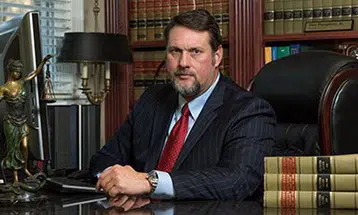
Attorney Don Pumphrey, Jr. is a former prosecutor, former law enforcement officer, and a successful and experienced criminal defense attorney. Don has achieved over 100 not guilty verdicts at trial and over 2,000 dismissals.