- DUI
- Criminal Defense
- Florida DUI
- Traffic Offenses
- Drug Charges
- Marijuana Charges
- Violent Crimes
- Domestic Violence
- Temporary Injunctions
- Weapons Charges
- Theft Crimes
- White Collar Crime
- Juvenile Offenses
- Sex Crimes
- Violation of Probation
- Early Termination of Probation
- Seal or Expunge Criminal Record
- Criminal Appeals
- US Federal Offenses
- Misdemeanor Charges
- Felony Charges
- Co-Defendant Cases
- College Student Defense
- College Student Hearings
- FSU Students
- FAMU Students
- Florida Panhandle Arrests
- Extradition to Florida
- Bench Warrants / Warrants
- Emergency Bond Hearings
- Gambling Charges
- Drone Arrests
- Marsy’s Law
- UAS Infractions
- Introduction of Contraband
- Lying to Police
- Locations
- Case Results
- Our Firm
- Media
- Resources
- Blog
- Contact Us
Major FL Court REVERSES Battery Conviction Due To Potential Discrimination Against White Men in Jury Selection
April 23, 2026 Don Pumphrey, Jr. Criminal Defense, Violent Crimes Social Share
Florida’s 3rd District Court of Appeal ruled that potential discrimination against white men in jury selection required REVERSAL of a defendant’s battery conviction.
CASE: Whitby v. State, 933 So.2d 557 (Fla. 3d DCA 2006)
Outcome: Conviction REVERSED, as the trial judge did not determine whether the State was attempting to excuse a white male juror on the basis of his race and sex.
Jury Selection in Florida
In Florida, jury selection (also known as voir dire) is a critical aspect of any criminal proceeding. Jury selection is an opportunity for the State and defense to question potential jurors.
The goal of this process is to evaluate whether potential jurors are likely to be fair and impartial (e.g. decide the case based on the evidence/testimony at trial), or if they are likely to allow their preexisting bias(es) to influence the way they render their verdict.
If it becomes clear that a potential juror is likely to base their verdict (at least partially) on their prior experiences or opinions, a party may initiate a CAUSE CHALLENGE of that potential juror.
A cause challenge occurs when the moving party believes there is a clear legal basis (e.g. strong evidence of bias) for a potential juror to be excused from service. Examples of cases in which an experienced, aggressive Florida criminal defense attorney is likely to initiate a cause challenge of a potential juror include:
- A potential juror says they will “absolutely” hold a defendant’s silence against him if he decides not to testify
- A potential juror says they will value the testimony of law enforcement officers over all other witnesses
- A potential juror says they know the victim in the case and feel a tremendous sympathy for them
In each of these cases, it is unlikely that the potential juror can be “rehabilitated” successfully. This is because the potential juror’s personal experiences/views are so relevant to the case, that the trial judge is likely to recognize they are not the “right juror” for that particular matter – and will excuse them accordingly.
However, excusal for cause will NOT occur simply because a potential juror indicates they hold a particular bias. This is because the potential juror can be SUCCESSFULLY REHABILITATED in certain cases. For more on the process of rehabilitation, click here.
Once a cause challenge is launched, the opposing party may either stipulate to this (e.g. agree to excuse the potential juror for cause), or object to it. If the opposing party indicates they OPPOSE the cause challenge (e.g. they object), the trial judge has two choices:
- Grant the cause challenge over the objection, sending the potential juror home
- Deny the cause challenge, allowing the potential juror to remain in the venire (for now)
In the event that a cause challenge is denied, this does not mean a potential juror will be seated on the eventual jury automatically. This is because there is another type of “challenge” that can be launched against a potential juror – a peremptory challenge (often referred to as a peremptory strike).
A peremptory strike occurs when a party to the case (e.g. State or defense) UNILATERALLY excuses a potential juror from service – without having to run this by the trial judge or opposing party for approval. Most of the time, this is as simple as the moving party saying:“We exercise a peremptory on Juror #10.” Bowden v. State, 787 So.2d 185 (Fla. 1st DCA 2001)
Unlike cause challenges, peremptory strikes are LIMITED. The typical number of peremptory strikes awarded at the start of a criminal proceeding is:
- THREE to each party (State and defense) in misdemeanor cases
- SIX to each party in non-capital/non-life felony cases (e.g. first-degree felonies or below)
- TEN to each party in capital/life felony cases
Notably, a trial judge may award additional peremptory strikes to either party (if requested). And if a trial judge ERRONEOUSLY denies a cause challenge, a trial judge must award an additional peremptory strike for each wrongly denied cause challenge to the defense. A judge’s failure to do so is likely to be considered reversible error. For more, click here.
Though each party is given broad latitude to exercise peremptory strikes for almost any reason, the discretion to do so is not unlimited. The U.S. Supreme Court has been clear that a potential juror cannot be peremptorily stricken based on race, gender, or ethnicity. Batson v. Kentucky, 476 U.S. 79 (1986); J.E.B. v. Alabama ex rel. T.B., 511 U.S. 127 (1994)
In the event that the opposing party (e.g. non-moving party) believes that a peremptory strike is being improperly exercised on this basis, they are likely to initiate a Neil challenge (otherwise known as a Neil inquiry). This involves the following three-step process:
- #1: The objecting party (e.g. the defense) announces they are performing a Neil challenge of the peremptory strike.
- #2: The State provides the trial judge a race-, sex-, or ethnicity-neutral reason (depending on the basis of the objection) for the peremptory strike
- #3: The trial judge either “buys” the State’s explanation (e.g. finds it is good-faith) and allows the strike – or finds the explanation is pretextual (e.g. B.S.) and denies the strike
Note: A Neil inquiry is sometimes referred to as a Melbourne inquiry, as the same “three-step” process was also outlined in Melbourne v. State, 679 So.2d 759 (Fla. 1996).
If a trial judge “cuts off” a Neil inquiry by doing either of the following, a defendant’s conviction must be REVERSED as a matter of law if they object to the composition of the jury immediately before it is sworn:
- The trial judge overrules the defendant’s objection/request for a race/sex/ethnicity-neutral reason for the strike WITHOUT requiring that the State give such a reason (Step #2)
- The trial judge fails to determine whether the State’s allegedly race/sex/ethnicity-neutral reason for the peremptory strike was GENUINE (e.g. not pretextual)
This principle was reinforced in a major case decided by Florida’s 3rd District Court of Appeal (Miami’s highest court). There, a defendant was charged with battery. During jury selection, the defense OBJECTED to a State peremptory strike of a white male juror.
Ordinarily, this would have led to the State providing a race/sex-neutral reason for the use of the strike. However, the trial judge immediately cut this off and overruled the defense’s objection – without a full Neil inquiry being conducted.
The defense objected to the composition of the jury (which the trial judge overruled), and the jury was sworn. The defendant was then tried and convicted.
On appeal to the 3rd DCA, the defendant argued that the trial judge was REQUIRED to allow a full Neil inquiry to occur once the defense objected to the State’s peremptory strike of the white male juror. As a result, he urged the 3rd DCA to reverse his conviction, as the judge’s premature “cut-off” of the Neil inquiry was REVERSIBLE ERROR.
The 3rd DCA agreed and REVERSED the defendant’s conviction as a matter of law – but was not unhappy with the result. Let’s take a look at the case – Whitby v. State, 933 So.2d 557 (Fla. 3d DCA 2006) – and discuss what it means for those in Florida who are concerned about jury selection.
KEY CASE: Whitby v. State, 933 So.2d 557 (Fla. 3d DCA 2006)
In Whitby, the defendant was convicted of battery after he allegedly threw hot water on a victim, burning her. During jury selection, the following occurred:
- The defense challenged a prospective juror (Hayes) based on her initial response that she would be inclined to give a police officer’s testimony more weight
- The State replied and said that Hayes had been successfully rehabilitated, as Hayes said that she would follow the law and NOT give a police officer’s testimony more weight after additional questioning
- The trial judge denied the defense’s cause challenge
- Later, the State moved to peremptorily strike another potential juror (Lynn)
- The defense objected and launched a Neil challenge of the strike, asking the State for a non-race, non-sex basis for striking Lynn (a white male) because he was “a member of a protected class”
- The trial judge quickly cut this off and allowed the strike without the State giving a race and sex-neutral reason
- The jury was ultimately sworn and Whitby was convicted
On appeal, Whitby made a pair of arguments, urging the 3rd DCA to reverse his conviction as a matter of law on either (or both) of the following grounds:
- #1: The trial judge abused his discretion by DENYING the cause challenge of Hayes
- #2: The trial judge impermissibly cut off the Neil inquiry into the State’s peremptory strike of Lynn
Addressing the first argument first, the 3rd DCA concluded that the trial judge DID NOT err as a matter of law by denying the cause challenge of Hayes, writing:
“During voir dire, juror Hayes initially indicated that she would be biased in favor of a police officer’s credibility. However, upon further questioning, she unequivocally stated that she would not give a police officer’s testimony more weight due to his/her status as a law enforcement officer and that she would evaluate the case on the evidence presented. We, therefore, conclude that the trial court acted within its discretion by denying the defendant’s cause challenge of Ms. Hayes.”
However, the trial judge REVERSED Whitby’s conviction on the basis that the trial judge did not allow a full Neil inquiry into the State’s peremptory strike of Mr. Lynn. Although this was required as a matter of law 3rd DCA was clearly unhappy about the result, writing:
“While we conclude that the trial court did not abuse its discretion in denying the defendant’s cause challenge of Ms. Hayes, we reverse based upon the trial court’s failure to conduct a Neil inquiry regarding the State’s peremptory challenge of juror Lynn. In doing so, we express our concern, as other judges of this court have expressed in the past, that the present procedure, which was intended to simplify the process, has led to unnecessary reversals of otherwise error-free trials decided by clearly impartial juries.”
“While discrimination and the systematic exclusion of jurors based upon race, ethnicity, gender, or one’s religious beliefs is abhorrent and an evil we in a civilized society cannot tolerate, we acknowledge that even good intentions can be taken too far and result in an equally unacceptable evil: that cases be reversed where there is no doubt that the challenge in question was not motivated by racial prejudice, and no doubt that the jury which tried the defendant was an impartial jury, without even an allegation by the defendant that the peremptory challenge was motivated by an improper purpose.”
Put simply, the 3rd DCA believed that automatic reversals should NOT occur simply because a trial judge “cuts off” a Neil inquiry, even when no actual racism/sexism is alleged by the defense. Nevertheless, the 3rd DCA was compelled to reverse Whitby’s conviction because that was, and is, the law in the state of Florida.
In sum, Whitby v. State, 933 So.2d 557 (Fla. 3d DCA 2006) marks a significant development in Florida’s corpus of case law surrounding jury selection. The 3rd DCA (Miami’s highest court) held that:
- The trial judge did not err as a matter of law by denying the defense’s cause challenge of Hayes
- However, the trial judge prematurely cutting off a Neil inquiry into Lynn (a white male juror) was automatically a basis for reversal of Whitby’s battery conviction
Florida’s criminal defense community should take note of Whitby v. State, 933 So.2d 557 (Fla. 3d DCA 2006), as it makes that strategic objections during jury selection can lead to reversal of a guilty verdict on appeal.
If someone is arrested and formally charged in Florida and concerned about jury selection, it is critical to find experienced and trusted legal representation as soon as possible. This decision could make the difference in whether or not someone faces a lengthy prison term and hefty fines.
Criminal Defense Attorney in Tallahassee, FL
Don Pumphrey, Jr. is a Former Prosecutor, Former State Police Officer, Lifetime Member of the Florida Association of Criminal Defense Lawyers; for over 25 years as a private defense attorney who is Trusted, Experienced, Aggressive in Criminal Defense as a Trial Attorney, Criminal Lawyer, Criminal Defense Lawyer for the accused in Florida State Courts located in Tallahassee, Florida but handling cases throughout the State of Florida.
Don Pumphrey, Jr. and the Tallahassee criminal defense lawyers at Pumphrey Law have decades of experience fighting criminal charges on behalf of clients and winning. Call Pumphrey Law now at (850) 681-7777 to learn more about what we can do for you. Our lawyers will be happy to provide you with a free consultation.
Don Pumphrey, Jr.
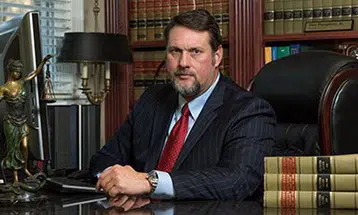
Attorney Don Pumphrey, Jr. is a former prosecutor, former law enforcement officer, and a successful and experienced criminal defense attorney. Don has achieved over 100 not guilty verdicts at trial and over 2,000 dismissals.