- DUI
- Criminal Defense
- Florida DUI
- Traffic Offenses
- Drug Charges
- Marijuana Charges
- Violent Crimes
- Domestic Violence
- Temporary Injunctions
- Weapons Charges
- Theft Crimes
- White Collar Crime
- Juvenile Offenses
- Sex Crimes
- Violation of Probation
- Early Termination of Probation
- Seal or Expunge Criminal Record
- Criminal Appeals
- US Federal Offenses
- Misdemeanor Charges
- Felony Charges
- Co-Defendant Cases
- College Student Defense
- College Student Hearings
- FSU Students
- FAMU Students
- Florida Panhandle Arrests
- Extradition to Florida
- Bench Warrants / Warrants
- Emergency Bond Hearings
- Gambling Charges
- Drone Arrests
- Marsy’s Law
- UAS Infractions
- Introduction of Contraband
- Lying to Police
- Locations
- Case Results
- Our Firm
- Media
- Resources
- Blog
- Contact Us
North Florida’s Highest Court Discusses Equivocal vs. Unequivocal Miranda Invocations
December 19, 2025 Don Pumphrey, Jr. Criminal Defense Social Share
Florida’s 1st District Court of Appeal ruled that a suspect saying “Man, I don’t really want to talk about that” was not an unequivocal invocation of the right to remain silent – allowing officers to continue questioning.
In Florida and throughout the U.S., Miranda rights must be read to someone before they are subject to custodial interrogation by law enforcement.
Per the U.S. Supreme Court’s landmark Miranda v. Arizona, 384 U.S. 436, 479 (1966) ruling, these key rights include:
- The right to remain silent
- The fact that anything they say can and will be used against them in a court of law
- The right to have an attorney, including during police questioning
- The fact that if someone cannot afford an attorney, one will be provided for them
If someone is read their Miranda rights, the proper next move is to exercise them! Police are trained to “break down” suspects and get information out of them that they can use at trial – so tell police you wish to remain silent and request an attorney. Say this out loud – simply staying quiet allows questioning to continue. Berghuis v. Thompkins, 560 U.S. 370 (2010)
When a person is notified of their Miranda rights and asked if they wish to speak with officers without an attorney present, they have two choices they can make:
- Choose to remain silent/request an attorney (smart choice)
- Waive their Miranda rights and agree to speak with law enforcement without an attorney present
If someone decides to do the latter, their Miranda waiver must be knowing, intelligent, and voluntary. In essence, they must understand the nature of their Miranda rights and the potential consequences of not exercising them before freely deciding not to do so. This makes a waiver “knowing, intelligent, and voluntary.”
In the event that a Miranda waiver is not knowing, intelligent, and voluntary, (e.g. someone did not understand their rights or was coerced into not exercising them), these are inadmissible in a court of law (at trial). If a defendant’s confession (or other post-arrest statement) followed an involuntary waiver, this can be suppressed – preventing it from being shown to a jury.
A key aspect of the discussion surrounding Miranda rights is the question of “equivocal” versus “unequivocal” Miranda waivers (or invocations).
After someone hears their rights read to them, an equivocal waiver or invocation may sound something like:
- “Maybe I’ll answer some questions…” (Equivocal waiver)
- “I’ll only answer a few questions, but not all…” (Equivocal waiver)
- “I may want a lawyer…” (Equivocal invocation)
- “I think I probably want to remain silent…” (Equivocal invocation)
If someone equivocally waives their Miranda rights (e.g. they are not sure what to do or it seems they will only speak under particular conditions), law enforcement must ask clarifying questions to ensure what the suspect’s true intentions are. Almeida v. State, 737 So. 2d 520 (Fla. 1999). If a suspect asks for further explanation about their rights, officers must answer in good faith.
Once a person waives their Miranda rights (agrees to speak/without an attorney), however, the “duty to clarify” a suspect’s intentions is significantly diminished. If interrogation is underway and a suspect attempts to invoke (exercise) their Miranda rights, they must do so unequivocally.
Essentially, saying something like “I think I may want to stay silent” (which would ordinarily cause officers to pause if said before someone waives their rights) becomes insufficient. Any attempt by a suspect to exercise their rights once interrogation is occurring must be obvious (e.g. “I’m exercising my right to remain silent, and I want a lawyer…”)
But just how unequivocal (e.g. clear and obvious) does a suspect’s invocation of their Miranda rights have to be once interrogation is underway? How clearly must a suspect express their desire to remain silent/request an attorney for police to end interrogation (required under Miranda once someone invokes their rights)?
This question was directly addressed by Tallahassee and North Florida’s highest court in a major case, Bailey v. State, 31 So.3d 809 (Fla. 1st DCA 2009). Let’s discuss Bailey and what it means for suspects who attempt to exercise their Miranda rights in Florida.
KEY CASE: Bailey v. State, 31 So.3d 809 (Fla. 1st DCA 2009)
In Bailey, the defendant (Bailey) was charged with and convicted of various offenses, including murder and attempted robbery. He argued on appeal that his confession was wrongly introduced into evidence at his trial (played for the jury) in violation of his Miranda rights.
At the start of interrogation, Bailey voluntarily waived his Miranda rights. When substantive questioning began, the detective (Detective Gupton) asked Bailey to tell him about the incident (“Okay. I know it’s hard but it helps me understand things clearer. What can you tell me about that incident?”).
In response to this question, Bailey said that he did not want to “talk about it” (“Man, I don’t really want to talk about that.”). Detective Gupton asked him why, and Bailey replied this was because he did not want a record of what he said on tape. Though Detective Gupton pretended to stop recording, the interview was still being taped – and Bailey confessed.
On appeal, Bailey argued that his statement (“Man, I don’t really want to talk about that”) was an invocation of his right to remain silent. Bailey asserted that since he attempted to exercise his Fifth Amendment right and questioning continued, it violated his Miranda rights to play the tape of the interview to the jury. Thus, according to Bailey, a new trial was required.
However, the 1st DCA disagreed and affirmed Bailey’s convictions. The 1st DCA began by first discussing the difference between pre-Miranda waiver and post-waiver invocations:
“If the suspect makes an equivocal or ambiguous reference to the right to remain silent after having validly waived that right, officers may continue the interrogation without attempting to clarify the meaning behind the reference. Owen, 696 So.2d at 717. In Alvarez v. State, 15 So.3d 738, 743–45 (Fla. 4th DCA 2009), the Fourth District explained the distinction between the standards applicable to a suspect’s initial waiver of his or her constitutional rights and a subsequent invocation of those rights …”
“The Fourth District’s discussion of pre-waiver and post-waiver analysis is consistent with case law from the Florida Supreme Court, such as Almeida v. State, 737 So.2d 520, 524 (Fla.1999), where the court noted that an equivocal or ambiguous invocation of the right to remain silent would be insufficient to “trump a [prior] clear waiver” of that right. The instant case requires a post-waiver analysis. More specifically, it requires us to decide whether Appellant’s statement, “Man, I don’t really want to talk about that,” was unequivocal. If it was, then the officers should have cut off questioning.”
Put simply, the 1st DCA reiterated that some statements that may require a “duty to clarify” before someone waived their rights no longer require this after someone waives their rights. As Bailey had already waived his Miranda rights, his statement needed to be an unequivocal (clear) exercise of his right to remain silent for interrogation to be required to end.
After listening to the tape of Bailey’s interview, the 1st DCA concluded that it was not obvious Bailey was attempting to invoke his right to remain silent. The court wrote:
“In this case, we had the relatively unique opportunity to listen to the statement as it was uttered at the time of the interview. If we had only the cold record to consider here, we might be persuaded that the Alvarez court’s reasoning requires reversal, as Appellant did make the statement at issue at the inception of the substantive questioning. Because, like the trial court, we were able to listen to the interview, we were able to consider the manner in which the words at issue were expressed and determine whether the officers responded reasonably. Having listened to the pertinent portions of the recording, we can understand why the trial court reached the result it did.”
“At first blush, the transcribed words “Man, I don’t really want to talk about that” may appear rather emphatic. However, the State has noted, and we agree, that the word “really” is not always used to express emphasis, but is sometimes used in a hedging manner. This point led us to consider the words in their audible context. From the recording, we know that Appellant essentially mumbled the words in question and followed them with additional, indecipherable language. The words on the recording simply do not come across as a clear assertion of a right. Therefore, we cannot say that the trial court erred in concluding that Appellant’s words were insufficient to trump his prior waiver of his right to remain silent. Accordingly, Appellant’s judgments and sentences are AFFIRMED.”
Notably, the 1st DCA conceded that if the audio tape had not been available, a new trial may have been ordered for Bailey based purely on the words he used. But in the context of hearing the interrogation, it did not appear Bailey was “clearly asserting” his rights. Because this was necessary to end questioning (as he’d already waived them), the 1st DCA affirmed.
In sum, Bailey v. State, 31 So.3d 809 (Fla. 1st DCA 2009) is an intriguing development in Florida’s corpus of case law surrounding Miranda rights – and in particular, when someone equivocally (or unequivocally) waives (or invokes) their rights. The 1st DCA reasoned:
- Bailey voluntarily waived his Miranda rights before interrogation began, requiring him to clearly invoke them if he wanted the interrogation to end (equivocal invocation no longer sufficient)
- Bailey’s “invocation” (“Man, I don’t really want to talk about that.”) wasn’t unequivocal because he appeared to make the statement quietly, use “really” as a hedging word (not for emphasis), and mumbled other words after the statement
- Because Bailey did not unequivocally invoke his Miranda rights, his rights were not violated when his confession was played for the jury – requiring the guilty verdict to be affirmed
Florida defense attorneys and criminal defendants should take note of Bailey v. State, as it does both of the following:
- Emphasizes the need for unequivocal invocation after an initial Miranda waiver (as seen in other cases like Almeida), and;
- Allows courts to consider how a suspect actually said the words that allegedly constituted an unequivocal invocation of their rights to gauge their true intentions
If someone is arrested and formally charged in Florida in a case involving a Miranda waiver that was not knowing, intelligent, or voluntary, it is critical to find experienced and trusted legal representation as soon as possible. This decision could make the difference in whether or not someone faces a lengthy prison term and hefty fines.
Criminal Defense Attorney in Tallahassee, FL
Don Pumphrey, Jr. is a Former Prosecutor, Former State Police Officer, Lifetime Member of the Florida Association of Criminal Defense Lawyers; for over 25 years as a private defense attorney who is Trusted, Experienced, Aggressive in Criminal Defense as a Trial Attorney, Criminal Lawyer, Criminal Defense Lawyer for the accused in Florida State Courts located in Tallahassee, Florida but handling cases throughout the State of Florida.
Don Pumphrey, Jr. and the Tallahassee criminal defense lawyers at Pumphrey Law have decades of experience fighting drug charges on behalf of clients and winning. Call Pumphrey Law now at (850) 681-7777 to learn more about what we can do for you. Our lawyers will be happy to provide you with a free consultation.
Don Pumphrey, Jr.
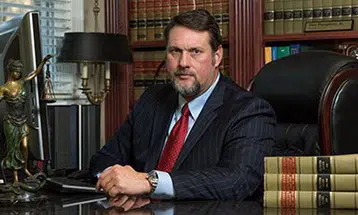
Attorney Don Pumphrey, Jr. is a former prosecutor, former law enforcement officer, and a successful and experienced criminal defense attorney. Don has achieved over 100 not guilty verdicts at trial and over 2,000 dismissals.