- DUI
- Criminal Defense
- Florida DUI
- Traffic Offenses
- Drug Charges
- Marijuana Charges
- Violent Crimes
- Domestic Violence
- Temporary Injunctions
- Weapons Charges
- Theft Crimes
- White Collar Crime
- Juvenile Offenses
- Sex Crimes
- Violation of Probation
- Early Termination of Probation
- Seal or Expunge Criminal Record
- Criminal Appeals
- US Federal Offenses
- Misdemeanor Charges
- Felony Charges
- Co-Defendant Cases
- College Student Defense
- College Student Hearings
- FSU Students
- FAMU Students
- Florida Panhandle Arrests
- Extradition to Florida
- Bench Warrants / Warrants
- Emergency Bond Hearings
- Gambling Charges
- Drone Arrests
- Marsy’s Law
- UAS Infractions
- Introduction of Contraband
- Lying to Police
- Locations
- Case Results
- Our Firm
- Media
- Resources
- Blog
- Contact Us
North Florida’s Highest Court Tosses Out Felony Criminal Mischief Conviction: Here’s Why
January 14, 2026 Don Pumphrey, Jr. Criminal Defense Social Share
Florida’s 1st District Court of Appeal reversed a juvenile’s adjudication of delinquency for felony criminal mischief, finding that the testimony to support a finding of over $1,000 in damage was inadmissible hearsay.
In Florida, criminal mischief is a very serious criminal offense. Depending on the extent of the damage allegedly caused to property willfully and maliciously by the defendant, they may face either misdemeanor or felony charges.
For someone to be guilty of criminal mischief in Florida, the State must establish all of the following beyond a reasonable doubt:
- The defendant injured or damaged real or personal property
- The property injured or damaged belong to another person
- The injury was done willfully and maliciously, without legal justification or excuse
Important: Per W.F. v. State, 979 So.2d 1171 (Fla. 3d. DCA 2008), “willful” means intentional, knowing, and purposeful. “Malicious” means wrongful, intentional, without legal justification or excuse, and with the knowledge that injury or damage will or may be caused to another person or the property of another person.
The penalties for criminal mischief are largely dependent on the amount of damage that was allegedly willfully and maliciously damaged.
Florida’s criminal mischief statute (Fla. Stat. 806.13) provides the following penalty scheme:
- If the damage is under $200, criminal mischief is a second-degree misdemeanor (up to 60 days in jail and a $500 fine)
- If damage is between $200 and $1,000, criminal mischief is a first-degree misdemeanor (up to 1 year in jail and a $1,000 fine)
- If damage is greater than $1,000, criminal mischief is a third-degree felony punishable by up to 5 years in prison and a $5,000 fine
- If the damage is to a historical monument or religious facilities (church, synagogue, etc.) and totals over $200, criminal mischief is a third-degree felony
If the charge is more serious than second-degree misdemeanor criminal mischief, a key element of establishing a defendant caused more than $200 in damages is providing proof at trial that the damages were a particular amount.
If the State fails to prove the monetary value of the damage beyond a reasonable doubt, someone may only be found guilty of second-degree misdemeanor criminal mischief. This is because any willful and malicious damage is crime.
However, this can’t be considered first-degree misdemeanor or felony criminal mischief without a non-hearsay, evidence-based estimate of the damage that exceeds $200 or $1,000, respectively. For more on this, click here.
Critically, hearsay is inadmissible to prove damages in a criminal mischief case. Hearsay is an out of court statement offered in court to prove that the statement (or record/document is true). For more on hearsay, click here.
Examples of hearsay damage estimates in criminal mischief cases may include:
- “John told me the damage to my car was over $1,000”
- “Mary told me that the damage to the house was at least $500”
- “Jim told Gary that went he went to the shop for repairs, he got a quote for $4,000”
Hearsay cannot serve as the basis for a damages estimate in a criminal mischief case because it violates the defendant’s right to confront their accuser. If someone alleges that they “know” a particular amount of damage has been caused that elevates the defendant’s potential punishment, they must be available for cross-examination. T.B.S. v. State, 935 So.2d 98 (Fla. 2d. DCA 2006)
In one criminal mischief case in North Florida, a juvenile (someone under the age of 18) was found guilty of third-degree felony criminal mischief based on inadmissible hearsay testimony. Because of this, his felony adjudication of delinquency (finding of guilt by a judge) was reversed by Florida’s 1st District Court of Appeal.
But the 1st DCA did not enter an adjudication of delinquency for second-degree misdemeanor criminal mischief (usually occurs when the State fails to prove the alleged damages). Instead, it adjudicated the defendant delinquent of first-degree misdemeanor criminal mischief – a more serious charge.
Why did the 1st DCA decide to do this? Let’s take a look at R.A.P v. State, 575 So.2d 277 (Fla. 1st DCA 1991) and what it means for defendants accused of criminal mischief in Florida.
KEY CASE: R.A.P v. State, 575 So.2d 277 (Fla. 1st DCA 1991)
In R.A.P., the defendant (R.A.P.) was a juvenile when he was arrested and charged with felony criminal mischief. R.A.P. was allegedly involved with a group of juveniles who caused roughly $1,200 to the victim’s vehicle.
About half of this damage was allegedly to the car’s glass windows, and about half was to the body of the vehicle. At trial, the victim (Sweat) attempted to testify that he received an estimate from a body shop that the damage was, in total, approximately $1,200 (felony criminal mischief).
R.A.P.’s attorney objected, noting this was inadmissible hearsay. The objection was sustained, so Sweat’s estimate of the damages could not serve as the proof that R.A.P. had committed felony criminal mischief (over $1,000 in damages).
Later at R.A.P.’s trial, the passenger in the vehicle at the time of the incident, Brian Morrow, testified that he personally estimated the damage to the car’s body to be between $600 and $700. Morrow concluded this because he worked in auto repair for roughly a year.
Morrow further testified that his brother estimated the glass damage to be approximately $600 ($1,200-$1,300 in total). However, R.A.P.’s counsel objected to the non-testifying brother’s estimate being admitted into evidence as to the glass damage (as this was hearsay).
The objection was sustained, leaving the only “admissible” estimate of the damages to be Morrow’s as to the body of the vehicle ($600 to $700). At the conclusion of R.A.P.’s trial, however, he was still adjudicated delinquent of felony criminal mischief (over $1,000 in damages).
On appeal to the 1st DCA, R.A.P. argued that the trial judge erred by entering an adjudication of delinquency for felony criminal mischief. He noted that both estimates of the damage to the glass of the vehicle were inadmissible, so could not be considered.
Since the State failed to prove he caused over $1,000 in damage to the car (the only admissible damage estimate was Morrow’s $600 to $700 estimate of damages to the body of the vehicle), R.A.P. argued he was not guilty as a matter of law of felony criminal mischief.
The 1st DCA agreed with him and reversed his third-degree felony adjudication of delinquency. However, the court entered an adjudication of delinquency for first-degree misdemeanor criminal mischief rather than second-degree criminal mischief. The court explained:
“Appellant does not challenge that portion of the order regarding the aggravated assault offense, however, he contends that there was insufficient admissible evidence to support a finding that he caused over $1,000 in damage by criminal mischief. We agree that the evidence does not support the adjudication and therefore reverse and remand for entry of an order finding appellant delinquent for having committed the lesser offense of first degree misdemeanor criminal mischief.”
“In the instant case, the record discloses that several boys, including appellant, damaged Howard Sweat’s automobile by hitting it with sticks and axe handles and by throwing a trash can at it. Sweat testified, based upon estimates he received from automobile body repair shops, that the value of the damage was approximately $1,200. Sweat’s testimony constituted inadmissible hearsay, which was properly objected to and therefore cannot be used to sustain the adjudication.”
“The state, however, presented other evidence which supports an adjudication of the lesser offense of criminal mischief by causing damage of between $200 to $1,000. Brian Morrow, a passenger in Sweat’s car at the time of the incident, testified that the value of the damage to the car, exclusive of glass repair, was between $600 and $700. Because the record contains admissible evidence showing that the value of the damage caused by appellant’s criminal mischief was only between $600 and $700, appellant’s adjudication for third degree felony criminal mischief, which requires a showing of $1,000 or more worth of damage, must be reversed. The evidence does, however, support an adjudication for first degree misdemeanor criminal mischief.”
In sum, R.A.P v. State, 575 So.2d 277 (Fla. 1st DCA 1991) is a significant development in Florida case law on the issue of what evidence is admissible to prove criminal mischief damages. The 1st DCA found:
- Both damage estimates as to the glass of vehicle were inadmissible hearsay (approximately $600)
- Morrow’s estimate of the damage to the body of the vehicle, based on his personal experience, was admissible (approximately $600 to $700)
- Because the admissible estimate of damage to the vehicle totaled $600 to $700, this fell in the range of first-degree criminal mischief, so the 1st DCA entered an adjudication of delinquency for this (rather than second-degree)
Florida’s criminal defense community should take note of R.A.P. v. State, as it provides crucial insight into key legal issues in criminal mischief cases.
In a criminal mischief case, it is vital to have the best representation possible, as this charge can carry heavy criminal and financial penalties. Don Pumphrey Jr. and the attorneys at Pumphrey Law have decades of experience fighting to win for clients across the state of Florida.
Criminal Defense Attorney in Tallahassee, FL
Don Pumphrey, Jr. is a Former Prosecutor, Former State Police Officer, Lifetime Member of the Florida Association of Criminal Defense Lawyers; for over 25 years as a private defense attorney who is Trusted, Experienced, Aggressive in Criminal Defense as a Trial Attorney, Criminal Lawyer, Criminal Defense Lawyer for the accused in Florida State Courts located in Tallahassee, Florida but handling cases throughout the State of Florida.
Don Pumphrey, Jr. and the Tallahassee criminal defense lawyers at Pumphrey Law have decades of experience fighting drug charges on behalf of clients and winning. Call Pumphrey Law now at (850) 681-7777 to learn more about what we can do for you. Our lawyers will be happy to provide you with a free consultation.
Don Pumphrey, Jr.
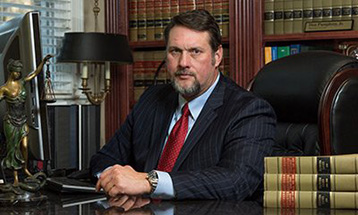
Attorney Don Pumphrey, Jr. is a former prosecutor, former law enforcement officer, and a successful and experienced criminal defense attorney. Don has achieved over 100 not guilty verdicts at trial and over 2,000 dismissals.