- DUI
- Criminal Defense
- Florida DUI
- Traffic Offenses
- Drug Charges
- Marijuana Charges
- Violent Crimes
- Domestic Violence
- Temporary Injunctions
- Weapons Charges
- Theft Crimes
- White Collar Crime
- Juvenile Offenses
- Sex Crimes
- Violation of Probation
- Early Termination of Probation
- Seal or Expunge Criminal Record
- Criminal Appeals
- US Federal Offenses
- Misdemeanor Charges
- Felony Charges
- Co-Defendant Cases
- College Student Defense
- College Student Hearings
- FSU Students
- FAMU Students
- Florida Panhandle Arrests
- Extradition to Florida
- Bench Warrants / Warrants
- Emergency Bond Hearings
- Gambling Charges
- Drone Arrests
- Marsy’s Law
- UAS Infractions
- Introduction of Contraband
- Lying to Police
- Locations
- Case Results
- Our Firm
- Media
- Resources
- Blog
- Contact Us
North FL’s Highest Court Affirms Conviction in Burglary Case, Finds No Racism in Jury Selection
April 23, 2026 Don Pumphrey, Jr. Criminal Defense, Theft/Property Crimes Social Share
Florida’s 1st District Court of Appeal affirmed a defendant’s conviction, finding that the State offered a “genuine” race-neutral reason for exercising a peremptory strike on a Black juror.
CASE: Bowden v. State, 787 So.2d 185 (Fla. 1st DCA 2001)
Charge(s): Burglary, Criminal Mischief, Resisting Without Violence
Outcome: Convictions AFFIRMED, as the State had a “genuine,” race-neutral reason for using a peremptory strike on a Black juror.
Jury Selection in Florida
In Florida, jury selection (voir dire) is a critical aspect of any criminal proceeding. During jury selection, each party to the case (e.g. State and defense) may question potential jurors to evaluate whether they will be able to fairly and impartially decide a case – or if their preexisting bias will render them unable to render a verdict based on the evidence/testimony.
If a party to the case believes that a potential juror is likely to be unable to set aside their bias(es) and render a verdict solely based on evidence and testimony, they may move to cause challenge the potential juror. Cause challenges are unlimited in number.
Examples of cases in which an experienced and aggressive Florida criminal defense attorney is likely to initiate a cause challenge of a potential juror include:
- A potential juror says they will “absolutely” hold a defendant’s silence against him if he decides not to testify
- A potential juror says they will value the testimony of law enforcement officers over all other witnesses
- A potential juror says they know the victim in the case and feel a tremendous sympathy for them
In each of these scenarios, the potential juror does not have a bias that is “typical” and can be set aside if they are instructed to follow the law. These potential jurors will probably be excused for cause because it is very unlikely they’ll be able to view the evidence/testimony objectively (due to their prior experiences/perspectives).
Once a cause challenge is launched, the opposing party may either stipulate to this (e.g. agree to excuse the potential juror for cause), or object to it. If the opposing party indicates they OPPOSE the cause challenge (e.g. they object), the trial judge has two choices:
- Grant the cause challenge over the objection, sending the potential juror home
- Deny the cause challenge, allowing the potential juror to remain in the venire (for now)
It is important to note that if a cause challenge is denied, this DOES NOT mean a potential juror will be automatically seated on the jury. This is because there is another type of challenge – the “peremptory challenge” (commonly referred to as a peremptory strike).
A peremptory challenge (or peremptory strike) occurs when a party to the case (State or defense) UNILATERALLY excuses a potential juror from service. Most of the time, it’s as simple as: “We exercise a peremptory on Juror #9.” Nothing more needs to be said.
Unlike cause challenges, peremptory strikes are LIMITED. The typical number of peremptory strikes awarded at the start of a criminal proceeding is:
- THREE to each party (State and defense) in misdemeanor cases
- SIX to each party in non-capital/non-life felony cases (e.g. first-degree felonies or below)
- TEN to each party in capital/life felony cases
Note: The trial judge retains discretion to award a party to the case additional peremptory strikes (if they are requested). In the event that a trial judge ERRONEOUSLY denies a cause challenge by the defense (“abuses their discretion”) and fails to award the defense an additional peremptory strike, the defendant’s conviction(s) must (usually) be REVERSED. For more, click here.
Under some circumstances, a peremptory challenge is, itself, “challenged.” This is because the discretion each party has to use a peremptory strike is not totally unlimited. The U.S. Supreme Court has said that a juror cannot be peremptorily stricken based on race, gender, or ethnicity. Batson v. Kentucky, 476 U.S. 79 (1986); J.E.B. v. Alabama ex rel. T.B., 511 U.S. 127 (1994)
In the event that the opposing party (e.g. non-moving party) believes that a peremptory strike is being improperly exercised on this basis, they are likely to initiate a Neil challenge (otherwise known as a Neil inquiry). This involves the following three-step process:
- #1: The objecting party (e.g. the defense) announces they are performing a Neil challenge of the peremptory strike.
- #2: The State provides the trial judge a race-, sex-, or ethnicity-neutral reason (depending on the basis of the objection) for the peremptory strike
- #3: The trial judge either “buys” the State’s explanation (e.g. finds it is good-faith) and allows the strike – or finds the explanation is pretextual (e.g. B.S.) and denies the strike
Note: A Neil inquiry is sometimes referred to as a Melbourne inquiry, as the same “three-step” process was also outlined in Melbourne v. State, 679 So.2d 759 (Fla. 1996).
Step #3 of the Neil/Melbourne analysis is critical to defense appeals in many cases. Under some circumstances, a judge will simply find that the State’s stated “race/sex/ethnicity-neutral” reason for the strike is, in fact, race/sex/ethnicity-neutral.
However, this is INSUFFICIENT as a matter of law. The trial judge must evaluate whether they believe the State’s stated race/sex/ethnicity-neutral reason for the use of the peremptory strike is genuine.
If this is clearly PRETEXTUAL (e.g. the State is covering up their TRUE intent to peremptorily strike the potential juror based on an immutable characteristic), and a trial judge fails to conduct the necessary “genuineness” inquiry, a defendant’s conviction(s) (generally) must be reversed as a matter of law due to unlawful discrimination in jury selection. For more on this, click here.
In one major Florida case involving a dispute surrounding the legitimacy of the State’s ostensible justification for a peremptory strike of a Black juror, the defendant was charged with:
- Burglary of an Unoccupied Structure
- Criminal Mischief
- Resisting an Officer Without Violence (two counts, one of which was REVERSED due to a double jeopardy violation)
During jury selection, the State moved to peremptorily strike the only Black juror in the venire. The defense initiated a Neil/Melbourne challenge – and the State replied that the potential juror’s relatives had a history of drug charges. Moreover, the State indicated the potential juror’s “body language” indicated she was seemingly sympathetic to the defendant.
The judge allowed the potential juror to be peremptorily stricken over the defense’s objection, and the defendant was convicted. Challenging his convictions to Florida’s 1st District Court of Appeal (Tallahassee and North FL’s highest court), the defendant argued that:
- The trial judge FAILED to conduct the requisite “genuineness” inquiry (Step #3 of the Neil/Melbourne analysis)
- The State did not attempt to strike a white juror that gave similar answers to the Black juror during jury selection
- If the trial judge had conducted a proper genuineness inquiry, he would have found the State’s justification for striking the Black juror “pretextual” and denied the peremptory challenge
- Because he failed to do so, the defendant’s conviction required REVERSAL
However, the 1st DCA DISAGREED – and AFFIRMED the defendant’s convictions. Let’s take a look at the case – Bowden v. State, 787 So.2d 185 (Fla. 1st DCA 2001) – and discuss what it means for those concerned about jury selection in Florida.
KEY CASE: Bowden v. State, 787 So.2d 185 (Fla. 1st DCA 2001)
In Bowden, the defendant (Bowden) was arrested and charged with burglary, criminal mischief, and resisting an officer without violence. During jury selection/at trial, the following occurred:
- The State moved to peremptorily strike the only Black potential juror, a female, before the jury was sworn
- The defense initiated a Neil/Melbourne challenge, arguing this was racially motivated
- The State argued that the “body language” of the potential juror as well as the fact that the potential juror’s relatives have faced drug charges were “race-neutral” reasons for the strike
- The latter fact was relevant because the case against Bowden involved alleged burglary of a pharmacy of the possibility of a drug-based voluntary intoxication defense
- The defense replied that the reasons were “pretextual,” as the potential juror stated she did not know much about her family’s criminal history and she said those charges would not impact her ability to be fair and impartial
- The defense also argued that a white juror provided similar answers during jury selection, but the State made no move to strike her
- The judge nevertheless allowed the State’s peremptory strike of the Black female juror
- Bowden was convicted on all charges by an all-white jury
On appeal to the 1st DCA, Bowden asserted a proper “genuineness” analysis by the judge would have led him to conclude that the State’s strike was racially motivated, and their stated reasons in response to the defense’s challenge of the peremptory strike were “B.S.”
Citing Batson v. Kentucky, 476 U.S. 79 (1986), Bowden urged the 1st DCA to grant him a NEW TRIAL on the basis that racial discrimination occurred during jury selection. But the 1st DCA did not agree and AFFIRMED his convictions. Finding that the trial judge implicitly conducted a genuineness inquiry despite not doing so out loud, the 1st DCA wrote:
“The defendant argues for a new trial on the alternative grounds that either the trial court did not reach Melbourne’s step 3, the trial court applied Melbourne incorrectly, or the record is inadequate to make this determination. The stipulated record states that “[t]he trial court judge indicated he did not believe the strike was racially motivated and denied Defense Counsel’s objection and allowed the State to exercise its peremptory challenge and exclude Juror No. 228.” … This statement indicates that the trial court reached step 3 of the Melbourne analysis and determined that the strike was genuine. Even had there not been a stipulated record indicating the trial court’s specific ruling on genuineness, the judge’s decision to allow the State’s peremptory challenge would indicate that he found the strike to be genuine. There are no specific words that the trial court must state to satisfy the step 3 considerations of Melbourne.”
The 1st DCA then addressed Bowden’s claim that even if the judge engaged in a “genuineness inquiry,” he could not have reasonably concluded the State’s stated reasons for the peremptory strike were legitimate:
“The defendant challenges the reasonableness of the State’s explanation for the strike. However, as explained in Melbourne, that is no longer the test. The reasonableness of an explanation is a factor that a court may consider in assessing genuineness. … A court, when considering the relevant circumstances surrounding the strike, may consider the various Slappy factors, including whether a strike is based on a reason equally applicable to an unchallenged juror. … The defendant does not contend that the trial court failed to consider the relevant circumstances surrounding the strike. Rather, the defendant disagrees with the trial court’s assessment that the strike was genuine. We conclude that the trial court’s ruling, under Melbourne, is not clearly erroneous.
“The defendant’s last alternative argument is that the record is inadequate to make a determination under Melbourne. Prior to Melbourne, a peremptory challenge based on body language was not an acceptable reason unless observed by the trial judge and confirmed by the judge on the record. Wright v. State, 586 So.2d 1024, 1029 (Fla. 1991). However, the Florida Supreme Court in Melbourne has advised us on review to use common sense and to not create traps of reversible error. Common sense indicates that the trial judge is in the best posture to determine whether a party is genuinely striking a potential juror for using body language, regardless of whether a notation is placed on the record by the judge or not.
“For example, if in response to a question a potential juror makes an obscene hand gesture back at the questioning attorney, the judge is in an excellent posture to see the gesture and make the determination that the party’s strike is genuine. It does not make sense in that instance for us to find error and reverse the case just because when challenged, the questioner responded that he did not like the juror’s body language, and the judge permitted the strike without noting the body language on the record. … Likewise in this case, the State’s attorney explained that the body language of the juror concerned him. It is not necessary that the judge made a record of what the body language was.”
Put simply, the 1st DCA found that the trial judge had broad latitude to either accept or reject the State’s reasons unless they were “clearly erroneous.” Since there was insufficient proof offered by Bowden that the “body language” of the potential juror was not a legitimate concern of the State, the judge did not “clearly err” by allowing her to be peremptorily stricken.
In a concurring opinion, Judge Benton of the 1st DCA found that it was unnecessary for the trial judge to even reach the “body language” issue. Per Judge Benton, Bowden’s attorney MISLED the judge when she claimed the Black potential juror (Delegol-Robinson) said that her relatives’ history of drug charges would not impact her ability to be fair and impartial:
“Even though Ms. Delegol-Robinson never said that any relative had ever been charged with any crime, defense counsel (like the state’s attorney) told the trial court that she had. Thus misinformed, the trial court reached the third Melbourne step and ruled that this proffered, non-racially-discriminatory reason for the peremptory challenge was genuine. Under Floyd, the defense cannot complain on appeal about the trial court’s reaching the third Melbourne step on the basis of this proffered justification, even though the trial court was misled, because defense counsel did not assert below that this explanation was not supported by the record. For the same reason, appellate counsel is foreclosed from arguing that the trial court’s decision as to genuineness must be reversed because no record basis for this proffered reason existed.”
“The trial judge did not, it is also true, confirm on the record the occurrence of any body language about which the state’s attorney complained, in assigning a second reason for the peremptory strike. See Wright v. State, 586 So.2d 1024, 1029 (Fla.1991). The record does not reveal, moreover, whether or not defense counsel disputed its occurrence. See Floyd, 569 So.2d at 1229; Slappy, 522 So.2d at 23. But, because the trial court found that the first reason the assistant state’s attorney asserted was not a pretext, but a genuine, non-discriminatory explanation for the peremptory strike, the sufficiency and genuineness of the body language explanation have become immaterial.”
In sum, Bowden v. State, 787 So.2d 185 (Fla. 1st DCA 2001) marks a significant development in Florida’s corpus of case law surrounding jury selection. The 1st DCA (North Florida’s highest court) found that:
- The trial judge implicitly conducted a genuineness analysis (“Step #3”) even if he did not do so aloud
- It was not “clearly erroneous” for the judge to rule that the State’s race-neutral basis for striking the Black potential juror was genuine
- The body language of the potential juror was concerning to the State, and it WAS NOT “clearly erroneous” for the trial judge to allow the peremptory strike on that basis
- Because there was no racial discrimination in jury selection, Bowden’s convictions were AFFIRMED
Judge Benton offered a concurring opinion, in which he argued that by falsely representing to the judge that the potential juror had relatives convicted of drug offenses, Bowden waived any right to challenge the “genuineness” of either of the State’s “race-neutral” reasons for the strike.
Florida’s criminal defense community should take note of Bowden v. State, 787 So.2d 185 (Fla. 1st DCA 2001), as it makes clear when the 1st DCA will (and will not) REVERSE a conviction based on alleged discrimination during jury selection.
If someone is arrested and formally charged in Florida and concerned about jury selection, it is critical to find experienced and trusted legal representation as soon as possible. This decision could make the difference in whether or not someone faces a lengthy prison term and hefty fines.
Criminal Defense Attorney in Tallahassee, FL
Don Pumphrey, Jr. is a Former Prosecutor, Former State Police Officer, Lifetime Member of the Florida Association of Criminal Defense Lawyers; for over 25 years as a private defense attorney who is Trusted, Experienced, Aggressive in Criminal Defense as a Trial Attorney, Criminal Lawyer, Criminal Defense Lawyer for the accused in Florida State Courts located in Tallahassee, Florida but handling cases throughout the State of Florida.
Don Pumphrey, Jr. and the Tallahassee criminal defense lawyers at Pumphrey Law have decades of experience fighting criminal charges on behalf of clients and winning. Call Pumphrey Law now at (850) 681-7777 to learn more about what we can do for you. Our lawyers will be happy to provide you with a free consultation.
Don Pumphrey, Jr.
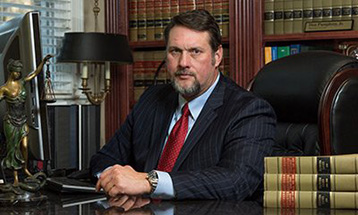
Attorney Don Pumphrey, Jr. is a former prosecutor, former law enforcement officer, and a successful and experienced criminal defense attorney. Don has achieved over 100 not guilty verdicts at trial and over 2,000 dismissals.