- DUI
- Criminal Defense
- Florida DUI
- Traffic Offenses
- Drug Charges
- Marijuana Charges
- Violent Crimes
- Domestic Violence
- Temporary Injunctions
- Weapons Charges
- Theft Crimes
- White Collar Crime
- Juvenile Offenses
- Sex Crimes
- Violation of Probation
- Early Termination of Probation
- Seal or Expunge Criminal Record
- Criminal Appeals
- US Federal Offenses
- Misdemeanor Charges
- Felony Charges
- Co-Defendant Cases
- College Student Defense
- College Student Hearings
- FSU Students
- FAMU Students
- Florida Panhandle Arrests
- Extradition to Florida
- Bench Warrants / Warrants
- Emergency Bond Hearings
- Gambling Charges
- Drone Arrests
- Marsy’s Law
- UAS Infractions
- Introduction of Contraband
- Lying to Police
- Locations
- Case Results
- Our Firm
- Media
- Resources
- Blog
- Contact Us
North Florida’s Highest Court Declines 12-Person Jury Request in Capital Sexual Battery Case…1 Judge Disagrees
November 11, 2025 Don Pumphrey, Jr. Criminal Defense, Sex Crimes Social Share
Tallahassee and North Florida’s highest court ruled that capital sexual battery defendants are not entitled to 12-person juries. But one judge on the court did not agree.
In Florida, criminal defendants in the vast majority of cases have a right to a jury of just six members, not twelve. This rule applies in all felony and misdemeanor cases, with the exception of capital cases, where death penalty is a possible punishment for the crime). In capital cases, twelve jurors are required.
This has been Florida’s jury law for well over a century, and the constitutionality of this practice was affirmed by the U.S. Supreme Court in a landmark 1970 decision, Williams v. Florida, 399 U.S. 78 (1970).
But the logic of Williams has come under serious scrutiny in recent years. Many advocates and judges, including current U.S. Supreme Court Justice Neil Gorsuch, have argued that the logic of Williams is faulty and that twelve jurors should be required for most (if not all) criminal trials. For more on this, click here.
One of the most intriguing issues surrounding jury size requirements in Florida is whether six or 12 jurors are required in a capital sexual battery case (victim under 12, defendant 18 or older). Though the answer may seem to be 12, as it is a “capital” felony, the reality is significantly more complicated than many expect.
This is because in State v. Hogan, 451 So. 2d 844 (Fla. 1984), the Florida Supreme Court ruled that only 6 jurors are required in capital sexual battery cases. This distinguishes capital sexual battery from other capital offenses (such as first-degree murder), where a jury of twelve must be impaneled unless this right is waived by the defendant.
Though State v. Hogan seems like an odd decision at first glance, there was a reason the Florida Supreme Court ruled this way in spite of state law mandating 12 jurors in capital felony cases. In 1981, the Florida Supreme Court ruled the death penalty for sexual battery (if the victim does not die) constitutes cruel and unusual punishment. Buford v. State, 403 So. 2d 943 (Fla. 1981)
As execution was no longer a possible penalty for capital sexual battery in Florida post-Buford, the Hogan court reasoned that the 12-person jury requirement for capital sexual battery no longer existed. Even though the crime was still called “capital” sexual battery, it was no longer really a “capital offense” – and non-capital cases only require 6 jurors.
Hogan’s reasoning has been controversial in the four decades since the decision was handed down. Various judges have called it into question, arguing that a “textualist” reading of Florida law commands the continued use of 12-person juries in capital sexual battery cases – because it continues to be designated a capital offense.
Since Hogan, many Florida defendants who have been tried with six-person juries in capital sexual battery cases have challenged the constitutionality of this practice. One such defendant was Terry Phillips, who was convicted of this offense by a jury of six and appealed to Florida’s 1st District Court of Appeal. Let’s discuss his case.
KEY CASE: Phillips v. State, 316 So. 3d 779 (Fla. 1st DCA 2021)
In Phillips, the defendant (Phillips) was convicted of capital sexual battery. Since this occurred before Florida’s 2023 legislative amendment restoring the death penalty as a possible punishment for this offense (despite constitutionality questions), he was tried automatically by a six-person jury (and found guilty).
On appeal, Phillips made multiple arguments in favor of reversing the guilty verdict at trial. One of these was that he was constitutionally entitled to a twelve-person jury, as he was charged with a capital felony (capital sexual battery) – and capital felonies require twelve jurors under Florida law.
In response, the State cited State v. Hogan, 451 So. 2d 844 (Fla. 1984) and argued that it applied to Phillips’s case. The 1st DCA agreed, holding that Hogan governed and Phillips had no right to a twelve-person jury. Addressing Hogan’s rule that only crimes where execution is a possible punishment qualify as “capital felonies” (requiring a twelve-person jury), the 1st DCA wrote:
“Hogan’s interpretation of the language in section 913.10 is not outlandish or controversial, and that interpretation is an entirely separate issue from the questions now raised regarding the Florida Legislature’s decision to use six-person juries in any non-capital case (and regarding the U.S. Supreme Court’s decision to affirm that choice under the U.S. Constitution). Thus, there is no indication that any current re-interpretation of said language would yield a result different from Hogan’s.”
Intriguingly, Phillips cited a 2017 concurrence by 1st DCA Judge Makar in Lessard v. State, in which Makar argued that Williams v. Florida, 399 U.S. 78 (1970) was wrongly decided and that 12-person juries should be required in serious felony cases. But the 1st DCA held that the legal issues in Lessard were different, writing:
“Appellant cites our respected colleague’s concurring opinion in Lessard v. State in support of his argument that the jury question is one of great public importance which this Court should certify. 232 So. 3d 13 (Fla. 1st DCA 2017) (Makar J., concurring) (questioning the decision in Williams v. Florida, 399 U.S. 78, 90 S.Ct. 1893, 26 L.Ed.2d 446 (1970), which upheld Florida’s use of six-member juries in all non-capital cases, based on current research and evidence).”
“Although the subject matter is related, the legal issue examined in Lessard and the issue here are different. The propriety of Florida’s general use of six-person juries is a fair question for debate. It is a legislative question, and, as explained in Judge Makar’s Lessard concurrence, it is a constitutional issue. Hogan centered—as does this case—on the statutory interpretation of the phrase “capital cases” in section 913.10. Hogan’s resolution of the issue was straightforward and consistent with previous supreme court precedent.”
In other words, because Phillips did not challenge Williams and instead challenged Hogan, the 1st DCA found Judge Makar’s Lessard concurrence (criticizing Williams) was not applicable to the case.
Notably, Judge Makar himself did take part in deciding Phillips’s case – and concurred with the judgment of the 1st DCA. Judge Makar indicated he agreed with the 1st DCA’s majority opinion (focused on whether Hogan reasonably interpreted the definition of a “capital felony”), but took another opportunity to advocate for 12-person juries generally:
“I fully concur but write to update my observation in Lessard v. State that reconsideration of the Supreme Court’s jury size decision in Williams v. Florida, 399 U.S. 78, 90 S.Ct. 1893, 26 L.Ed.2d 446 (1970), which upheld the use of six-member juries in state court criminal cases, was a ‘jurisprudential dark horse.’ 232 So. 3d 13, 13 (Fla. 1st DCA 2017) (Makar, J., concurring).”
“Since that observation four years ago, the Supreme Court issued its decision last year in Ramos v. Louisiana, which held that the Sixth Amendment right to jury trial requires that state court verdicts in criminal cases be unanimous, overruling its precedents from the early 1970s to the contrary.”
Expressing agreement with Ramos’s unanimity requirement (everyone on the jury must agree with the guilty verdict for a conviction), Judge Makar urged the U.S. Supreme Court to apply this same logic to the twelve-person jury issue and overturn Williams v. Florida, 399 U.S. 78 (1970):
“Justice Gorsuch stated… if the Sixth Amendment’s right to a jury trial requires a unanimous verdict to support a conviction in federal court, it requires no less in state court. On similar reasoning, if the Sixth Amendment right to jury trial requires a twelve-member jury to support a criminal conviction—as is done in every federal court (and almost every state court)–it isn’t much of a stretch to conclude that ‘it requires no less in state court.’”
Though Judge Makar wrapped up his concurrence by claiming Williams v. Florida, 399 U.S. 78 (1970) was “ripe for re-evaluation” post-Ramos, he did not voice disagreement with the outcome of Phillips’s case.
While Judge Makar believed Phillips had a right to a twelve-person jury in the abstract, he concurred with Hogan’s interpretation of what constitutes a “capital felony” as to require a 12-person jury under state law.
In other words, Judge Makar believed that Phillips was not entitled to a twelve-person jury under current law in Florida – but also indicated that current law is likely unconstitutional.
In sum, Phillips v. State, 316 So. 3d 779 (Fla. 1st DCA 2021) is an intriguing development in Florida case law surrounding 12-person juries in capital sexual battery cases. Tallahassee and North Florida’s highest court (1st DCA) held that since capital sexual battery was not punishable by death at the time of Phillips’s conviction, a 6-person jury was permissible.
Judge Makar concurred on the legal issue on whether the offense being “capital” (regardless of if death is a potential punishment) automatically entitles someone to a 12-person jury under current Florida law. Though he believed that it does not, he also reiterated his belief that Florida’s jury laws are likely unconstitutional, and 12-person juries are guaranteed by the Sixth Amendment.
For more on twelve person jury arguments and the evolution of Florida courts (as well as the U.S. Supreme Court) on this issue, click here.
If someone is arrested and formally charged in Florida and concerned about twelve-person juries and jury selection, it is critical to find experienced and trusted legal representation as soon as possible. This decision could make the difference in whether or not someone faces a lengthy prison term and hefty fines.
Criminal Defense Attorney in Tallahassee, FL
Don Pumphrey, Jr. is a Former Prosecutor, Former State Police Officer, Lifetime Member of the Florida Association of Criminal Defense Lawyers; for over 25 years as a private defense attorney who is Trusted, Experienced, Aggressive in Criminal Defense as a Trial Attorney, Criminal Lawyer, Criminal Defense Lawyer for the accused in Florida State Courts located in Tallahassee, Florida but handling cases throughout the State of Florida.
Don Pumphrey, Jr. and the Tallahassee criminal defense lawyers at Pumphrey Law have decades of experience fighting drug charges on behalf of clients and winning. Call Pumphrey Law now at (850) 681-7777 to learn more about what we can do for you. Our lawyers will be happy to provide you with a free consultation.
Don Pumphrey, Jr.
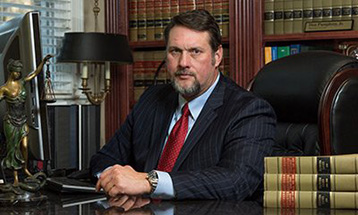
Attorney Don Pumphrey, Jr. is a former prosecutor, former law enforcement officer, and a successful and experienced criminal defense attorney. Don has achieved over 100 not guilty verdicts at trial and over 2,000 dismissals.